
Employer Branding

The 10 best employer branding software in 2026

Without employer branding software to govern it, an employer brand erodes the same way other brands erode — in dozens of off-message touchpoints. A regional careers page running a deprecated EVP. A recruitment ad in Spain using messaging the global team retired six months ago, an employee referral video produced locally with stale claims about culture.

For HR leaders, internal comms teams, and employer brand managers, the structural issue is that EVP assets, guidelines, and approved campaign kits live everywhere except where talent acquisition and local managers actually need them. SharePoint folders, PDF brand books, scattered career sites, and emailed templates stitched together as best as anyone can manage.

The cost is candidate trust, time-to-hire, and quality of applicant pool — and in regulated industries, regulatory exposure when off-message recruitment content goes out unchecked.

That is where employer branding software comes in. This guide is for HR and employer brand leaders, internal comms teams, and talent acquisition operations evaluating platforms that bring EVP, employer brand assets, and global talent campaigns into one governed environment.

What is employer branding software?

Employer branding software is a centralized platform that helps organizations build, govern, and scale their Employer Value Proposition (EVP) and employer brand across talent acquisition, internal communications, and global markets. It is the platform layer that makes consistent employer brand execution possible at enterprise scale.

At its most complete, employer branding software brings together three connected layers — a brand portal that serves as the home for EVP, guidelines, and campaign assets across internal and external audiences; Templated Content Creation so local recruiters and managers produce on-brand talent campaigns without an agency; and analytics or reputation management so leadership can see how the employer brand is being received in market.

It is not an applicant tracking system, an HRIS, or a generic recruitment marketing tool. Those tools manage candidates and pipelines. Employer branding software governs the brand candidates encounter before they ever apply.

Without it, EVP assets fragment across tools, regional teams produce off-message content because central guidelines are inaccessible, and leadership has no view of where the brand is showing up — or whether it is on-message.

10 best employer branding software platforms in 2026

Platforms in this list were selected on category leadership, breadth of employer branding capability, and relevance to organizations managing global EVP, internal employer comms, and talent acquisition at scale. Where vendors concentrate on a single layer — career sites only, reviews only, or employee advocacy only — we have noted it.

Platform comparison overview

PlatformBest forKey featuresNotable strengthsPricing tier
PapirflyGoverning global EVP and employer brand at scaleBrand portal, Templated Content Creation, DAM, GDPR complianceOnly platform combining a governed EVP portal with localized talent campaign production$$$–$$$$
Symphony TalentRecruitment marketing with EVP‑driven career sitesCareer site builder, programmatic ads, candidate CRMMature recruitment marketing suite with strong career site capability$$$–$$$$
PhenomAI‑powered talent experience including employer brandAI candidate experience, career sites, talent CRMBroad talent experience platform with EB at the centre$$$$
Beamery
Talent CRM combining sourcing and employer marketingTalent CRM, talent marketing, career sites, AI matchingStrong CRM‑driven approach to candidate nurture and employer brand$$$–$$$$
UniversumResearch‑driven employer brand strategyTalent research, EVP development, benchmarkingResearch authority used by global EB teams for strategy and target group insight$$–$$$
PathMotionPeer‑to‑peer employee storytellingEmployee Q&A, candidate‑employee conversations, content libraryStrongest dedicated platform for authentic employee voice$$–$$$
The MuseShowcasing employer brand to active job seekersBranded employer profiles, video storytelling, candidate matchingHigh‑intent job seeker reach with editorial-style brand showcasing$$–$$$
Glassdoor for EmployersManaging employer reputation and reviewsReview monitoring, employer profile, sponsored adsLargest review platform in the category — significant candidate reach$$–$$$$
CareerArcSocial recruiting and employer brand distributionAuto‑publishing to social, employee advocacy, Glassdoor syncStrong social recruiting automation for talent teams$$–$$$
EveryoneSocialEmployee advocacy at scaleEmployee post creation, suggested copy, reach analyticsBroad employee advocacy platform applicable beyond talent$$–$$$
Best for
Platform
Best for
Papirfly
Governing global EVP and employer brand at scale
Symphony Talent
Recruitment marketing with EVP-driven career sites
Phenom
AI-powered talent experience including employer brand
Beamery
Talent CRM combining sourcing and employer marketing
Universum
Research-driven employer brand strategy
PathMotion
Peer-to-peer employee storytelling
The Muse
Showcasing employer brand to active job seekers
Glassdoor for Employers
Managing employer reputation and reviews
CareerArc
Social recruiting and employer brand distribution
EveryoneSocial
Employee advocacy at scale
previous arrowprevious arrow
next arrownext arrow

1. Papirfly – Best for governing global EVP and employer brand at scale

Best for: HR, employer brand, and internal comms teams that need to govern EVP, employer brand assets, and global talent campaigns across markets, internal audiences, and external channels.

Pricing: $$$–$$$$

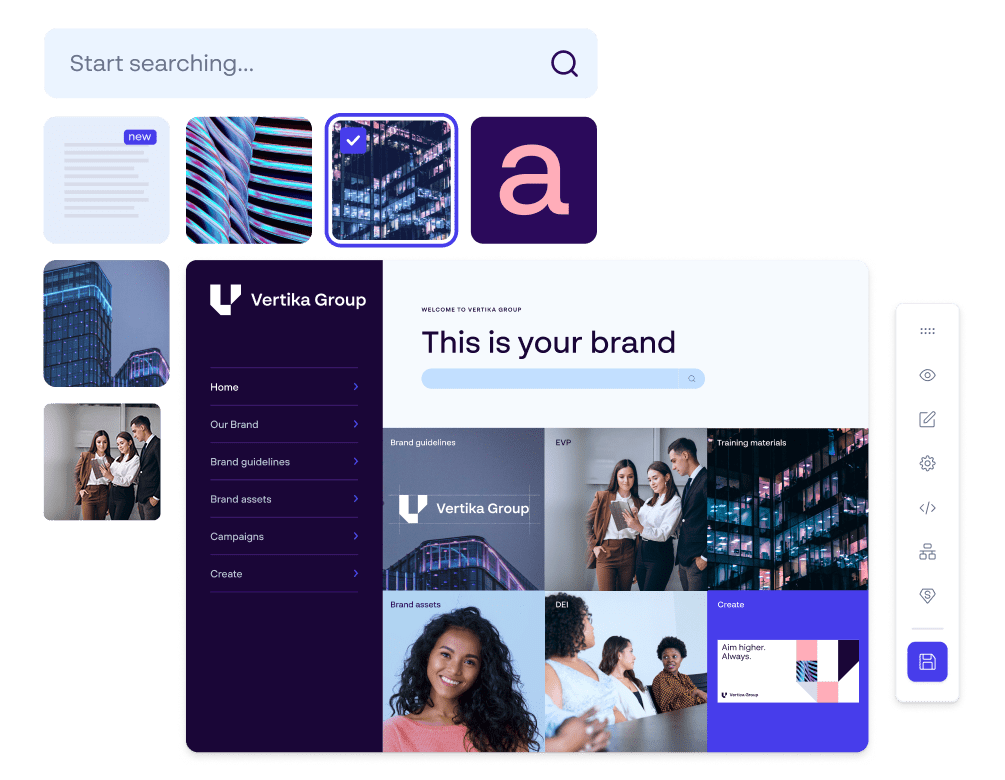
Papirfly is built for organizations that need a single governed home for their employer brand — the EVP, the talent acquisition campaign kit, the internal comms templates, and the localized assets that bring them all to market. The Papirfly Suite combines a fully customizable brand portal, Templated Content Creation, and Digital Asset Management in one integrated system.

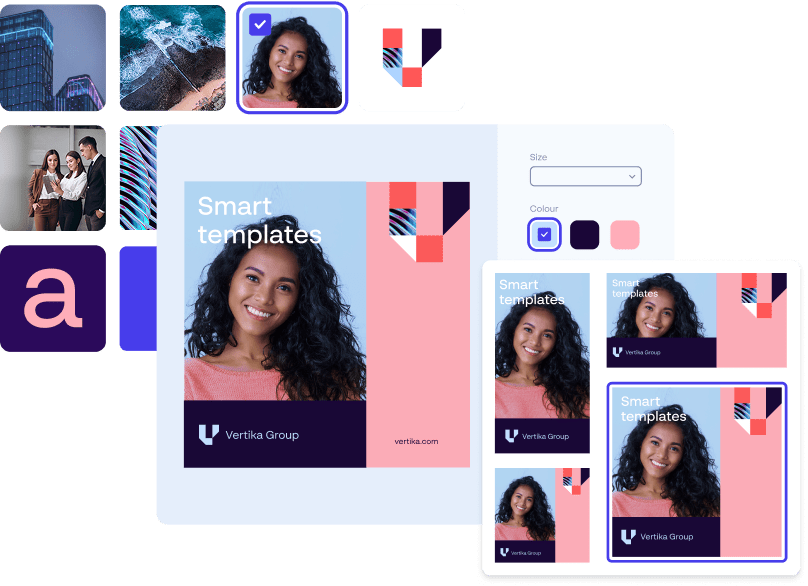
For employer branding specifically, the brand portal becomes the hub HR, recruiters, and local managers access daily — EVP guidelines, employer brand assets, internal comms templates, and approved campaign kits all in one place. Templated Content Creation lets local talent acquisition teams produce on-brand recruitment campaigns, internal comms, and EVP rollout materials in their own market without going through HQ or a creative agency.

The platform is used by enterprise employers including IHG and Goldman Sachs to govern brand at scale, with deployments built on AWS and certified to ISO 27001 and SOC 2 Type II. For employer branding, this matters because EVP rollouts, internal change comms, and international talent campaigns all sit inside the same governed system — one place for the brand candidates encounter before they ever apply, and the brand employees experience every day.

Key features:

  • Customizable brand portal as governed home for EVP, guidelines, and assets
  • Templated Content Creation for local TA, recruitment, and internal comms
  • Digital Asset Management with AI auto-tagging and rights management
  • Multi-brand, multi-region architecture for global employer brand rollout
  • Role-based permissions for HR, recruiters, partners, and local managers
  • ISO 27001 and SOC 2 Type II security for HR-data adjacent workflows

Pros:

  • Only platform combining a governed EVP portal, localized talent campaign production, and DAM in one suite
  • Local TA and internal comms teams produce on-brand campaigns without a central bottleneck
  • Adoption typically exceeds 90% portal access — making the governed path the default path
  • Suitable for both internal employer brand work and external talent acquisition campaigns

Cons:

  • Implementation requires proper scoping — heavier than a single-layer point tool
  • Best suited to enterprises managing employer brand across multiple markets or business units, not single-market hires
  • Custom pricing positions Papirfly at the higher end of the category

2. Symphony Talent – Best for recruitment marketing with EVP‑driven career sites

Best for: Talent acquisition teams that need a full recruitment marketing platform with strong EVP-led career site capability and programmatic candidate sourcing.

Pricing: $$$–$$$$

Symphony Talent is a recruitment marketing platform with a long history in employer branding, particularly through its career site builder and programmatic candidate marketing capability. It combines candidate CRM, programmatic ads, career sites, and EVP-led content into one system.

The career site builder is its standout strength — designed to surface EVP, employee stories, and culture content at the moment a candidate is researching the company. Programmatic advertising automates candidate sourcing across channels, and the CRM nurtures candidates through long hiring cycles. Symphony Talent has built a strong roster of enterprise customers across financial services, retail, and pharma.

The platform’s core orientation is recruitment marketing more than employer brand governance — EVP execution lives in the career site rather than as a portal for internal teams to access guidelines and assets. Organizations needing centralized employer brand governance across internal and external touchpoints may find the platform stronger at the top of the funnel than across the full employer brand surface.

Key features:

  • EVP-led career site builder with rich media support
  • Programmatic candidate advertising across channels
  • Candidate CRM with long-cycle nurture
  • AI-driven candidate matching
  • Recruitment marketing analytics
  • Integration with major ATS systems

Pros:

  • Mature recruitment marketing suite with strong enterprise track record
  • Career site capability is among the strongest in the category
  • Programmatic candidate sourcing reduces TA team manual workload
  • Long-cycle candidate nurture supports hard-to-fill roles

Cons:

  • EVP execution centred on career sites, less on internal employer brand governance
  • Less suited to organizations needing a portal for HR and internal comms guidelines and assets
  • Pricing positions it at the higher end for full-platform deployments

3. Phenom – Best for AI‑powered talent experience including employer brand

Best for: Enterprises wanting an AI-driven, end-to-end talent experience platform with employer brand at the centre of candidate, employee, and recruiter journeys.

Pricing: $$$$

Phenom positions itself as an Intelligent Talent Experience platform, with employer brand integrated into a broader suite covering candidate, employee, recruiter, and management experiences. Its Employer Brand product centralizes EVP, career sites, jobs content, and chatbot experiences for talent.

The platform’s strength is depth: AI-driven candidate matching, personalized career site experiences, employee referral capability, and analytics that connect employer brand investment to hiring outcomes. Phenom has a strong enterprise customer base including major global employers and is recognized in analyst evaluations for talent experience.

The platform is broad and complex, which is both its strength and its limitation. For organizations whose primary need is employer brand governance for HR and internal comms — separate from the full talent experience stack — Phenom can feel oversized. License and implementation cost reflects the breadth.

Key features:

  • AI-driven candidate experience and matching
  • Personalized career sites with EVP content
  • Talent CRM and email automation
  • Chatbot for candidate and employee questions
  • Analytics linking employer brand to hiring outcomes
  • Employee referral capability

Pros:

  • Genuinely end-to-end talent experience platform
  • Strong AI capability across candidate and employee journeys
  • Analytics tie employer brand investment to measurable hiring outcomes
  • Recognized in analyst evaluations for talent experience

Cons:

  • Breadth and complexity make it heavier than dedicated employer brand platforms
  • Less suited if the priority is centralized EB governance for HR and internal comms only
  • Implementation and license cost reflects platform scale

4. Beamery – Best for talent CRM combining sourcing and employer marketing

Best for: Enterprises whose employer brand strategy is tied closely to candidate nurture, talent pool development, and connecting employer brand to specific talent marketing campaigns.

Pricing: $$$–$$$$

Beamery is a talent lifecycle CRM with employer marketing, career site, and AI matching built in. The platform’s central concept is the candidate as a long-term relationship — sourcing, nurturing, and engaging through employer brand content over time.

Beamery’s CRM is among the strongest in the category, and its employer marketing capability allows TA teams to run talent marketing campaigns with EVP and employer brand content as the engagement vehicle. The platform integrates with major ATS systems and is used by enterprise employers across financial services, technology, and consumer brands.

Beamery’s primary lens is candidate relationship management — employer brand is treated as the content layer of nurture campaigns rather than as an organization-wide EVP governance system. Internal communications and EVP enforcement are not core capabilities.

Key features:

  • Talent CRM with long-cycle candidate nurture
  • Employer marketing campaigns with EVP content
  • Career sites with AI personalization
  • AI-driven talent matching and pipeline management
  • Integration with major ATS systems
  • Talent intelligence and pipeline analytics

Pros:

  • Strongest talent CRM among employer brand platforms in this list
  • Connects employer brand investment to specific talent campaigns
  • Strong enterprise customer base validates scale
  • AI matching reduces TA team sourcing workload

Cons:

  • Primary lens is candidate relationship, not enterprise EVP governance
  • Internal comms and EVP enforcement are not core capabilities
  • Less suited if the priority is governing employer brand across internal and external surfaces

5. Universum – Best for research‑driven employer brand strategy

Best for: Employer brand teams in the strategy, research, and EVP development phase — organizations defining or refreshing the employer brand before scaling execution.

Pricing: $$–$$$

Universum is a research-led employer branding platform with decades of experience in talent research, EVP development, and target audience benchmarking. Its core proposition is data on what talent actually wants — at country, industry, and target group level — and consultancy on how to translate that into a competitive EVP.

The platform combines research datasets (the World’s Most Attractive Employers rankings being its best-known output), benchmarking against competitors, and consultancy or workshops on EVP definition and rollout. Universum is widely used as the strategic input layer that shapes the employer brand before software and tactical execution take over.

Universum is not a content production platform, a portal, or a career site builder — its strength is research and strategy. Organizations needing a system to govern, distribute, or produce employer brand assets at scale will pair Universum’s research output with execution platforms downstream.

Key features:

  • Talent research datasets at country and industry level
  • Employer brand benchmarking against competitors
  • EVP development workshops and consultancy
  • Target audience insight by candidate persona
  • Annual rankings (World’s Most Attractive Employers)
  • Talent research surveys at scale

Pros:

  • Recognized authority in employer brand research and strategy
  • Research datasets are unmatched in scale and longevity
  • Benchmarking gives leadership board-level confidence in EVP direction
  • Bridges strategy and execution through workshops and frameworks

Cons:

  • Not a content production, distribution, or portal platform
  • Execution requires pairing with downstream software for asset governance and rollout
  • Subscription cost reflects research depth, not technology breadth

6. PathMotion – Best for peer‑to‑peer employee storytelling

Best for: Employer brand teams that want authentic employee voice — peer-to-peer Q&A and content from real employees — at the centre of their talent attraction strategy.

Pricing: $$–$$$

PathMotion is a dedicated employer branding platform built around peer-to-peer storytelling. Candidates ask questions and current employees respond, creating a searchable library of authentic content that surfaces on the company’s career site, social channels, and recruitment campaigns.

The platform’s premise is that candidates trust employees more than they trust corporate messaging. PathMotion turns that into operational employer brand content — moderated, taggable, and reusable across surfaces. Customers include major banks, professional services firms, and global engineering and consulting employers.

PathMotion is a specialist platform — its strength is authentic employee content, not full EVP governance, asset management, or career site building. It works best alongside an employer brand stack rather than as the sole platform.

Key features:

  • Peer-to-peer Q&A between candidates and employees
  • Moderated content library reusable across channels
  • Career site widget integration
  • Employee ambassador management
  • Tagging by role, location, and topic
  • Content analytics by audience and channel

Pros:

  • Specialist depth for authentic employee voice content
  • Content library compounds in value over time
  • Works alongside other EB platforms rather than replacing them
  • Strong fit for professional services and graduate recruitment

Cons:

  • Specialist platform — not full employer brand governance
  • Requires sustained employee participation to stay valuable
  • Less suited to industries with restricted employee social engagement

7. The Muse – Best for showcasing employer brand to active job seekers

Best for: Employer brand teams that want premium showcasing of culture, values, and EVP to high-intent job seekers via a third-party career discovery platform.

Pricing: $$–$$$

The Muse is a career discovery platform that lets employers build a rich, branded employer profile combining video, photography, and editorial-style content. Job seekers come to the platform actively researching companies, which makes it a high-intent audience for employer brand storytelling.

The platform offers branded employer pages, video tours, employee profiles, and integrated job postings. The Muse’s editorial focus differentiates it from review sites and job boards — employer presence is curated and storytelling-led rather than user-review driven.

The Muse is an external showcasing platform rather than a system for governing employer brand internally. Organizations needing portal-based EVP governance, asset distribution to internal teams, or templated talent acquisition production will need to pair The Muse with separate tools.

Key features:

  • Branded employer profile pages
  • Video and photography-led storytelling
  • Employee profiles and culture content
  • Integrated job postings
  • Audience targeting by candidate interest
  • Engagement analytics by content type

Pros:

  • High-intent job seeker audience — visitors are actively researching employers
  • Storytelling format suits culture-led EVP narrative
  • Editorial differentiation from review sites and job boards
  • Branded experience without development effort

Cons:

  • Third-party platform — does not govern employer brand internally
  • Pairs with rather than replaces employer brand systems of record
  • Audience reach concentrated in specific markets and segments

8. Glassdoor for Employers – Best for managing employer reputation and reviews

Best for: Employer brand teams that need to monitor and respond to public employer reputation — reviews, ratings, and CEO approval — across the largest review platform in the category.

Pricing: $$–$$$$

Glassdoor for Employers is the platform side of Glassdoor, the largest employer review and rating site. It gives employers a managed presence — branded profile, response tools for reviews, sponsored job posts, and analytics on how they compare with competitors.

The platform’s strength is reach and reputation: Glassdoor reviews influence candidate decisions, and the employer profile is a primary touchpoint in the candidate research journey. Enhanced features let employers add culture content, photos, employee stories, and respond to reviews to demonstrate engagement.

Glassdoor for Employers is a reputation management and showcasing platform, not a governance system for EVP and employer brand assets internally. Reviews are user-generated and cannot be removed — the platform is about managing the response, not the input.

Key features:

  • Branded employer profile with culture content
  • Review monitoring and response tools
  • Sponsored job posts
  • Employer benchmarking against competitors
  • Analytics on profile engagement and follow rates
  • Awards programme participation (Best Places to Work)

Pros:

  • Reach is unmatched for employer reputation
  • Influences candidate decisions earlier than career sites
  • Response tools turn reviews into engagement opportunities
  • Awards programme provides external validation

Cons:

  • Reputation management focus — not a system of record for employer brand
  • Reviews are user-generated and cannot be controlled
  • Pricing for enhanced presence can scale quickly with reach

9. CareerArc – Best for social recruiting and employer brand distribution

Best for: TA teams that want to automate employer brand and recruitment content distribution across social channels — especially LinkedIn, Facebook, X, and Instagram.

Pricing: $$–$$$

CareerArc is a social recruiting platform that automates the distribution of jobs, employer brand content, and culture posts across social media. The platform pulls jobs and content from the ATS or content library and publishes on schedule across the company’s social channels.

For employer brand teams, the value is distribution scale — turning a single content asset into hundreds of automated, branded social posts. CareerArc also includes a Glassdoor sync, employee advocacy capability, and analytics on candidate sources by channel.

CareerArc is a distribution layer rather than a content production or governance platform. Organizations needing centralized EVP governance or internal employer brand assets will use CareerArc alongside, not instead of, those systems.

Key features:

  • Auto-publishing of jobs and content to social channels
  • Glassdoor review sync
  • Employee advocacy capability
  • Source-of-hire analytics by channel
  • ATS integration for automated job feeds
  • Content scheduling and library

Pros:

  • Automates social distribution at meaningful scale
  • Reduces TA team manual posting workload significantly
  • Source-of-hire analytics tie social activity to hiring outcomes
  • Works alongside existing ATS and EB systems

Cons:

  • Distribution-focused — not a system for governing or producing employer brand assets
  • Requires source content from elsewhere
  • Less suited if the priority is centralized employer brand content governance

10. EveryoneSocial – Best for employee advocacy at scale

Best for: Organizations whose employer brand strategy depends on activating employees as content distributors at scale — particularly large white-collar workforces.

Pricing: $$–$$$

EveryoneSocial is an employee advocacy platform that gives employees a curated content library and tools to share company content on personal social channels. The platform is built around making sharing easy — pre-approved content, suggested copy, and analytics on reach and engagement.

For employer brand teams, EveryoneSocial extends reach far beyond corporate channels. Each employee becomes a distribution node for employer brand content, candidate stories, and culture posts. The platform is broader than employer branding alone — it is also used for thought leadership and product marketing — but employer brand is one of its strongest use cases.

EveryoneSocial is a distribution and engagement platform, not a system for governing or producing employer brand assets centrally. It pairs naturally with platforms that govern the brand and produce the content.

Key features:

  • Curated content library for employee sharing
  • Suggested social copy and post variants
  • Reach and engagement analytics by employee and content
  • Gamification and recognition for active sharers
  • Integration with corporate content systems
  • Role-based content channels

Pros:

  • Significantly extends employer brand reach via employee networks
  • Strong analytics on which content and which advocates drive reach
  • Broader use cases beyond employer branding (thought leadership, product)
  • Works well alongside dedicated employer brand governance platforms

Cons:

  • Distribution-focused — not a content governance or production platform
  • Requires sustained employee participation to stay valuable
  • Less suited to industries with restricted employee social engagement

5 main reasons why businesses need employer branding software

1. EVP governance keeps the employer brand consistent across markets and channels

The biggest cause of off-message employer brand content is not poor judgment in market — it is that the EVP, guidelines, and approved campaign kits are too hard to find. Local talent acquisition teams default to making it up. Employer branding software fixes this by making the governed path the easiest path.

  • Centralized EVP, guidelines, and assets accessible to TA, HR, and managers
  • Role-based permissions per market and function
  • Audit trail of what is in market, where, and approved by whom

2. Talent attraction is shaped by what candidates see before they apply

Candidates research employers across career sites, review platforms, social channels, and employee content long before they ever submit an application. Employer branding software gives organizations a consistent presence across that pre-application surface — so the brand candidates encounter matches the brand the company is trying to build.

  • Branded career sites with EVP-led content
  • Reputation monitoring across review platforms
  • Employee stories and peer-to-peer content
  • Consistent visual and verbal brand across surfaces

3. Internal communications shape how employees show up externally

The employer brand is lived inside the company before it is communicated outside. Employer branding software gives internal comms teams the templates, asset access, and approval workflow to roll out EVP-aligned messaging at scale — across markets, business units, and functions.

  • Templated internal comms aligned with EVP narrative
  • Asset access for internal events, town halls, and leadership comms
  • Approval workflows for brand and legal sign-off

4. Employee advocacy turns headcount into employer brand reach

Corporate channels reach a fraction of the audience that employees collectively reach on their own networks. Employer branding software gives advocacy programmes the content, suggested copy, and analytics to scale — turning employees into the most credible distribution channel a company has.

  • Curated content library for employee sharing
  • Suggested copy variants for posts
  • Engagement and reach analytics
  • Recognition and gamification for participation

5. Talent acquisition analytics make employer brand investment defensible

Employer brand spend has historically been hard to defend at board level — it sits between marketing and HR with no clean attribution. Employer branding software changes that by giving leadership measurable signals: review sentiment, application source quality, time-to-hire by EB campaign, and EVP penetration in target talent segments.

  • Review sentiment by location, function, and tenure
  • Application source attribution by channel
  • Time-to-hire and quality-of-hire analytics
  • Employer brand benchmarking against competitors

4 key features to look for in employer branding software

1. A governed home for EVP, guidelines, and employer brand assets

A scattered employer brand cannot be enforced. Look for a centralized brand portal that gives HR, TA, internal comms, and local managers the EVP, guidelines, approved assets, and templates in one place — with permissions configured to each audience.

  • Multi-region, multi-business-unit portal architecture
  • Role-based access for HR, TA, comms, partners, and local managers
  • Embedded guidelines alongside assets

2. Templated content creation for local and central teams

Without templates, local TA teams default to creating their own assets. Look for platforms that let HQ configure which fields are locked, which are editable, and which are open — so local recruiters can produce on-brand campaigns in minutes without breaking the EVP.

  • Locked, editable, and open field-level controls
  • Multi-channel output (print, social, email, video)
  • AI compliance check before review

3. Distribution and reputation across the candidate journey

Candidates form their employer perception across many surfaces — career sites, social channels, review platforms, employee content. Look for capabilities that connect those surfaces: career site EVP content, social distribution, review monitoring, and employee advocacy where appropriate.

  • Career site or career hub builder
  • Social distribution and scheduling
  • Review monitoring and response
  • Employee advocacy capability

4. Analytics that connect employer brand to hiring outcomes

Employer brand investment must be measurable at board level. Look for platforms that link EB activity to source-of-hire, time-to-hire, application quality, and audience sentiment — not just impressions and clicks.

  • Source-of-hire analytics by channel
  • Time-to-hire by EB campaign
  • Audience sentiment by market and function
  • EB benchmarking against competitors

How to choose the right employer branding software

  1. Assess where your employer brand currently breaks down. Identify whether the gap is governance (EVP and guidelines are inaccessible), production (local teams have no templates), distribution (content does not reach the right audience), or measurement (you cannot prove ROI) — most teams have at least two.
  2. Define your requirements across EVP, talent acquisition, and internal comms. Translate the audit into the specific outcomes that matter: consistency, candidate quality, time-to-hire, internal sentiment, and audience reach.
  3. Evaluate team and organizational scale. Map every audience that touches the employer brand — HR, TA, internal comms, local managers, employee advocates, partners — and verify the platform serves the broadest one.
  4. Consider integration with the existing HR and TA stack. Validate ATS, HRIS, content, and analytics integrations against your specific systems rather than against a generic logo wall.
  5. Calculate total cost of ownership. Add license, implementation, and content production cost — and weigh that against agency fees, redundant production, time-to-hire reduction, and reputation risk the platform replaces.

Employer branding software use cases by industry

1. Financial services: EVP governance across regulated regional markets

Financial services employer brand teams face a structural challenge: every candidate touchpoint may need legal review, regional regulation differs, and EVP narratives must be consistent across the global business. Employer branding software gives the central team a governed home for EVP, with templated regional execution that satisfies local compliance review.

2. Professional services: Authentic employee voice for graduate recruitment

Professional services and consulting firms hire heavily from graduate and early-career segments where peer-to-peer content drives the most impact. Employer branding software with employee storytelling capability gives candidates the authentic insight they trust, while the central EB team retains brand governance and moderation.

3. Retail and hospitality: Multi‑property and franchise talent campaigns

Retail and hospitality groups recruit at hundreds of locations, often through franchisees or local managers. Templated Content Creation lets each location produce on-brand recruitment posters, social posts, and digital ads in their own market — without breaking the global EVP.

4. Technology and engineering: Talent CRM with employer brand at the centre

Tech and engineering employers compete in deep, narrow talent pools where the same candidates are nurtured for months or years. Employer branding software with talent CRM capability lets EB content carry that nurture — feeding candidates EVP and culture content over time, not just at the point of application.

Get started with employer branding software

Employer brand is no longer a poster on the careers page. It is the system of touchpoints — career sites, review platforms, social channels, employee content, internal comms, EVP execution — that shape the brand candidates encounter and employees experience. The right platform closes the governance, production, and distribution gaps across environments.

If you are evaluating platforms to govern, produce, and scale your employer brand across global markets, internal audiences, and external channels, Papirfly is worth a closer look. The Papirfly Suite combines a governed EVP portal, Templated Content Creation for local talent campaigns, and Digital Asset Management as a single system rather than a stitched-together stack.

See Papirfly in action

Ready to see what governed, scalable employer branding looks like across your markets?

See Papirfly in action

Ready to see what governed, scalable employer branding looks like across your markets?

Ready to see what governed, scalable employer branding looks like across your markets?

Frequently asked questions about brand management software

What is employer branding software?

Employer branding software is a centralized platform that helps organizations govern, produce, and distribute their EVP and employer brand across talent acquisition, internal communications, and global markets. The most complete platforms combine a brand portal, templated content creation, and analytics.

What is the difference between employer branding software and an ATS?

An ATS manages candidates and applications inside the hiring process. Employer branding software governs the brand candidates encounter before they apply — career sites, EVP, employee content, social presence, and reviews. They serve different stages and rarely replace each other.

What features should I look for in employer branding software?

Prioritize a governed brand portal for EVP and guidelines, templated content creation for local TA and comms teams, distribution across career sites and social channels, and analytics that tie EB activity to source-of-hire and time-to-hire. See our best brand management software guide for adjacent context.
How does employer branding software improve talent acquisition?

It improves candidate quality, time-to-hire, and conversion by giving candidates a consistent, credible employer brand across every touchpoint. Local talent acquisition teams produce on-brand campaigns faster, and analytics connect employer brand activity to specific hiring outcomes.

How much does employer branding software cost?

Mid-market platforms run from a few thousand to tens of thousands of dollars annually. Enterprise platforms — Papirfly, Phenom, Symphony Talent, Beamery — use custom pricing, with annual agreements typically ranging from $25,000 to well over $100,000 depending on scale.

How long does it take to implement employer branding software?

Implementation runs from four weeks for a focused career site or advocacy deployment to six months or more for a full EVP portal, content production, and integration rollout. Success depends on how well EVP and templates are scoped before go-live.

Employer Branding

How technology fuels employer brand transformation

In a competitive talent market, a strong employer brand isn’t just an advantage—it’s a necessity. As organizations grow and evolve, refreshing an employer brand ensures it remains compelling, consistent, and engaging. But achieving this at scale presents a common challenge: how do you maintain brand consistency while allowing for local nuances?

The answer lies in technology.

Maintaining employer brand consistency across global recruitment teams

Rebranding on a large scale is complex. Variations in brand representation can weaken impact, create confusion, and dilute the core message. Talent management leaders know that empowering employees to bring the brand to life—without compromising its integrity—is critical.

PepsiCo faced this exact challenge when revamping its employer brand. With teams operating in 77 countries and over 318,000 employees, maintaining a cohesive brand identity while allowing for regional adaptation was no small feat. As Sally Elbassir, Associate Manager of Global Talent Attraction & Engagement at PepsiCo, explained:

“It was challenging to maintain brand consistency. All it takes is a little tweak here and a little tweak there, and then suddenly your brand doesn’t look like your brand anymore.”

Without the right technology, ensuring consistency across regions, teams, and channels is nearly impossible.

A centralized brand governance system for a consistent employer brand

To overcome these challenges, companies like PepsiCo are turning to digital asset management (DAM) and rebranding software—comprehensive systems designed to centralize, simplify, and scale employer brand governance.

Key benefits include:

  • One source of truth – A brand portal for brand guidelines, approved assets, and templates ensures every team has access to the right materials.
  • Streamlined content creation – Pre-approved templates enable employees to quickly produce on-brand assets without reliance on external agencies.
  • Effortless localization – Local teams can adapt materials for cultural relevance while maintaining global consistency.
  • Workflow efficiency – Automated approvals and structured asset management eliminate bottlenecks and reduce delays.

PepsiCo leveraged this approach to empower teams globally. “Papirfly is a tool that everyone feels empowered to use,” Elbassir noted. “We made sure that we set it up so that folks could take the templates and use them to build assets that are still customized but also maintain the global brand.”

Deliver a scalable, sustainable employer brand strategy

By embedding digital asset management and rebranding management software into an employer brand strategy, organizations can achieve:

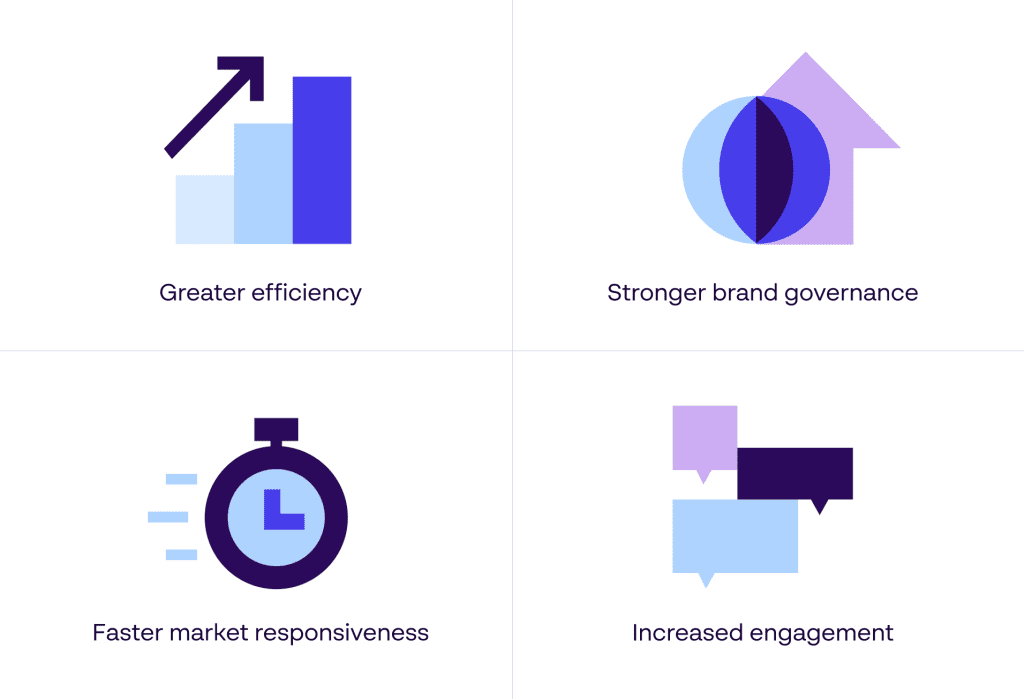
  • Greater efficiency – Teams can produce high-quality, on-brand content in-house, reducing costs and speeding up execution.
  • Stronger brand governance – Centralized control ensures assets remain compliant, while flexible tools empower local talent managers.
  • Faster market responsiveness – Campaigns roll out seamlessly across multiple regions, keeping pace with recruitment demands.
  • Increased engagement with next-gen employees – Younger talent expects visually compelling, interactive, and dynamic content that resonates with their digital-first mindset.
An infographic showing key benefits of rebranding management software for employer branding.

The urgency: Why now is the time to invest

According to Forrester’s 2025 Predictions Report, companies are under increasing pressure to demonstrate ROI on their technology investments. Many organizations that fail to build a structured approach to brand governance will scale back investments prematurely, putting them at a long-term disadvantage.

Forward-thinking leaders must prioritize solutions that balance immediate wins with long-term sustainability. Investing in a DAM solution and rebranding management software now ensures a scalable, future-proof foundation that drives efficiency and brand integrity.

Additionally, with Millennials and Gen Z comprising a growing share of the workforce, employer brands must embrace innovative, technology-driven approaches to content creation. Digital tools allow for the seamless production of engaging, creative assets that align with how these generations consume and interact with content—whether through short-form video, personalized visuals, or interactive storytelling.

Lessons for employer brand professionals

For HR professionals, recruitment marketers, and employer brand managers considering an employer brand refresh, the next steps are clear:

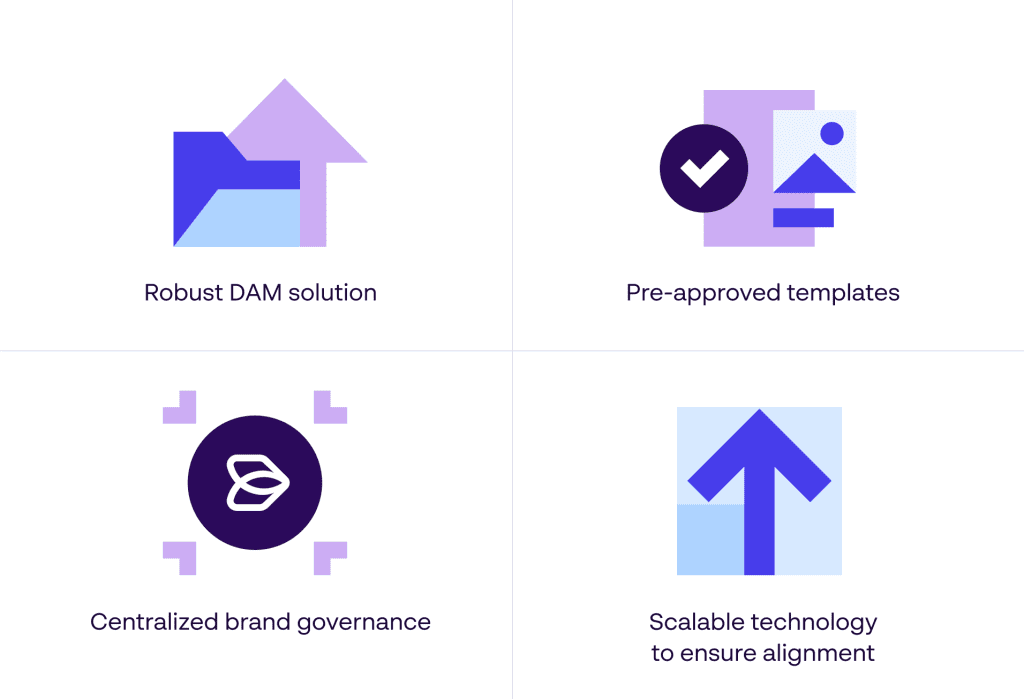
  • Invest in the right tools – A robust digital asset management and content creation solution ensures brand consistency and efficiency.
  • Empower local teams – Giving employees access to pre-approved templates reduces bottlenecks and increases engagement.
  • Centralize brand governance – A single, structured system prevents inconsistencies and ensures seamless execution.
  • Scale with confidence – Technology enables a brand to grow, adapt, and maintain alignment across global teams.
  • Create content that resonates with new generations – Leveraging digital tools enables more engaging and relevant employer branding content that attracts younger talent.
An infographic showing key tactics employer brand managers can ensure a brand refresh is a success.

Rebranding isn’t just about new messaging or fresh visuals—it’s about creating a system that sustains and scales an employer brand over time. With the right technology, businesses can maintain brand integrity while giving teams the flexibility to bring it to life.

Ready to evolve your employer brand with confidence and clarity?

Explore our rebranding solutions and discover how the right technology empowers local teams, ensures brand consistency, and accelerates impact across every market.

Employer Branding

Maintaining DEI communications on limited budgets in the automotive industry

As DEI (Diversity, Equity and Inclusion) initiatives continue to be deprioritized across the automotive industry due to budget cuts, maintaining strong, consistent DEI communications remains essential for talent acquisition, employee retention and brand reputation:

Infographic displaying the importance of DEI communications for the automotive industry - Sources: Glassdoor, Kantar, Diversio

Rather than eliminating DEI efforts, brands can leverage automated marketing technology to sustain and even enhance their messaging at a fraction of the cost.

Templated content creation tools empower anyone in your organization to produce high-quality, on-brand materials. A well-organized Digital Asset Management (DAM) system streamlines campaign execution and ensures compliance.

Below, we’ll explain how Papirfly’s powerful Digital Asset Management and Content Creation Suite can make your DEI communications more cost-efficient, more consistent and more effective across your company.

4 ways Papirfly’s solutions deliver cost-efficient DEI communications at scale

1. Achieve scalable DEI content with on-brand content creation tools

Manual content creation is a major drain on automotive marketing budgets:

  • Content production is time-consuming and resource-heavy
  • It limits scalability and diversity
  • It prevents localization and personalization
  • It slows campaign execution
  • It impacts brand consistency

Papirfly’s on-brand content creation software enables you to not only maintain but expand your DEI communications.

Intelligent design templates lock in key branding elements (logos, slogans, colors, etc.) so your teams can create content efficiently while staying on-brand. No more bottlenecks that delay campaign launches or result in low-quality, off-brand materials.

Papirfly asset highlighting 6 powerful benefits of on-brand content creation tools for the development of DEI communications for automotive brands

Plus, because our templated content creation solution is so intuitive, anyone can produce DEI communications – no design skills required. So if your local dealership or factory runs a recruitment campaign, they can generate content in-house, rather than rely on HQ.

Speaking of local teams, templates include customizable text and image fields, so regional teams can create localized employer brand campaigns. Combined with automated approval workflows that suit a dealership network structure, this software delivers truly agile, self-sufficient marketing.

Even without a dedicated DEI team, on-brand content creation software lets you produce high-impact, multichannel campaigns faster, more consistently and more cost-effectively than ever.

Papirfly statistics showcasing the value that on-brand content creation tools offer automotive companies in reducing the effort and cost of asset creation

2. Ensure standardized, compliant DEI messaging with DAM

Alongside our templated content creation solution, Papirfly’s DAM software streamlines your DEI communications, ensuring structure, compliance, and efficiency.

By centralizing all DEI and employer brand content, our DAM system eliminates scattered assets. Assets can be tagged and categorized based on location, users, language and beyond, so your messaging is nuanced to the relevant region, while custom access control lets you manage who can retrieve particular assets.

This seamless access to all DEI materials empowers both HQ and regional teams to execute campaigns on time and reduce wasted resources.

Beyond this, our DAM solution saves time and money by automating compliance across your digital assets – something few DAM systems offer:

Papirfly asset showing how its DAM system helps brands manage compliance across their digital assets and DEI communications

Total compliance and total control over your digital DEI assets – Papirfly’s DAM system ensures only approved, on-brand content reaches your marketing channels.

3. Educate your frontline employees with powerful brand portals

To empower frontline workers to create impactful DEI content, they need a deep understanding of your brand. Papirfly’s brand portal makes this seamless by centralizing brand guidelines and campaign materials in one accessible space.

Unlike standard DAM solutions, brand portals ensure employees can easily educate themselves on how to communicate DEI messaging effectively. 

You can create custom campaign or regional pages, clarifying what assets your people can use, available templates and general guidelines. They are simple to make, and you can assign access rights based on country, region and other parameters.

By integrating seamlessly with our DAM software, intuitive brand portals cut search time and provide clear content direction. The result? Consistent, authentic DEI communications across all channels, and employees inspired to be ambassadors for your automotive brand.

Infographic showcasing that 68% of employees say they do not understand their company’s vision, highlighting the need for brand portals - Source: European Leaders

4. Measure the ROI of your DEI communications with real-time analytics

Tracking the effectiveness of your DEI communications is key to continuous improvement. Papirfly’s marketing data and analytics tools provide real-time insights into what content your teams are engaged with across your organization.

With our tools, you can analyze campaign adoption rates to see which assets are being accessed by your dealerships and regional teams. 

You can also gather insights from successful, popular campaigns and apply those insights to underperforming regions, refining your global DEI communications strategy.

With a customizable analytics dashboard, you can focus on the data that matters most – filtered by date, region, and asset type – ensuring your DEI communications remain impactful, data-driven, and consistently optimized.

Papirfly asset illustrating the cost and performance improvements that automated DEI marketing technology offers over a manual approach

Papirfly: Your key to successful DEI communications at scale and under budget

Even as DEI departments disappear across the automotive industry, strong, sustainable DEI communications remain crucial for employee recruitment and retention.

Papirfly’s dynamic Digital Asset Management and Content Creation Suite is the only way to maximize the reach of your DEI content against ever-shrinking budgets. 

Through our smart content creation templates, cohesive DAM system and insightful brand portals, you not only replace the role of a DEI department or team. You take the volume, quality and consistency of these communications to the next level, all while staying within budget.

Ready to create compliant DEI communications at one-third the cost?

Discover how our solutions work for scaling all your on-brand content needs. Explore now.

Employer Branding

The role of employer branding in attracting top pharma talent

In today’s highly competitive pharmaceutical sector, companies face an increasingly complex challenge in attracting and retaining top talent. Traditional recruitment methods are no longer enough in an industry that demands innovation, speed, and expertise. As the pharma industry grapples with a shortage of skilled professionals, the importance of employer branding has never been more critical.

Employer branding goes far beyond simply promoting a company’s products and services—it’s about defining what it’s like to work there. A strong employer brand fosters trust, sets a company apart from its competitors, and signals to potential employees that the organization values their growth, fosters a positive work culture, and is committed to employee well-being. But with the talent market flooded with outdated job descriptions and a lack of differentiation, can pharma companies afford to overlook this key aspect of recruitment?

What makes a strong employer brand?

A compelling employer brand isn’t just about creating a catchy tagline or designing an attractive job posting. It’s the essence of what makes a company a desirable place to work. At its core, a strong employer brand revolves around a clear and compelling Employer Value Proposition (EVP)—a statement that defines what the company stands for and the unique benefits it offers to employees.

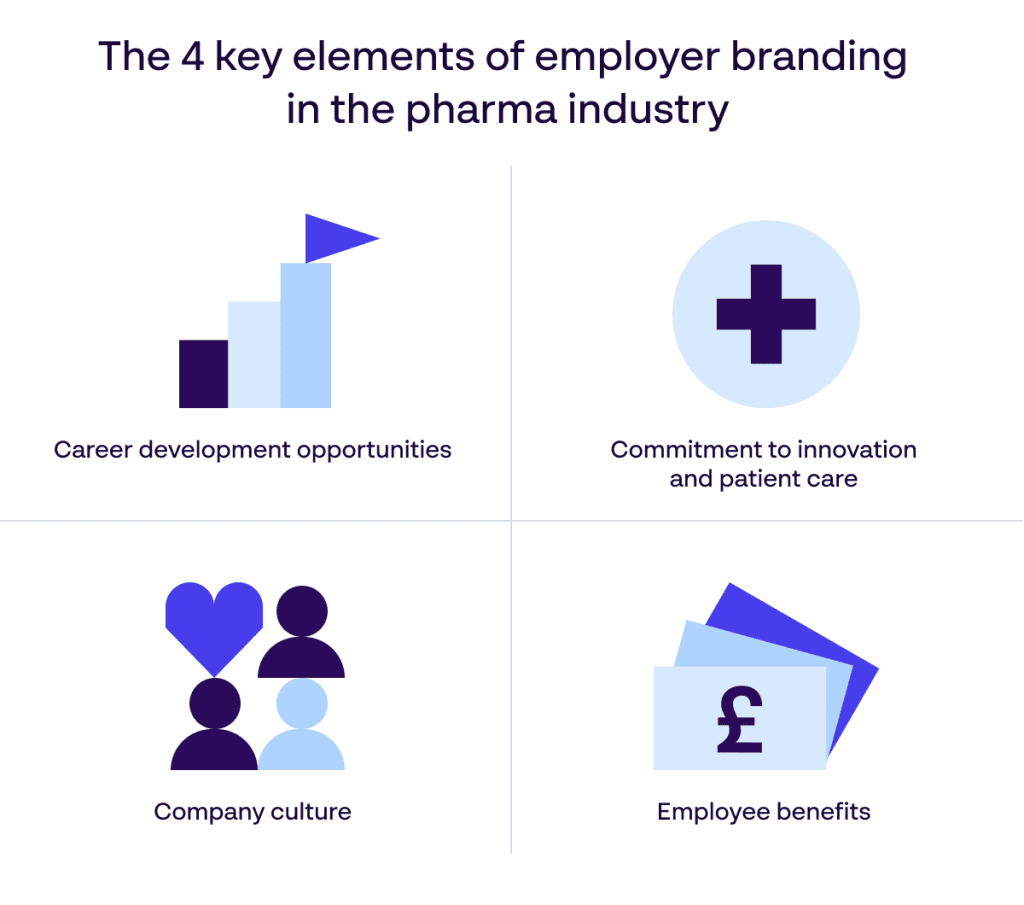
In the pharma industry, a successful employer brand highlights elements such as:

  • Career development opportunities: Pharma professionals are looking for growth opportunities that align with their ambition. A strong employer brand offers clear pathways for progression.
  • Commitment to innovation and patient care: Talented individuals in pharma are deeply motivated by the impact they can have on healthcare. A company that demonstrates innovation in treatments and services will attract professionals driven by this mission.
  • Company culture: A strong culture that values collaboration, diversity, and work-life balance can make a company stand out as a desirable place to work.
  • Employee benefits: Today’s top candidates expect more than just a paycheck. Companies that demonstrate a commitment to employee well-being, such as flexible working arrangements, wellness programs, and competitive benefits packages, appeal to the best talent.
4 Key factors influencing employer branding in the pharmaceutical industry - Infographic

But creating a strong brand isn’t enough if the messaging isn’t consistent. Pharma companies must ensure that their brand is communicated uniformly across all touchpoints—job boards, company websites, social media, and recruitment campaigns. Consistency in messaging helps reinforce the company’s values, making it easier for potential employees to identify with the brand.

How employer branding attracts top pharma talent

When potential candidates evaluate where they want to work, one of the first things they consider is a company’s reputation. A strong employer brand increases the trust and credibility of an organization, making it more attractive to high-caliber professionals.

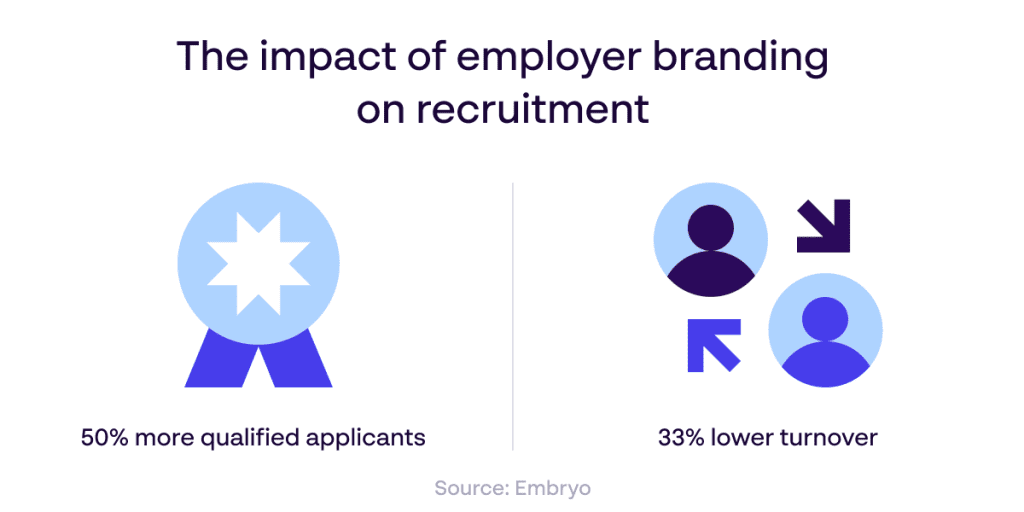
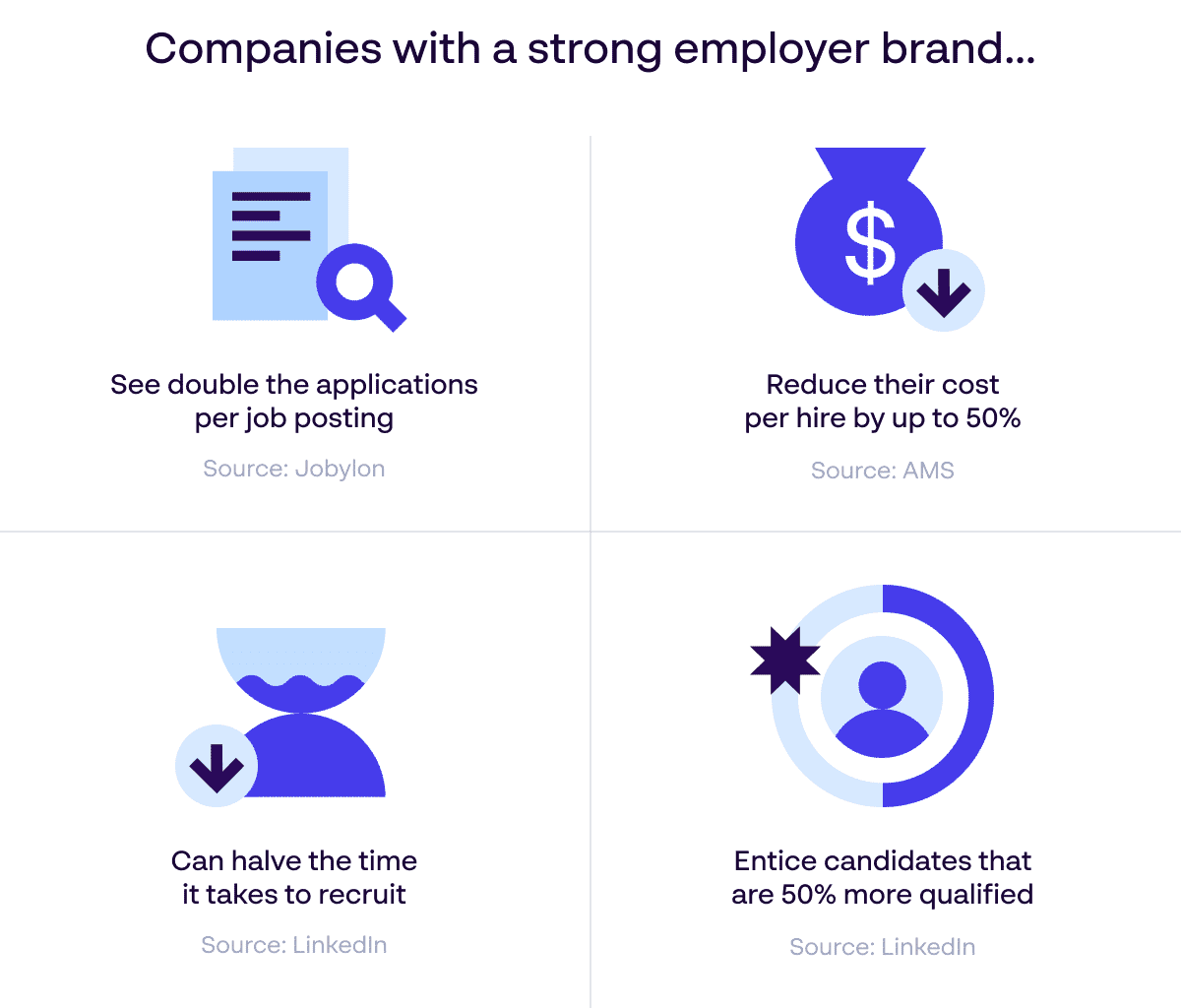
In fact, 56% of pharma companies report significant challenges in hiring for critical positions due to a shortage of qualified professionals (PharmaTimes). However, companies with strong employer brands see 50% more qualified applicants and 33% lower turnover (LinkedIn Talent Solutions). This highlights just how important it is to differentiate through your employer brand, especially when hiring for hard-to-fill positions in the pharmaceutical industry.

A strong employer brand also enables organizations to streamline their recruitment process. Candidates who resonate with a company’s values and culture are more likely to apply, reducing the time it takes to fill key positions and cutting down on recruitment costs. Moreover, it helps reduce employee turnover, as candidates are more likely to stay with companies that align with their personal and professional values.

With growing competition for talent in the pharma industry, having an attractive employer brand isn’t just a “nice-to-have”—it’s a strategic advantage.

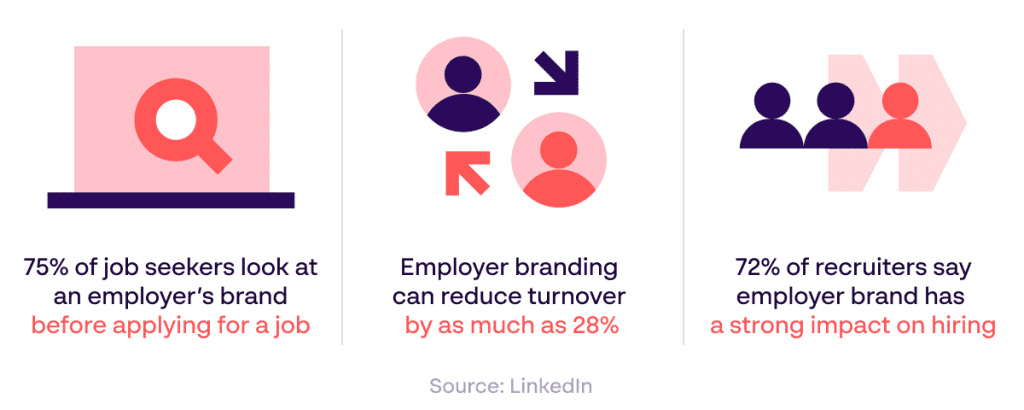
How employer branding improves hiring and retention - Papirfly Infographic - Source: LinkedIn

The importance of consistency and authenticity in employer branding

While a strong employer brand can attract candidates, authenticity and consistency are what will make them stay. Pharma companies must communicate their values not just through marketing materials but also through the experiences of current employees. Encouraging your employees to act as brand ambassadors can be one of the most effective ways to communicate your company culture authentically.

Employee testimonials, work-life balance highlights, and showcasing internal initiatives such as professional development programs help potential candidates envision themselves within the organization. It’s about giving candidates an insider’s view of what it’s really like to work at your company, not just what you say in a job posting.

Equally important is maintaining consistency across all platforms, ensuring that every touchpoint—from job descriptions to social media posts—aligns with the company’s core values and messaging. Inconsistent branding can confuse candidates, leading to potential misunderstandings about what the company stands for and whether it’s the right fit.

How to build a consistent and authentic employer brand

In the competitive world of pharma recruitment, building a consistent and authentic employer brand is essential for attracting top talent. However, achieving this requires the right tools and strategies.

Pharma companies, especially those operating across multiple markets, need tools that streamline their content creation process. This allows them to maintain a consistent brand message across different regions, while still being localized for each market. For multinational companies, scaling employer branding efforts quickly without compromising on brand integrity is crucial. Whether it’s for job postings, recruitment ads for social media, or posters for recruitment fairs, maintaining a cohesive and on-brand narrative is vital and can make all the difference in attracting the best talent.

The challenge of outdated job profiles

A significant challenge in pharma recruitment is the prevalence of outdated job descriptions and role profiles. These documents often fail to reflect the evolving culture and values of the company. Worse, outdated content can make a company seem out of touch with current industry standards. In an industry where top talent is in high demand, this can seriously impact a company’s ability to attract quality candidates.

For many organizations, keeping job descriptions and recruitment materials up to date and aligned with company culture is an ongoing struggle. The right tools can help address this. Templated content creation solutions enable teams to quickly update job descriptions and recruitment assets, ensuring the most current, relevant messaging. These tools make it easy to keep job descriptions accurate and in line with the company’s culture, helping to attract the right talent. This proactive approach helps businesses stay competitive in a fast-moving talent market.

Digital Asset Management solutions also ensure that all content, whether recruitment-related or internal, aligns with the company’s branding strategy, providing a unified approach to employer branding that strengthens both recruitment and retention.

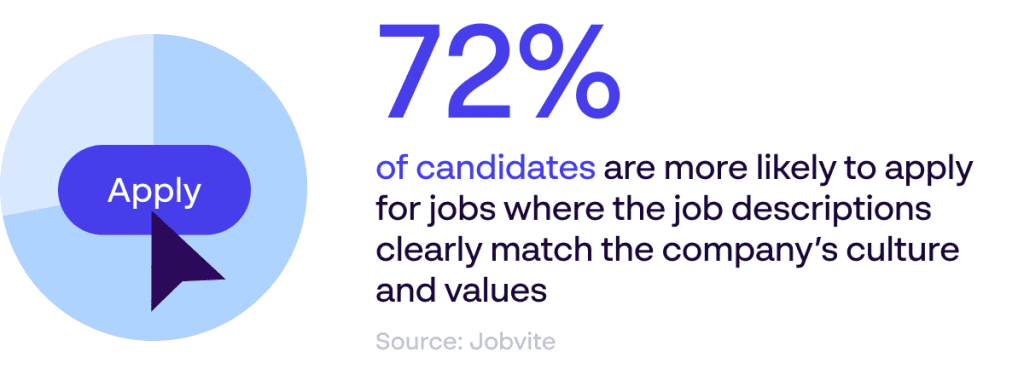
The role of company culture in job applications - Infographic - Source: Jobvite

A streamlined approach to employer branding

To tackle these challenges, teams need more than just basic solutions. What they need are Digital Asset Management and on-brand content solutions that streamline the content creation process across all platforms. This allows recruitment teams to scale their employer branding efforts quickly and ensure that every piece of communication—whether it’s a job posting, social media ad, or internal memo—aligns with the company’s core values.

By integrating the right solutions, pharma companies can create globally consistent and locally relevant recruitment materials, which helps attract top talent from multiple markets without compromising brand integrity.

Solving the challenges of employer branding to attract top pharma talent

Building a strong employer brand is no longer optional—it’s a necessity in today’s competitive pharma recruitment landscape.  It helps attract and retain top talent by building trust, reducing recruitment costs, and showcasing what makes your company a great place to work. 

Papirfly’s on-brand content creation and Digital Asset Management solutions enable pharma companies to efficiently scale their employer branding efforts while ensuring their messaging is both globally consistent and locally relevant. These tools enable recruitment teams to quickly update job descriptions and other recruitment assets, ensuring they always reflect the company’s culture and values.

By maintaining consistency, pharma companies can not only build trust with candidates, attract the right talent, and reduce recruitment costs but also retain talent by showcasing what makes them a great place to work.

Ready to enhance your employer brand and attract the best pharma talent?

Explore how Papirfly can help your company create a cohesive, engaging, and consistent employer brand. Stand out in the talent marketplace and attract the best pharma talent.

Employer Branding

Driving the future: Recruiting top talent in the evolving automotive industry

The automotive industry is undergoing a fundamental transformation. As electric vehicles (EVs) and digital technologies reshape the landscape, traditional roles like “building a car” are evolving into “programming a car.” To stay ahead, automotive companies must attract tech-savvy talent—engineers, data scientists, and AI specialists. For HR leaders, creating fast, consistent, and compelling recruitment campaigns is essential to meeting this challenge.

The challenge: Recruiting in the EV era

In the age of EVs and digital transformation, HR leaders face several key challenges:

1. Adapting to a new talent landscape

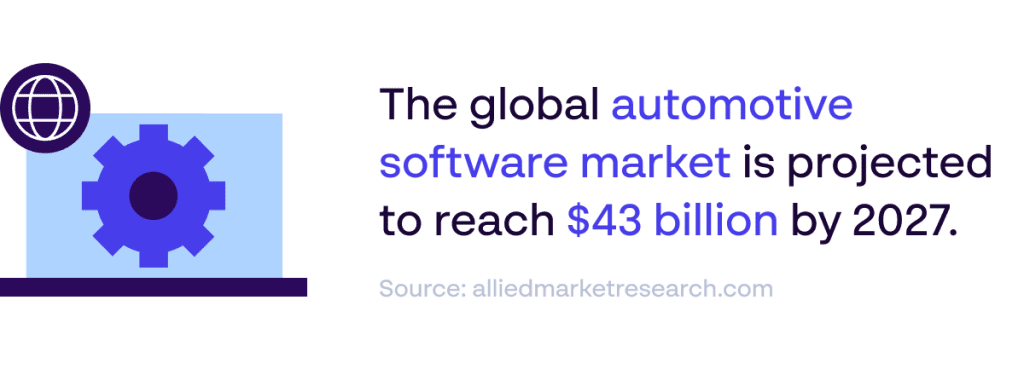
Demand for software engineers, AI specialists, and data scientists in the automotive industry has surged. The global automotive software market is projected to reach $43 billion by 2027. Yet, many companies struggle to position themselves as the right employer for this evolving workforce. With increased competition from tech firms and startups, automotive brands must highlight their unique advantages to stand out. This includes showcasing their role in cutting-edge innovations, sustainability efforts, and the impact of their technology on the future of mobility.

Papirfly Graphic with automotive software growth prediction of $43 billion. Source: alliedmarketresearch.com

2. Staying agile in a rapidly changing industry

Innovation in EVs and digital technologies moves at an unprecedented pace. Recruitment campaigns must evolve just as quickly—outdated messaging risks making a company seem irrelevant to prospective candidates. HR leaders must develop agile strategies that allow them to swiftly adjust messaging, ensuring their employer brand stays aligned with industry trends. Additionally, leveraging real-time data insights can help HR teams refine job descriptions, highlight in-demand skills, and tailor outreach to match shifting workforce expectations.

3. Building a consistent employer brand

Differentiation is critical. Automotive companies need to communicate clearly and consistently why they are the ideal choice for top talent. Without a strong and unified employer branding, attracting the right candidates becomes increasingly difficult. A well-defined employer brand not only strengthens recruitment but also enhances employee retention, as candidates are more likely to stay with companies that align with their values and career aspirations. Consistency in branding across digital platforms, job descriptions, and social media is essential in reinforcing credibility.

4. Balancing global consistency with local relevance

While the EV revolution is global, recruitment strategies must resonate locally. Companies must develop localized content tailored for specific markets while maintaining alignment with their global employer brand. Cultural nuances, regional job expectations, and local talent pools all play a role in shaping recruitment strategies. By ensuring recruitment messaging is adaptable yet consistent, companies can engage candidates more effectively while maintaining a cohesive global identity.

Meeting HR challenges in the automotive sector

HR teams must ensure their recruitment strategies reflect industry changes, stay competitive in talent acquisition, and establish a strong employer brand. The ability to swiftly update recruitment campaigns, reduce time-to-market for content, and maintain consistency in messaging is crucial. Companies that effectively execute these strategies will build trust with prospective hires and strengthen their position as an employer of choice. Additionally, integrating digital tools that streamline recruitment efforts—such as AI-powered resume screening, automated workflows, and data-driven insights—can significantly enhance efficiency and outreach.

The solution: How Papirfly empowers automotive recruitment

Addressing these challenges requires a solution that enables agility, consistency, and efficiency. Papirfly’s Digital Asset Management and on-brand content creation solutions empower HR teams to create recruitment campaigns that evolve with industry trends, attract top talent, and reinforce a strong employer brand—globally and locally. By centralizing assets, ensuring brand consistency, and offering intuitive tools for customization, Papirfly allows organizations to scale their recruitment efforts efficiently. With built-in compliance features, seamless collaboration, and localization capabilities, recruitment teams can maintain messaging accuracy while adapting to regional needs.

Automotive Employer Branding is easy with Papirfly - find out how we can help.

Employer Branding

Localized employer branding: Your key to engaging with regional talent

In today’s highly competitive job market, your employer brand is vital. It’s the key to attracting top talent, retaining your existing employees, and distinguishing yourself against a backdrop of ever-increasing competition.

And, while a compelling Employee Value Proposition (EVP) and an authentic, attractive culture are both important parts of a world-class employer brand – for global companies, few things are more crucial to connect with candidates than personalized, localized messaging. 

This means more than just writing job descriptions in relevant languages or using local imagery in your onboarding materials. For the best localized employer brand messaging, it’s important to tailor your marketing assets to the cultural sensitivities of local markets.

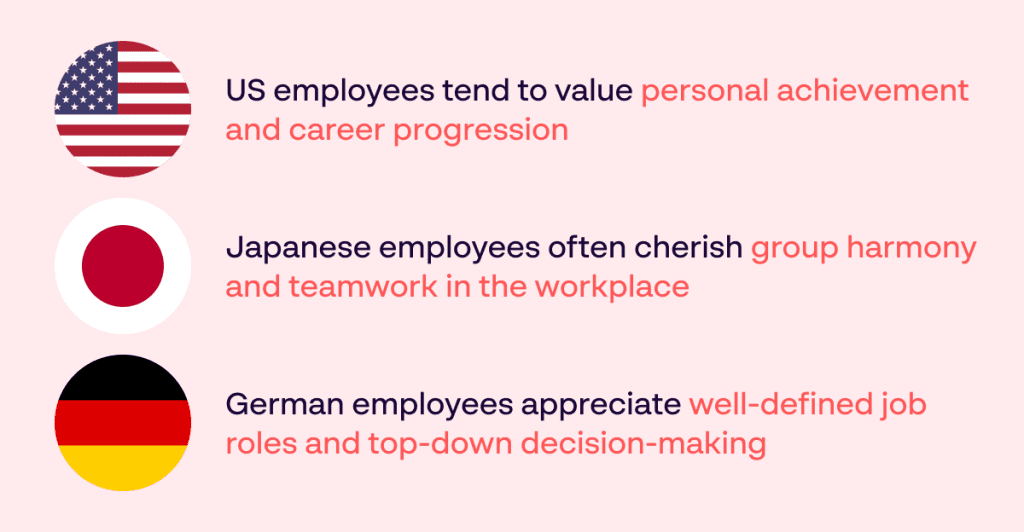
Imagine you were recruiting candidates in Japan. Because Japanese work culture tends to value collectivism, where a company is often viewed like a family, you would want to create content that centers around your team members and company culture. 

However, this ‘team-focused’ recruitment strategy likely wouldn’t spark the same interest with American job seekers. In this instance, you might speak to this region’s individualism by highlighting employee perks, learning and development opportunities, or flexible working options on your adverts.

Respecting a culture’s unique nuances is essential for attracting and retaining top talent. It shows them that your company values their specific requirements, rather than pushing ahead with a generic, one-size-fits-all message for your global workforce.

But what more does localized employer branding do for your company? And how do you actually implement this in your marketing? In this article, we’ll dive deeper into the topic of employer brand localization and show you how to get started. 

Why is region-specific employer branding so important?

According to recent figures, as many as 75% of global firms have found it hard to get the right talent through the door. If you’re one of the thousands of employers in this difficult position, you’ll know that long-term vacancies can cost your business dearly in time, money and productivity.

To give yourself an edge in local talent attraction, regional employer branding allows your roles to better resonate with job seekers right out the gate. By wrapping your collateral in imagery or elements that speak to their culture or surroundings, you already demonstrate that your brand aligns with them directly.

This can help you fill your positions up to 50% faster, and boost your chances of securing a quality hire by as much as three times

Plus, by engaging your existing employees with job materials that reflect their culture and location, you can improve retention internally by as much as 28%. Aside from easing the pressure on your recruitment and hiring processes, engaged workplaces can be 17% more productive and 21% more profitable. 

On top of this, localized employer brand content lays the foundation for a more positive global reputation. Even if your internal employees and job seekers aren’t the target audience for your corporate branding, giving these groups a positive experience sends a strong signal to customers, stakeholders and other audiences in these territories. 

How do you translate a global employer brand to local markets?

A localized employer brand strategy is a proven way of improving the speed and quality of your talent acquisition efforts. It can also empower your existing staff, enhance productivity and contribute to a trusted reputation.

But how do you unlock the full potential of this strategy? Like any employer branding initiative, the right approach is essential.

Understand your ideal candidates and existing staff

Before committing any time or resources to localized content creation, it’s important to understand exactly who your regional audiences are and what they stand for. 

Do you want to appeal to candidates in a brand-new market? Are you trying to counteract high churn in a particular regional office? 

Your objectives will dictate the look, feel and direction of your employer brand campaigns, so it’s important you have a clear picture of the employee personas you’re targeting from the very beginning. Without this, it can be impossible to know how to tailor job postings and employee engagement strategies to best resonate with the right people.

Plus, when you consider that every country has their own idea of work, culture, benefits and more, ensuring your adverts, onboarding materials and internal branding pieces are as impactful as possible relies on the insight you gain through these personas.

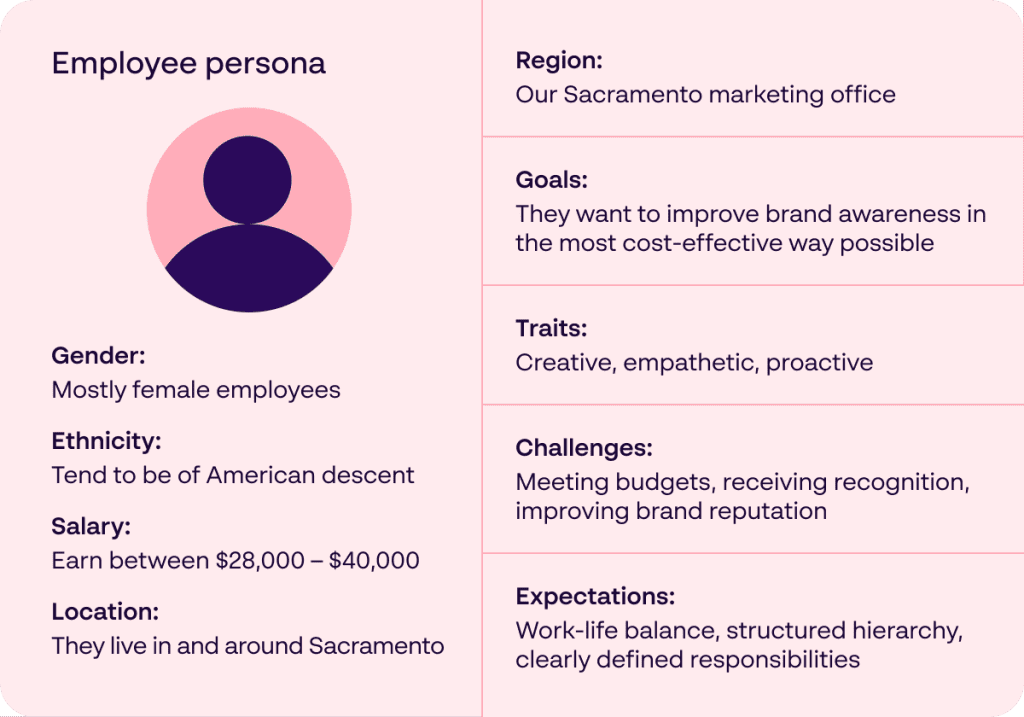
So, how do you create these crucial documents? At their core, your employee personas should ask:

  • What region is my audience located in? 
  • What goals and motivations do they have?
  • What are their key demographics?
  • What personality traits do they demonstrate?
  • What challenges do they face?
  • What do they want/expect from a workplace? 

Stay organized with robust Digital Asset Management software

Once you have a solid idea of exactly who you need to target, the next step involved in translating your employer brand worldwide is to prioritize organization.

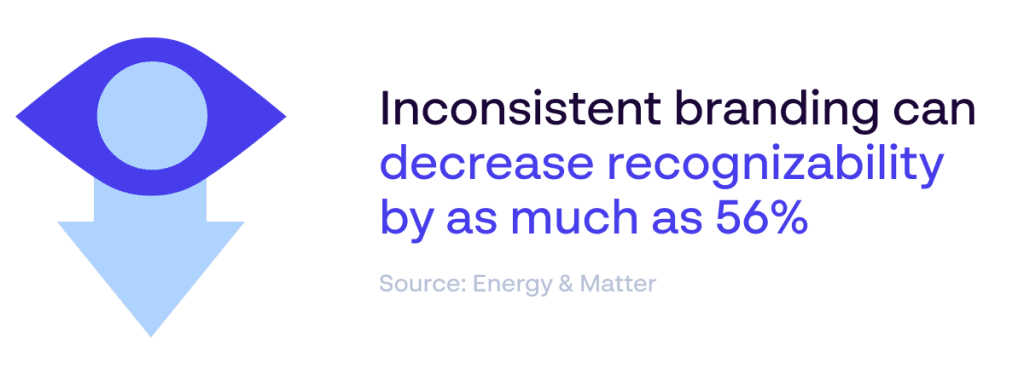
The last thing you want is for an off-brand job advert to find its way into the hands of a potential candidate, or a new recruit to receive an outdated version of your onboarding package. Why? Because inconsistencies like this can shatter people’s trust, set false expectations, and undermine the good will your employer brand has worked so hard to build.

But, with potentially thousands of assets to organize across dozens of countries, keeping on top of everything can quickly become a full-time responsibility.

Here, a dedicated Digital Asset Management (DAM) system can be really helpful. Acting as a central, digital repository where every asset can be tagged, organized and easily accessed, getting the right materials in front of the right candidates becomes a simple, straightforward task.

Coupled with regional brand portals that house your local style guidelines, EVPs and exemplary assets, your provincial teams can get immediate access to the content relevant to their audience. This makes it faster and easier for your global departments to run effective recruitment campaigns, all while streamlining internal communications.

Invest in on-brand content creation tools

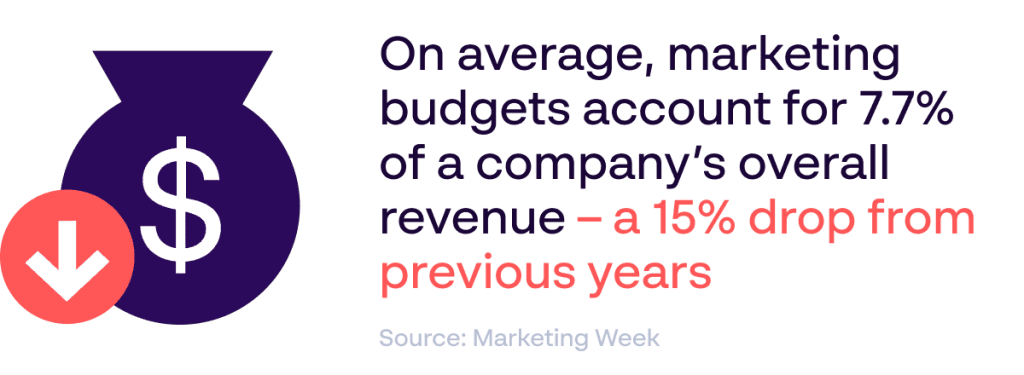
While giving your teams access to the right assets is an important part of delivering a locally-tuned employer brand, if you operate in multiple territories, chances are you’ll have a long list of different audiences to create collateral for – and the time, resources or capabilities to deliver only a fraction of it.

Coupled with the inconsistency that can arise when your decentralized teams begin adapting your core assets (or create their own materials altogether), it’s clear to see how content production is one of the greatest challenges for delivering a locally-relevant, globally spanning employer brand.

And with signs suggesting that the demand for collateral is only going up, how do you and your teams deliver employer branding at scale in the long term?

In our view, the right on-brand content creation tools are invaluable. By giving your central and frontline personnel the ability to swap out things like imagery, copy, colors and more in a matter of clicks, as the core facets of your brand guidelines remain fixed, smart templating technology can streamline production in a big way.

In practice, this means your central marketing departments can prepare core materials on budget for every region, all while your locally-based teams have the tools to create or tailor assets to their target markets without undermining the consistency of your brand.

Plus, with ease of use central to most content creation tools, anyone across your business can produce the materials they need, freeing up your marketers and creatives to focus on fleshing out your employer brand strategy.

Put simply, the right solution can revolutionize the way you deliver collateral to candidates and colleagues around the world.

Inspire your existing employees to become advocates

Another great way to translate your global employer brand to local communities is to use employee ambassadors.

It doesn’t matter if you’re conducting localized hiring drives or spreading awareness of your presence in a new market. The bottom line is, people trust employees significantly more than companies themselves. 

So, who better to offer first-hand insight into your workplace than your regional team members? Their unique access and authenticity can demonstrate specifically how your workplace reflects the cultural nuances of the area.

This can give talent a clear picture of life at your organization, form genuine connections with people in the area, and ultimately attract candidates to your career site.

Furthermore, by getting your staff to play a more active role in your employer brand and rewarding their efforts, you can encourage your teams to stick with you for the long term. 

Ready to realize the full potential of your employer brand?

As the competition for talent intensifies – and job seekers become increasingly discerning – successfully recruiting and retaining talent demands a local approach to employer branding. 

However, with each country having their own cultural traditions and expectations to honor, crafting and coordinating content that resonates with each of these audiences is no easy feat.

By putting the insights we’ve covered in this article into practice, we hope you’ll have everything you need to reshape your employer brand into one that connects with candidates and colleagues from one region to the next.

Employer Branding

7 elements every world-class employer brand should have

A world-class employer brand is one of the most powerful assets any organization can build. When done well, it positions you as a place where people can grow, contribute, and feel valued. It supports talent attraction and talent retention, and can set your company apart in a competitive hiring landscape.

But the opposite is also true. A poorly maintained employer brand can lead to greater employee churn, sluggish hiring processes, lower morale and engagement, and potentially hurt your brand’s reputation beyond the talent pool.

To build a great employer brand that truly resonates, it helps to understand what separates the world’s strongest from the rest. Companies like Google, Salesforce, and HubSpot consistently ranks as exceptional places to work because they invest in the fundamentals that make their employer brands credible and compelling.

Drawing on industry research and decades of real-world experience, here are the seven characteristics that define world-class employer brands.

1. A world-class employer brand strategy

Every effective employer brand begins with a well-conceived strategy. Without it, messaging becomes fragmented, candidate experiences feel inconsistent, and teams struggle to articulate what sets you apart.

A strong strategy answers foundational questions:

  • How is our employer brand currently perceived?
  • Who are our ideal candidates?
  • What matters most to them?
  • Where do they spend their time?
  • What messages should we communicate throughout the candidate and employee journey?

Red Bull offers a powerful example of the link between solid strategy and employer branding success. Seeking a better way to identify promising talent across their global pool, they created Wingfinder — a tool built from deep analysis of the traits and capabilities they prioritize. The technology worked because the strategy behind it was sharp, intentional, and aligned with their long-term hiring goals.

2. A commitment to listening

Employer branding is not just about attracting candidates. It is about building an environment where your people feel heard, understood, and supported.

This is why it’s so important to listen to your staff. The insights you gain help you align your brand and your people, driving strong employee engagement and retention.

L’Oreal demonstrates what listening looks like in practice. When crafting their Employer Value Proposition (EVP),  they asked employees directly what mattered most. The result was a clear and authentic EVP grounded in real experiences.

Listening does not need to be complicated. A simple internal survey can unlock meaningful insights. Example questions include:

  • How would you describe the company culture to a friend?
  • What made you decide to join our organization?
  • What aspects of our workplace do you find most and least motivating?
  • If you could change one thing, what would it be and why?

3. An authentic company culture

Your employer brand must reflect what employees actually experience, rather than an idealized version of the workplace – otherwise you won’t be able to make good on your promises and new hires will soon leave.

Are you guided by tradition or driven by innovation? Is your structure formal and hierarchical, or open and collaborative?

There are no right or wrong answers here. What matters is that your values are reflected in everything you say and do.

4. A localized approach to communication

World-class employer brands all get one thing right – localization. They communicate with precision and cultural awareness, recognizing that what resonates in one region may fall flat in another.

The dangers of a one-size-fits-all approach are all too clear. Take the example of the Jolly Green Giant, who was mistranslated into Arabic as the “Intimidating Green Ogre”. You also risk excluding individuals who fall outside your central narrative or alienating specific cultures and groups.

SAP provides a counter example of how thoughtful localization fuels success. By carefully adapting content to local audiences, they present an entirely consistent brand identity that enables them to maintain a vast talent pool of over 150 nationalities.

Achieving SAP’s level of precision requires scalable processes. Many enterprise teams rely on content creation solutions to adapt messaging quickly and accurately. Pairing these employer branding tools with Digital Asset Management software can allow your teams to organize materials by region, audience, and channel, reducing the risk of off-brand or culturally inappropriate content.

5. A forward-thinking commitment to DEIB

Diversity, Equity, Inclusion, and Belonging are essential to any modern employer brand. Candidates want to work where they feel seen, supported, and welcomed. Existing employees expect environments that empower them and provide equal opportunity.

Mastercard provides a strong example of how to create a more equitable organization. Their global Business Resource Groups (BRGs) operate across 47 countries, and their public commitment to equal pay reinforces a company culture grounded in fairness and representation.

Your own DEIB strategy should reflect your people, your values, and your goals, so it is unlikely to mirror Mastercard’s approach exactly. But some key steps that can help you take your strategy to the next level include:

  • Appointing internal DEIB champions
  • Increasing transparency around hiring and promotion processes
  • Using AI to sense-check recruitment marketing campaigns for inclusive language
  • Establishing inclusive interview practices

6. A consistent employer brand

Maintaining a consistent brand is critical for building trust – because inconsistencies create doubt. A mismatched tone in a handbook, outdated logos on recruitment materials, slightly incorrect colors in a social graphic – any of these can undermine the credibility you work so hard to build.

That is why leading brands like Rolls Royce and Google commit to rigorous consistency at every touchpoint.

That’s why leading employer brands like Rolls Royce and Google commit to rigorous consistency, remaining true to their brand guidelines across every touchpoint. Here’s how you can achieve that level of brand cohesion:

  • Create a robust set of employer brand guidelines your teams can follow
  • Set up a digital brand hub to centralize every aspect of your brand identity
  • Use content creation tools like design templates to minimize human error
  • Recycle assets to maintain quality and efficiency

7. A proactive drive for employee advocacy

Employee voices carry more weight than ever. People trust real experiences from real team members, and top employer brands use this to their advantage.

Adobe highlights employee stories across its channels, while Nokia actively encourages employee to engage in social media content creation. These programs work because they show the world an authentic, unfiltered view of life inside the company.

Looking to encourage more of your employees to advocate for your employer brand? Discover 6 steps to turn your employees into true brand ambassadors.

Ready to elevate your employer brand?

Take steps to create a world class employer brand that will help keep your staff proud of the brand they work for, and attract the best talent to keep you growing.

Explore how to achieve better employer branding management today.

Ready to elevate your employer brand?

We’re here to help you attract
and retain top talent.

Ready to elevate your employer brand?

We’re here to help you attract
and retain top talent.

We’re here to help you attract
and retain top talent.

FAQs

What makes an employer brand truly world class?

A world-class employer brand is built on strategy, authenticity, and consistency. It reflects real employee experiences, communicates with clarity across regions, and demonstrates a genuine commitment to DEIB. When these elements work together, your organization becomes a place where people feel valued and inspired to stay.

Why does employer brand strategy matter so much?

A clear strategy gives structure to every decision, from talent messaging to recruitment experiences. Without it, communication becomes fragmented, and candidates struggle to understand what sets your organization apart. A strong strategy ensures alignment, focus, and a more compelling story for prospective and current employees.

How does employee feedback influence the employer brand?

Listening to employees ensures your employer brand reflects reality rather than aspiration. Their insights help shape your EVP, guide cultural improvements, and strengthen engagement. When people feel heard, they are far more likely to stay, contribute, and represent your brand positively.

Why is localization important in employer branding?

Different regions have different cultural expectations, values, and communication norms. Localizing your content ensures your message resonates everywhere you operate. It also prevents misinterpretations and builds a consistent yet culturally sensitive employer brand across global teams.

How does consistency affect employer branding?

Consistency builds trust. Every time your visuals, messaging, and tone of voice align, you reinforce reliability and quality. Even small inconsistencies can create doubt and weaken your credibility. Tools like brand hubs, Digital Asset Management, and Templated Content Creation help teams stay aligned at scale.

Employer Branding

Employer branding for employee retention: Your complete guide to keeping top talent

Replacing any employee is a long process. One that can cost your company thousands, undermine your teams’ productivity and impact your business’s bottom line in a big way.

However, when you consider that the average worker changes roles 12 times throughout their career, losing good employees seems like an expensive inevitability. But not all companies are built equal. 

Organisations that work hard to build a strong employer brand have seen their staff turnover rate drop by as much as 28%, allowing them to hold onto their highest performers for longer and reduce the strain on their hiring process. They achieve greater stability within their workforce, and reap the rewards through more sustainable performance.

But how do you build an employer brand that can support your ambitious talent retention efforts? In this guide, we’ll explore the greatest challenges your company faces in the fight to retain talent, the steps you can take to reduce employee turnover, and the wider benefits of investing in your employer brand.

Why do employees leave their jobs?

No company can realistically achieve a ‘clean sheet’ when it comes to retention. Many employees naturally progress from their roles, even if they’re completely engaged and satisfied at work. People move, life evolves, and preferences change.

However, these external factors aren’t the only reason why employees seek greener pastures. Whether a company cannot provide flexible work arrangements or their budget doesn’t stretch to meet salary expectations, there are many answers to why staff leave that can be addressed.

Poor onboarding experiences

One of the biggest hurdles to long-term retention is bad onboarding experiences. The process of securing talent starts from day one, so without a strong, well-established process for welcoming your newest joiners, as many as 80% of your recruits could be eyeing the exit door before they’ve even gotten settled.

Lack of recognition

If top performers’ efforts are rarely ever recognised, they may start to feel disheartened at work. Even simple initiatives like personalised thank you cards and internal shoutouts can be an excellent way of encouraging your employees to reconsider their next move.

Minimal opportunities for growth and development

Most employees don’t aspire to be in the same role for their entire career, especially the latest generations of candidates. If your staff feel that they aren’t being afforded the opportunity to develop, evolve and unlock their true potential in your company, then this can inspire them to look elsewhere.

Subpar company culture

Whether it’s down to a lack of flexibility or due to a feeling of overwhelming negativity, 73% of professionals say they have quit their jobs due to clashes with company culture. To encourage your top talent to stay with you for longer, it should be one of your top priorities to foster a strong sense of belonging at work.

Opposition to company values

When your teams can’t buy into your company’s overarching missions or values, they’re unlikely to connect with your organisation on a deeper level. If you want to give your staff a strong incentive to remain, you need to build an employer brand that aligns with their expectations and outlook.

High turnover

As well as causing employees to question their own position, high rates of turnover can create a feeling of uncertainty and disposition internally. Retaining employees for prolonged periods relies on the creation of a strong, stable organisational culture that rewards long service.

7 proven strategies to build a retention-focused employer brand

Holding on to your hardest workers takes more than great work and good pay. While these factors certainly matter to many, in a world where the competition for talent is reaching new heights, your employees need genuine reasons to stay.

That’s why employer branding is so important. Acting as a rallying point that your employees can get behind, strong employer branding is all about making your existing workers feel part of a united entity, aligning your people around shared values and goals.

It’s what separates good employers from the great, and how companies like Cisco and Deloitte have retained such a high percentage of their top talent for years.

So, how do you build a winning employer brand strategy to retain your existing employees? Like any brand management exercise, unlocking the true potential of your strategy demands a thoughtful, well-considered approach.

1. Improve internal communications

Arguably, one of the most important aspects of any employee retention effort is internal communication. Put simply, when your employees feel heard, understood and in the loop, they’re more likely to be actively engaged and committed to your company and their responsibilities.

While all companies are unique, initiatives like monthly newsletters, company-wide emails, ‘ask me anything’ sessions and internal surveys are all simple and effective methods you can try to help bridge the divide between individual departments, regional offices and leadership teams.

Just remember, effective internal communication isn’t just accessible – it’s regular, structured and works best when it begins from the top down. Establish these measures to give your teams a voice and network across your organisation.

2. Host team building and company culture-focused events

Another powerful way to bolster your employee retention programme is to host regular team building and company culture events, like wellness workshops, cultural celebrations and department days out. 

Providing opportunities for your teams to build stronger relationships is a great way to foster a tangible sense of community at work. Encouraging communication and collaboration company-wide can also be a great way to get your workers to feel like they fit in.

Why is this important? When employees feel as though they ‘belong’ at work, they’re 54% more likely to stay in their current role.

It can be easy to take a laissez-faire approach to initiatives like this, incorporating events and activities you think would resonate, as and when work schedules allow. But to get the most out of team building, consider taking a regimented approach by:

  • Sending out an employee engagement survey to gauge how people feel about your organisation
  • Using what you learn to set a handful of specific objectives you’d like to achieve
  • Planning out regular activities to help you resolve the biggest reservations about your culture
  • Polling your workers about their sentiment toward your company after the 6-month mark

3. Invest in career development and training opportunities

By committing to training and development throughout your company, you do more than just enhance the capabilities of your workforce. You also send a clear message to new and existing employees that you care about their long-term growth.

This is especially important to younger talent, as a recent study revealed that 74% of Millennials and Gen Z have considered quitting their jobs due to a lack of skill-building opportunities.

Whether this involves getting teams to attend industry conferences and events, or providing them with digital classes and webinars in the office, the best internal training and development programmes:

  • Are tailored to meet the specific skills gaps of your teams
  • Utilise technology for the best learning experience
  • Foster a culture of continued education
  • Remain adaptable and flexible to employee feedback 

4. Recognise and reward employee performance

When you consider that 79% of employees cite ‘underappreciation’ as a key driver for quitting their job, it’s clear to see the value that an employee recognition programme can have in your talent retention strategy. 

Not only do the uplifting effects of positive reinforcement strengthen your workers’ connection to your organisation. A rewarding work environment can also elevate overall job satisfaction, improve your workplace culture, and position your business as an employer of choice in the competitive global talent market.

For these programmes to work well, it’s important you give them the time and attention they need. That means ironing out specific details early on, like rewards and success criteria. You should also look to establish a process for monitoring other colleagues’ performance on a regular basis, and creating resources you can use to educate people about your scheme all across your enterprise.

With this in place, you can reward staff for:

  • Surpassing performance goals, like sales or reach
  • Spearheading helpful, innovative solutions at work
  • Displaying exceptional collaboration and leadership
  • Providing excellent customer service

5. Embrace DEIB initiatives at work

No member of staff wants to work somewhere they’re treated unfairly. To help nurture a culture of acceptance and understanding throughout your company, DEIB is the beating heart of any fair and equitable organisation.

Standing for Diversity, Equity, Inclusion & Belonging, initiatives like this help instil a sense of identity in every worker, enabling individual employees to feel heard and respected at work, regardless of their background, preferences or beliefs.

As you can imagine, creating a culture where everyone feels included is one of the best ways to hold on to your top talent. In fact, in a recent poll, 92% of employees agreed that an inclusive culture had a big influence on whether or not they wanted to remain with their employer.

In other words, by aligning your company’s values with your employees, and creating a work environment where everyone feels seen and respected, you give your enterprise a solid foundation from which to retain talent.

6. Incentivise brand ambassadors

Brand ambassadors are another tried-and-tested strategy for improving long-term talent retention. The way it works is two-fold.

Firstly, by instilling your most engaged supporters with a sense of pride and ownership, you recognise their value and make them feel more connected to your employer brand. Naturally, these added responsibilities can form the basis for a strong and productive long-term partnership with your top talent.

Secondly, the genuine endorsements your ambassadors share can promote trust, credibility and positivity among your other colleagues, crafting an attractive image of your workplace that can entice people to stay far longer than industry averages.

To learn more about brand ambassador programmes and how to set yours up for success, check out our in-depth guide: 6 techniques to turn your employees into true brand ambassadors.

7. Integrate the right technology

Finally, to shape a bright future for your organisation and help your teams actually implement some of the winning talent strategies we’ve discussed, you need the right technology by your side.

In practice, finding the best platforms for your needs can be its own challenge. Countless tools exist that can streamline everything from remote working and employee advocacy to internal feedback and communication.

To help you narrow down your list, we’ve rounded up some of our favourite talent acquisition and retention tools that can transform your approach.

Our first pick is PostBeyond, a clever solution that allows you to harness the power of your employees on social media with greater ease, so you can empower your talent to get talking about your employer brand.

Another great solution is Small Improvements. From enabling managers to praise coworkers for a job well done, to allowing individuals to request feedback any time – this software can pave the way for strong internal communication and collaboration.

Finally, two more key tools for today’s employer brand experts are Digital Asset Management (DAM) systems and content creation software:

  • DAM systems directly engage people with the essential components of your employer brand, and enable you to oversee and share this content across the entirety of your teams and locations
  • Content creation software enables you to scale up the development of your employer brand assets, using templates to speed up production, simplify the process and lock-down consistency

These tools can be contained within a broader, end-to-end brand management suite, giving you a firm foundation from which to control and elevate your employer brand materials.

The value of a retention-focused employer brand

With the right steps, you can create an environment and culture that resonates with your teams, opening the path to stronger connections and longer tenures.

This does more than simply save precious resources. Uniting your departments behind your brand values can be an effective way of motivating your employees to work harder, boosting your business’s overall productivity by as much as 12%.

Pair that with the morale-lifting effects of a well-considered employer brand, and it’s easy to see how investing in a happier, longer-tenured workforce can minimise friction, conflict and absenteeism. This also enables your company to stand out when it comes time to hire someone new.

Transform your employer brand into a retention powerhouse

Few things benefit your long-term talent retention than a winning employer brand. But taking the steps to build one is often easier said than done.

With the right expertise and investment, however, the benefits can be astounding. Beyond creating a culture that entices your existing employees to stay for longer, you can drive productivity, improve job satisfaction, and cement your organisation as an employer of choice in an increasingly busy talent market.

Combined with the right employer branding software, your long-term employees can become a springboard for your company’s ongoing success.

Employer Branding

How to create brand ambassadors and become an employer of choice

Attracting top talent in today’s climate takes more than strong compensation packages. Modern jobseekers are looking for employers that reflect their values and have a company culture they can connect with.

With trust, transparency, and authenticity at the forefront of candidates’ minds, how can you make your employer brand stand out in a highly competitive talent market? 

The answer lies in empowering your people – turning employees into passionate ambassadors for your brand.

In this guide, we’ll explore what brand ambassadors are, how you can encourage colleagues to embrace the responsibility, and why an approach like this is such a powerful tool in your recruitment efforts.

What are employee brand ambassadors?

Brand ambassadors are employees who actively advocate for your organization – both online and offline.

Whether through personal social media posts, testimonial videos, blog contributions, or press quotes, they share what it’s really like to be part of your team. This personal perspective builds trust and offers a window into your company culture that no polished campaign ever could.

While anyone can step into this role, the most effective ambassadors are those who naturally align with your brand values and are genuinely proud to represent your organization. Jobseekers can quickly spot insincerity, so authenticity is a must.

6 steps to transform your employees into brand ambassadors

Capturing the attention of today’s candidates means more than simply stating what your company stands for. You need to show how your Employee Value Proposition (EVP) and employer branding strategy translate to your working environment.

That’s why employee brand ambassadors are so valuable. They live and breathe your business every day and can give potential candidates an unfiltered look at your company culture. They make it easy for top talent to understand your organization and picture themselves within your team.

To truly harness this potential, your approach must be as structured and considered as any other marketing initiative – otherwise ambassador activity can become irregular and haphazard. Here are six steps that can help you build a strategy that works.

Step 1 – Understand the conversation around your employer brand

Before launching your ambassador program, take the time to audit existing touchpoints to see how employees and candidates feel about you as an employer.

For example:

  • Explore where employees new and old are leaving reviews about your organization
  • Ask your team to learn if they already advocating for your brand online or in person
  • Assess if potential candidates are talking about your business, and find out where those conversations are happening

This groundwork helps you gauge how people currently feel about your brand and whether there’s existing advocacy to build on. It also reveals areas where your employer brand strategy may need refining before engaging employees further.

Step 2 – Seek out the right ambassadors

Every employee has the potential to be a brand voice – but some may be more naturally suited to the role than others.

Use your audit to spot team members already promoting your company positively. They’re likely your most authentic storytellers. You can also identify strong candidates by looking for employees who:

  • Have substantial social media followings, especially on LinkedIn
  • Represent different departments or types of employees on your team
  • Are already highly regarded or well-known in your industry
  • Advocate for or have a keen interest in DEI

Above all, choose people who genuinely believe in your mission. Their enthusiasm will resonate with potential employees.

Step 3 – Let brand ambassadors speak in their own voice

Ambassador content can generate 24 times more engagement than traditional brand messaging, according to Social Media Today. That’s because content from your people feels real, not rehearsed.

While a consistent tone of voice matters for your employer brand, it is important not to impose it too rigidly on your ambassadors. Set clear guidelines around appropriate topics and language but give them the space to speak authentically and let their personal tone shine through

This not only drives stronger engagement – it also makes the job of being a ambassador more enjoyable and less daunting.

Step 4 – Invest in employer brand education for your teams

How can you ensure people stay up to speed with your employer brand from the moment they become brand ambassadors to the day they leave?

A dedicated brand portal is key, providing ambassadors with a single go-to source for everything they need. You can use it to house brands guidelines, example assets, info on your employee value proposition, and more.

Training also plays a vital role, particularly when it comes to social media best practice. It will give ambassadors the confidence to grow their following while avoiding common pitfalls that could damage your employer brand image. It’s also another way to position yourself as an employer of choice by providing valuable learning and development opportunities.

Step 5 – Recognize and reward engagement

Some employees will advocate naturally. Others might need a little encouragement.

Recognition is a powerful motivator. Whether it’s branded merchandise, extra leave, a feature in your internal newsletter, or shout-outs on corporate channels – small gestures go a long way.

You can also give employees a voice in shaping your employer brand and company culture. When they feel heard and involved, they’re far more likely to share their pride in where they work.

Step 6 – Empower your strongest advocates to share brand content

With your strategy in place, guidelines established, and brand ambassadors selected and trained, you’re almost there.

Now there’s just one more challenge to overcome – and it’s traditionally one of the biggest barriers to building a successful ambassador program. How do you equip your employees to create on-brand assets

The problem is that most ambassadors lack the skills or knowledge to craft quality collateral. And even if your team contains expert designers, that can still be a massive drain on time and resources.

The solution: templated content creation tools. By providing employees with easy-to-use employer branding templates, you can empower them to create their own personalized content without ever compromising brand consistency.

Papirfly employer branding tools success story - Building a better employer brand and how IBM achieves brand consistency across global recruitment campaigns

Elevate your employer brand with a robust employee ambassador programme

While content shared via corporate channels is vital in attracting talent, it’s your employee brand ambassadors who often make the most meaningful impact – when they’re mobilized effectively.

By sharing real experiences, showcasing your culture, and giving a behind-the-scenes look at daily work life, advocacy from within builds trust and clarity. This honest perspective helps candidates assess whether your organization aligns with their values, ensuring they enter the job application process with real enthusiasm.

The outcome speaks for itself: improved brand awareness, a stronger reputation, and more efficient, effective recruitment. In the long run, this reduces both the cost and time involved in hiring top-tier talent.

What’s more, encouraging engagement through ambassador programs doesn’t just support hiring goals – it also fosters pride, purpose, and alignment across your wider organization.

Does everyone create content that’s on‑brand, every time?

Find peace of mind with
better brand governance.

Does everyone create content that’s on‑brand, every time?

Find peace of mind with
better brand governance.

Find peace of mind with
better brand governance.

Discover Papirfly's Templated Content Creation for better brand governance

FAQs

What is an employee brand ambassador and why are they important?

An employee brand ambassador is someone who authentically advocates for your company, sharing personal experiences online and offline. Their stories help humanize your employer branding strategy, providing real insight into your company culture and building trust with candidates.

How can companies identify the best brand ambassadors?

Look for employees who have strong social followings, are respected in their fields, or actively support DEI. The most effective ambassadors are genuinely aligned with your company culture, mission and values, and already promote your company positively.

How do you support brand ambassadors while maintaining authenticity?

Provide employer branding guidelines and training but allow each brand ambassador to speak in their own voice. Empowering them to share real experiences builds engagement and trust without compromising brand integrity.

What tools help employees create on-brand content?

Templated content creation tools give ambassadors the ability to produce high-quality employer branding materials without design expertise. This ensures brand consistency while making advocacy easy and scalable.

How do employee brand ambassador programs improve recruitment?

Authentic employee advocacy strengthens employer branding, increases trust, and helps with attracting top talent. This results in faster, more efficient hiring and improves both brand perception and team cohesion.

Employer Branding

Transforming recruitment with custom templates: A guide to scalable employer branding

In today’s highly competitive landscape, the best talent doesn’t just arrive at your website ready to apply. To truly succeed, you need to tell candidates why they should consider you for their next career move.

In the same way a customer must be nurtured along their journey to buy, modern candidates must be guided along the path to apply, led by content that places your employer brand at the centre of every conversation.

From social media posts that highlight your core values to prospects, or onboarding documents that emphasise your company’s values to your latest recruits, a constant flow of compelling content keeps applicants on the hook. 

But how do you maintain the quality and brand consistency today’s job seekers expect across every touchpoint, within increasingly tighter schedules and budgets? How can you efficiently and practically scale your employer brand content with your changing talent acquisition requirements?

The answer: investing in custom design templates. Below, we explain what they are, how they can revolutionise your recruitment strategy, and the key signs of great template creation software.

What are custom design templates?

Think of custom design templates as a constant head start for any kind of on-brand asset creation. A framework based on your brand guidelines, enabling your designers, recruiters and wider employer brand team to produce high-quality content with speed, precision and assurance.

To achieve this, effective design templates include locked-down elements, such as asset dimensions, logo positions and design layouts. These cannot be moved or changed, so users stick within the fixed parameters of your guidelines.

From here, they can then switch out customisable elements, such as calls-to-action (CTAs), colour schemes, imagery, copy and more with creative freedom, knowing that they cannot steer far from your brand identity.

As you can imagine, having access to these branded templates can massively ramp up the production of recruitment ads, job listings, corporate communications and much, much more. The right templating tool is a real game-changer – giving your hiring teams the confidence and skills they need to break away from costly third-party agencies, time-consuming approval processes and design limitations.

What are custom templates for employer branding and recruitment - Infographic image

How can custom templates help with your recruitment efforts?

When you consider that 71% of recruitment-focused teams face challenges creating the content they need, custom templates can be a powerful tool to create the variety of collateral required to properly promote your employer brand. 

This is because design templates can:

Recruitment campaign content creation challenges and statistics for time taken, lack of skills and budget - Source: ContentStadium

Expedite the creation of personalised social content

In our increasingly digital world, it’s no surprise that 79% of applicants turn to social media platforms to conduct their job searches. But the breadth of these channels, with distinct optimal posting frequencies, can make it a challenge to generate the content required to stay top of candidates’ minds.

To tap into this marketplace of millions, customisable templates empower your teams to produce on-brand, studio-quality assets in minutes. 

With elements like CTAs, colour schemes and imagery able to be instantly swapped out to suit the nuances of a particular region, platform or branch of the business, intelligent templates make it possible to produce well-optimised social media posts in a truly scalable way, without sacrificing consistency or impact. 

Empower employees to become brand advocates

While a strong employer brand instils confidence in your potential candidates, it’s hard to ignore that 76% of individuals are more likely to trust content shared by a brand’s employees over assets from a brand itself.

To allow your most passionate employees to champion your culture, values and company mission through compelling, highly engaging material, custom templates give your strongest advocates an avenue to express their views and build trust, without compromising your brand’s identity.

By allowing employees to follow a helpful framework, even those with zero design skills can be empowered to develop exceptional assets for their personal profiles. This means your employer brand can reach a wider audience in a more targeted, organic way than simply through your company pages.

Recruitment and employee advocacy statistic - Socially engaged employees 58% more likely to attract top talent - Source: LinkedIn

Create a full suite of onboarding content

If you’re at the stage where your job openings are filled and your new hires are well on their way to becoming full-fledged team members, it can be easy to direct your employer branding technology toward the next campaign. 

But in recent years, so many organisations have lost potential hires at the final hurdle due to a negative or frustrating candidate experience. To ensure your employer brand is just as strong inside as out, customisable templates allow for the quick, easy and scalable creation of company manuals, brand guidelines and other essential internal communications.

With these templates, you can guarantee that your new hires have the information they need to start work swiftly and confidently. And, to give them a real sense of belonging from the outset, these can also allow you to easily personalise standard guidebooks and manuals for each recruit.

Streamline video production

Over 65% of businesses use video in their recruitment efforts. You can see why when 43% of candidates [Source: Flat Fee Recruiter] say they’re more likely to apply for a job promoted through video content.

Able to turn this traditionally long, costly and intensive process into something effortless, custom templates are a lifeline for any forward-thinking recruitment team eager to stake their claim in the video-centric future of search.

The right custom template software will include tools to make dynamic, on-brand edits in a standardised format, so you can produce this eye-grabbing content with greater ease.

Video and employer branding statistic - 42% of employees use video content to get a feel for company culture - Source: Seenit

5 benefits of using custom templates for recruitment

1. Speed up time-to-market

Filling an open position takes an average of 44 days. When you factor in the weeks, months or even years it can take for a new hire to settle in, skill up, and reach the desired level of competency, talent acquisition is a lengthy and disruptive process for any organisation.

Quicker and more scalable asset creation with design templates enables your team to produce videos, job adverts, office posters, employee testimonials and other collateral as quickly as possible – especially important if you’re running a high-volume recruitment campaign.

Time limits for marketers statistic - 26.5% of digital marketers struggle with time constraints - Source: LOCALiQ

2. Achieve complete consistency 

In a world with more opportunities for candidates than ever, first impressions matter. Inconsistent visuals, incoherent Employer Value Propositions (EVPs), fluctuating tones of voice – they simply don’t cut it with today’s savvy job seekers. 

Inspire the right kind of relationship with your ideal candidates from the very beginning. Intelligent templating allows you to align every piece of collateral with your unique brand guidelines. This helps you secure complete coherence in any design, across any platform, at any time.

More job opportunities recruitment statistic - Global remote job postings have risen by 10% since 2023 - Source: BloomBerry

But how do you ensure that the employee experience meets expectations? While there’s much to consider, custom templating tools are unquestionably important, unlocking the creation of studio-quality onboarding documents that prioritise what matters to your candidates – be it DEIB and employer branding, work-life balance or monetary perks.

Plus, with the effort behind the creation of employer brand collateral reduced and shared among your entire workforce, your employer brand specialists and senior leadership team can concentrate on establishing initiatives that propel your company culture forward.

SAP brand success story - How SAP united their employer brand to acquire top talent in multiple regions with Papirfly - Link to read story

What to look for in the right template creation software

Now you know what customisable templates are, how they can be applied to your talent acquisition efforts, and the plethora of advantages they offer, there’s just one final topic we want to discuss – the key signs to look out for in template creation software.

Although any templating tool can improve the quality, consistency, cost and time of your asset creation, not all software is created equal. If you’re keen to truly revolutionise your recruitment efforts, here are our 7 must-have features to prioritise in your search:

1. Limitless on-brand asset creation

The last thing your team members need is software that stifles your output and limits creativity. When looking for templating tools that can help you find, engage and attract the best talent, it’s essential you find a solution that allows you to create on-brand assets without restriction. No limits, no monthly credits – just the means to produce any volume of assets whenever required.

2. Multichannel compatibility

To reach your target audience wherever they are, it’s also important to have template creation software that can accommodate asset creation for any medium. Be it graphics for LinkedIn, videos for career pages, banners for job fairs, or posters for internal communication – ensure the solution you invest in enables you to create templates for any purpose.

3. Straightforward functionality

Creating and executing professional, persuasive recruitment campaigns demands an intuitive templating system. One your recruiters and advocates can easily pick up and use whenever they need to produce effective, on-brand content at pace.

Accessibility and functionality should therefore be top priorities in your template search, so anyone in your team can be elevated to create without a steep learning curve.

4. Approval measures

For complete confidence that everything your recruitment teams or employee advocates produce is in service of your long-term business goals, acquiring a platform with approval measures can be incredibly advantageous.

With these extra security measures in place informing users of what’s off limits, and a seamless way to send assets through for final sign-off, your recruitment campaigns reach audiences far sooner.

5. Streamlined localisation

Responding to recruitment needs in any region is a must for any global brand – and something only possible when you opt for a platform with dedicated, time-saving localisation tools. Look for a platform that instantly enables you to switch up languages and cultural imagery, so you can meet the demands and sensibilities of your local markets.

6. Cloud-based accessibility

Whether you’re a local business of dozens, or a conglomerate of thousands, manually installing software to employee machines one by one is a long and tedious task. Avoid this logistical headache by choosing a recruitment template creation tool backed by cloud software, meaning your worldwide teams can access it with minimal fuss.

7. Wider brand management features

Finally, while consistent, high-quality content is an important pillar of your recruitment campaigns, it’s far from the only part you have to consider when it comes to building, administering and evolving your employer brand. 

By broadening your search to an all-in-one brand management platform featuring customisable design templates, you can also effectively educate your users on the foundations of your employer brand, store all collateral in a dedicated DAM system, and gain a bird’s-eye view over the execution and performance of your campaigns.

7 must-have features in a brand template creation tool - Papirfly infographic image

Launch a new era of success and scalability for your recruitment campaigns

When it comes to recruitment, content is crucial. It’s how your employer branding stands out, captures the attention of top talent, and ultimately fills your open roles. But not any content will do. In today’s competitive landscape, potential employees have become increasingly selective about who they work for. 

Customisable templates give your recruitment teams and wider employees the keys to create captivating, consistent content on an otherwise unachievable scale. Look into the options available to understand how they can drastically reduce the costs, time and resources involved in building professional recruitment collateral, and make meeting your ever-growing recruitment demands a seamless formality.

Ready to improve the ROI of your next recruitment campaign? Empower your people with Papirfly - CTA link to Papirfly brand management software platform