
Content Creation

How design templates save finance brands 80% in content creation

Marketing teams in banks, credit unions, and insurers face increasing pressure to produce more content, faster—without sacrificing compliance or brand control.

But with legacy tools, siloed teams, and agency dependencies, production costs and risks spiral fast.

Discover how Papirfly helps financial institutions reduce asset creation effort by up to 80%—while reducing spend, improving control and brand consistency, and increasing speed to market.

Why financial brands overspend on content design

Financial institutions operate in highly regulated environments where every marketing asset must be accurate, brand-compliant, and legally sound.

When local branches rely on outdated systems or manually recreate content, it increases the risk of errors such as non-compliant disclaimers, conflicting messaging, slow campaign rollouts, and rising agency costs.

These inefficiencies make financial content production not just more expensive, but also riskier. The real challenge is not simply creating more content, but creating smarter content with consistent compliance and control.

Templated design unlocks faster creation of content at scale

Papirfly’s design templates give financial marketing and compliance teams the ability to scale high-quality content without losing control or inflating costs. Essential brand elements, logos, and disclaimers are locked into every template, eliminating common errors before they happen.

Local teams gain the freedom to create on-brand materials within clear guardrails, while automated approval workflows keep compliance seamless. The outcome is faster, more consistent campaigns — with far less reliance on agencies or manual rework.

Key benefits of design templates include:

  • Locked brand assets and compliance elements
  • Empowered local content creation within guardrails
  • Automated approval workflows
  • 80% reduction in manual content creation effort

Key results:

Shapes representing asset creation
Agency spend per asset
Papirfly logos representing brand consistency

Using design templates with DAM for smarter governance

Papirfly’s Digital Asset Management (DAM) brings every approved asset, campaign file, and approval record into one secure, centralized hub.

This ensures every branch or business unit works from the most up-to-date version of logos, visuals, product images, and region-specific disclaimers.

With features like smart search, version control, usage rights management, and full audit trails, DAM gives financial institutions complete governance and transparency across all content operations.

What an 80% effort reduction looks like in practice

According to Forrester’s Total Economic Impact™ report, enterprise teams using Papirfly experienced:

  • 80% less manual effort in content creation
  • 200$ average agency spend avoided per asset
  • 100% brand-compliant assets delivered to customers in all content

By combining design templates with Digital Asset Management, financial institutions can streamline production, eliminate unnecessary agency costs, and deliver more content—without compromising brand governance or speed.

Discover your content savings potential

See how Papirfly transforms content creation

Discover your content savings potential

See how Papirfly transforms content creation

See how Papirfly transforms content creation

Papirfly's Templated Content Creation tool

FAQs

How can design templates reduce agency spend?

Papirfly enables teams to create on-brand content in-house, eliminating the need for external designers for routine marketing tasks. Assigned budget can instead be spent on high-value creatives.

What makes this different from basic design tools?

Templates are built with embedded brand rules and approval flows—guaranteeing compliance across markets and teams.

Is Papirfly suitable for local branch marketing?

Yes. Templates and access controls are customizable by region, team, or campaign, enabling safe localization at scale for local branches for financial institutions.

Can we track who’s using assets and where?

Papirfly includes audit logs, version histories, and user permissions to monitor asset usage and ensure governance.

How long will it take to create a template?

We have a variety of design template solutions. Get started instantly with Papirfly’s InDesign templates based on designs, while you build out more with flexible elements where users choose from pre-approved options. All with as much support from Papirfly as you need.

Brand Consistency

How to keep your banking brand consistent after a merger

When banks, credit unions, and insurance providers go through mergers or acquisitions, the result can be operational alignment — but brand confusion. Multiple branches, legacy systems, outdated assets, conflicting messaging, and strict governance standards all create challenges.

Consistency isn’t just a marketing priority in finance – it’s a compliance necessity. This blog explores how to overcome that challenge with the right content governance tools. Discover how Digital Asset Management (DAM) and Templated Content Creation can help teams stay compliant, consistent, and in control at every branch, during every change.

How to maintain brand consistency during mergers in financial services

In the financial world, mergers and acquisitions are a given. Institutions consolidate to scale services, expand into new regions, or unify under a stronger umbrella brand. But without centralized governance, local branches often:

  • Use outdated or incorrect logos, templates, or disclaimers
  • Depend on head office or agencies for every content request
  • Operate in silos, leading to conflicting messages and compliance risk

All of this puts the brand’s trust, credibility, and regulatory standing at risk.

Why brand compliance is critical for financial content creation

According to the Content Marketing Institute’s Financial Services Survey (2024), 63% of financial marketers cite regulatory compliance as their number one content creation challenge.

63% of financial marketers list compliance as top challenge

of financial marketers list compliance as top challenge

63% of financial marketers list compliance as top challenge.

of financial marketers list compliance as top challenge

Trust is the currency of financial services. That trust starts with clarity and consistency — across brochures, branches, campaigns, and digital channels. But staying on-brand at scale is difficult when teams:

  • Work across dozens or hundreds of branches
  • Manage content in siloed systems
  • Lack access to approved, compliant materials

When speed matters — reacting to market shifts or regulatory changes — long approval chains or outdated folders won’t cut it.

How a DAM creates brand integrity in every financial services branch

Forrester’s DAM Trends Report (2024) shows that more than 60% of financial services firms have adopted a Digital Asset Management solution in the past three years. [Source: Forrester, 2024].

Papirfly’s DAM and Templated Content Creation solutions are purpose-built to solve these challenges. Our suite creates a single hub for everything your teams need to stay on-brand and compliant — even during large-scale changes like mergers and acquisitions.

  • Centralized brand hub – Distribute updated assets, disclaimers, and messaging in one secure, searchable brand portal
  • Smart templates – Empower branches to localize content while protecting layout, logos, and legal copy
  • Approval workflows – Streamline compliance reviews and guarantee brand alignment before go-live
  • Audit-ready control – Maintain a full record of how assets are created, edited, and used

Regulated industries need marketing tools built for compliance

Papirfly already supports financial organizations worldwide — including Deutsche Bank, Citi, Goldman Sachs, and Rabobank — helping marketing teams scale output without risking compliance or brand dilution.

Our tools are built for highly regulated industries, balancing flexibility for local teams with control for brand and compliance leaders.

If your teams are:

  • Going through a rebrand, merger, or acquisition
  • Supporting dozens of branches with limited marketing resource
  • Concerned about brand integrity or compliance exposure

…it’s time to explore a solution built for financial services.

Bring order to brand complexity

Discover how banks and credit unions scale their content with Papirfly

Bring order to brand complexity

Discover how banks and credit unions scale their content with Papirfly

Discover how banks and credit unions scale their content with Papirfly

Discover content templating for brand consistency in financial services

FAQs

How does Papirfly help with brand consistency across branches?

Papirfly provides a centralized brand hub with templated content creation tools, so every branch accesses and uses the same compliant, approved assets.

Is Papirfly suitable for financial services?

Yes. Papirfly is designed for regulated industries like banking and insurance, offering governance, audit trails, and brand control.

What happens during a merger or acquisition?

With Papirfly, new branches or teams can quickly access the latest brand materials, helping align communications and eliminate legacy content.

Can local teams still personalize content?

Absolutely. Templates allow localization while locking down brand and legal elements to maintain compliance.

Do you offer support during setup?

Yes. Papirfly provides dedicated onboarding and support teams to tailor the system to your institution’s needs.

Content Creation

7 best template design software solutions: Consumer vs Enterprise

Choosing the best template design software for your organization is critical. Get it wrong and you risk losing money, slowing content production, and eroding brand trust. But with hundreds of visual content tools out there, how do you select the best software for template design? Equally important, how do you know which solutions are actually fit for enterprise needs?

This blog breaks down the top seven visual content creation tools, highlighting how they differ—and why only a few can truly scale brand-compliant content creation in global organizations.

What makes a design template platform truly enterprise-ready?

“Templates” are everywhere—but their functionality varies wildly. Some tools optimize for speed and visual appeal. Others prioritize automation. Few are built to meet the compliance, localization, and workflow needs of complex teams managing multi-market brands.

To bring clarity to a crowded market, we’ve divided the best content creation software solutions into three categories:

  1. Consumer design platforms – intuitive but risky for brand control
  2. AI-powered content generators – fast but often generic
  3. Enterprise templating solutions – purpose-built for brand governance at scale

How consumer design platforms are easy but lack control

1. Canva

Loved by individuals and small businesses, Canva offers over 250,000 templates. But with little control over brand assets, fonts, or layouts, it falls short of enterprise-grade governance.

Best for: Social media, small team marketing, freelance creatives

2. Adobe Creative Express

Backed by Adobe’s reputation, this tool offers premium imagery and editing for a small monthly fee. However, brand controls remain light, and enterprise collaboration features are limited.

Best for: Creative professionals in the Adobe ecosystem

3. Figma – Powerful, but steep learning curve

Figma’s collaborative UI/UX environment is ideal for product designers. However, its professional depth can overwhelm non-designers, making it impractical for company-wide templated content creation.

Best for: Design teams and system builders

AI-powered platforms provide automation but lack brand alignment

4. Gamma

Gamma uses prompts to generate slide decks automatically. It’s great for speed but often misses the nuance of tone, hierarchy, and messaging. Limited brand alignment means risk for enterprises.

Best for: Individual productivity and fast ideation

5. Jasper Art

AI-generated imagery can support content workflows—but authenticity often suffers. Jasper Art’s outputs may impress visually, but they rarely meet brand or compliance standards.

Best for: Fast content experimentation, not brand-led execution

Enterprise templating blends creativity and brand compliance

6. Templafy

Templafy integrates tightly with Microsoft Office, making it ideal for legal and compliance-heavy teams. But it’s not built for modern marketing or brand activation.

Best for: Policy documents, legal templates, enterprise file compliance

7. Papirfly: The enterprise templating solution built for scale

Papirfly stands alone in combining global governance with local empowerment, enabling marketers across departments, regions, and skill levels to create high-quality, on-brand assets at scale.

Why Papirfly is the best template design software for enterprises

  • Locked templates with flexible inputs
    Papirfly’s templated content creation enables any user, including non-designers, to produce studio-quality, on-brand assets at scale using locked brand templates, ensuring compliance with guideline elements like logos, fonts, and color palettes.
  • Liquid Layout Technology
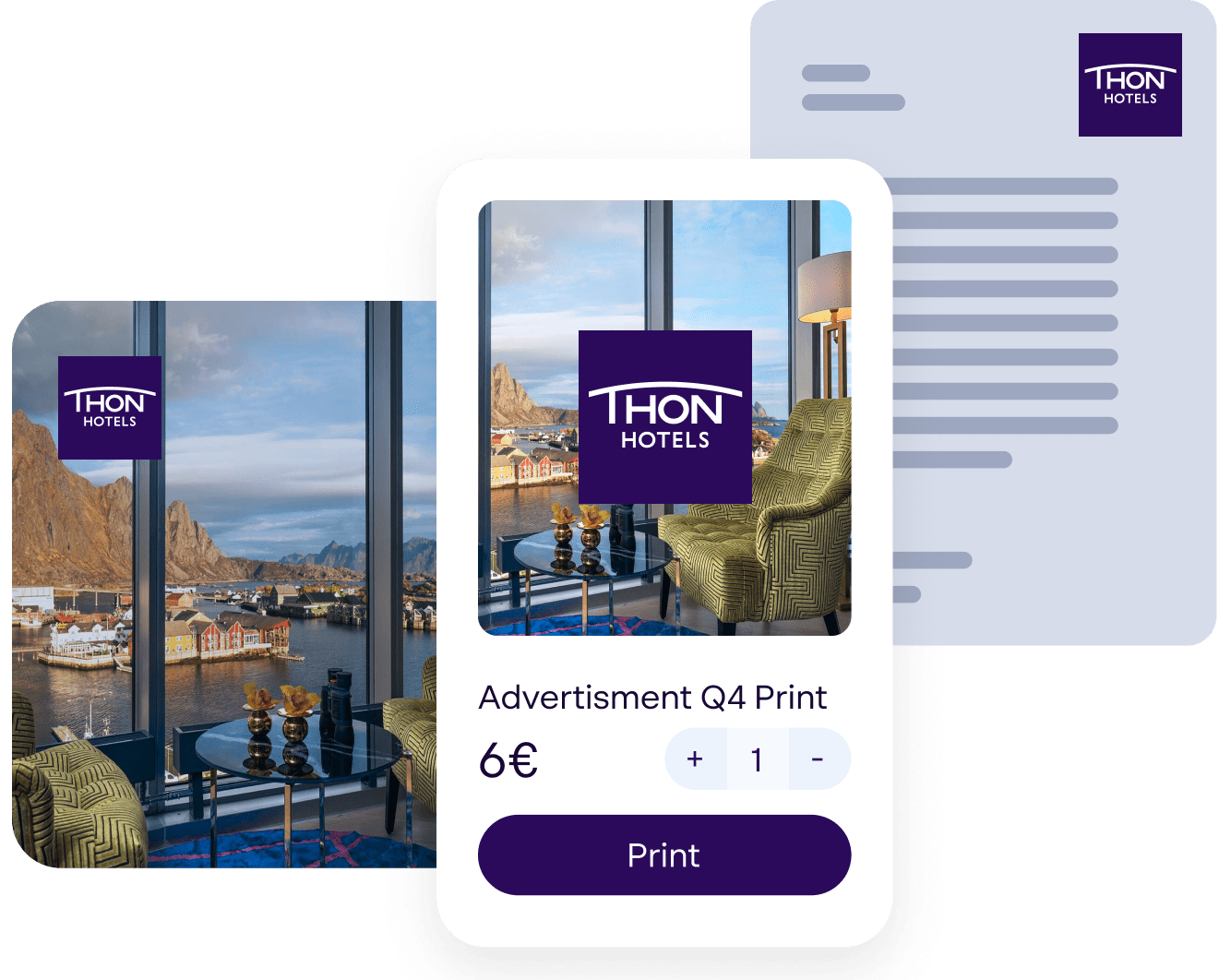
    With automated resizing through Papirfly’s fluid UI and layout system, marketing teams can instantly adapt branded content for print, social channels, and ad formats. No manual cropping or re-design required.
  • Global localization built-in
    Papirfly empowers local, regional, and affiliate teams to localize and customize pre-approved templates while keeping core brand elements protected and providing instant export options for print-ready PDFs and digital assets.
  • Multi-format on-brand templates
    Create and manage brand-compliant templates for every major format—including video, email, social media, print and digital documents, and banner ads. Ensure consistent branding across all channels and touchpoints.
  • InDesign import & campaign integration
    Convert existing InDesign files into flexible, editable templates in seconds using Papirfly’s integrated import workflow—streamlining the production of global assets and accelerating time-to-market.
  • Enterprise-grade workflow control
    Team members can create, approve, and publish customized templates across multiple channels using Papirfly’s role-based workflow—helping brands centralize control, automate approvals, and empower rapid production.
  • Interconnected with your tech stack
    Integrate Papirfly’s template builder and DAM with business-critical platforms like Adobe Creative Cloud, Figma, CRMs, and CMSs for seamless brand asset management and campaign activation.
  • Unified platform architecture
    The Papirfly suite combines DAM, Templated Content Creation, and other brand management tools so enterprises can manage collateral, enforce brand governance, and deliver consistent campaigns with a single solution.

Best for: Mid-market and enterprise organizations prioritizing brand compliance, speed-to-market, and global execution.

Strategic comparison: Which tool is right for your business?

Use CaseRecommended solution
Small teams (under 10)Canva, Adobe Creative Express
Creative departmentsFigma, Adobe Creative Express
Document-heavy workflowsTemplafy
Mid-market with growth plansPapirfly
Enterprise, global brand opsPapirfly

Only Papirfly’s design templates scale for brand governance

Consumer platforms focus on creative freedom. AI tools chase speed. Most enterprise tools handle one challenge well, rarely all.

Papirfly bridges the gap between creative enablement and brand control. It’s not just a templating tool. It’s a scalable solution to modern content operations, enabling every team to build trust through brand consistency—at speed, and at scale.

Ready to scale on-brand content creation?

Discover why leading brands trust Papirfly

Ready to scale on-brand content creation?

Discover why leading brands
trust Papirfly

Discover why leading brands trust Papirfly

Design template interface displaying brand-approved assets and layout options in a content creation tool.

FAQs

What is the difference between consumer and enterprise templating tools?

Consumer tools prioritize design flexibility but lack control. Enterprise tools like Papirfly ensure brand compliance, scalability, and workflow management.

Can Papirfly replace our current DAM or design tool?

Papirfly integrates with your DAM and creative suite while enhancing their capabilities through intelligent templates and brand governance.

How does Papirfly support localization?

With dataset-driven templates and multi-market content orchestration, Papirfly enables localized, compliant content creation without compromising brand identity. This makes Papirfly one of the most effective content creation tools for social media, among other things.

What teams benefit most from Papirfly?

Global marketing teams, brand managers, and local market contributors who need to create fast, on-brand content without relying on designers. Papirfly’s brand portals ensure every team can adopt brand guidelines.

Can Papirfly handle regulated industries?

Yes. Papirfly supports compliance workflows, GDPR consent managemnet, role-based permissions, and audit trails. The modular suite makes it ideal for regulated sectors like finance, healthcare, and pharma to build their compliant brand ecosystem according to their needs.

Digital Asset Management

Preserving corporate heritage with a modern DAM solution

Every photo, video and archived document is part of your company’s brand narrative. Yet too often these assets are hidden in old drives or out‑of‑the‑way servers – unavailable when you need them most. Ensuring corporate heritage remains both safe and accessible presents digital asset managers with a complex balancing act.

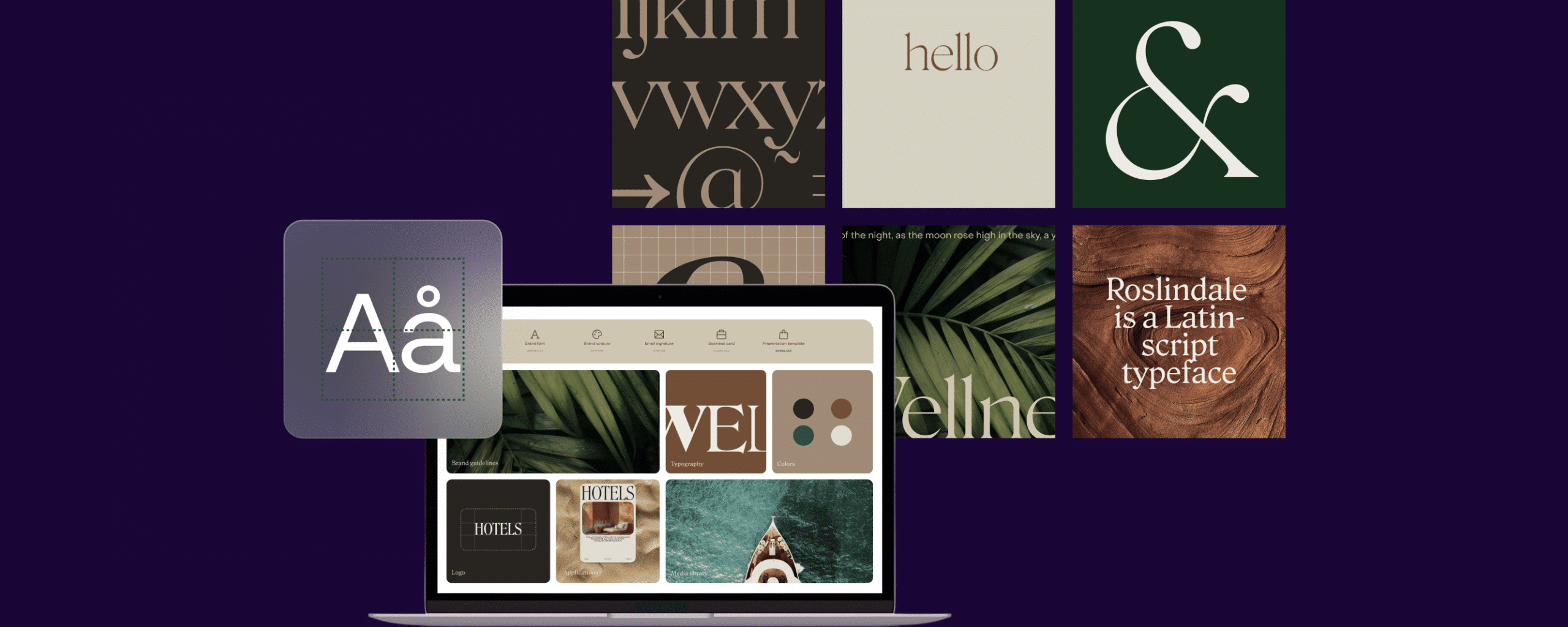
This guide explores how a purpose-built Digital Asset Management system can help preserve your heritage, reinforce brand culture, and accelerate creative workflows. From brand portal technology to GDPR compliance and templated content creation, we’ll dive into the key capabilities that make heritage asset a living resource, not a forgotten archive.

Why corporate heritage matters

Corporate heritage is the history of your business. From founding documents to milestone campaign reels, from product prototypes to workplace snapshots, these are the artifacts that chronicle your brand’s journey from the beginning to the present day.

Heritage assets serve three strategic purposes:

Strengthening brand authenticity: Archival photos support genuine storytelling that can help build emotional connections with audiences and distinguish you in crowded markets.

Fostering cultural continuity: Heritage assets can be useful for welcoming new hires and engaging existing employees by demonstrating shared values and showing “who we are”.

Mitigating compliance risk. Accurate historical records of product designs, financial disclosures, and consented imagery can be critical, especially in heavily regulated industries.

Timeline of brand assets accumulated over several decades for an energy company.

Over 50,000 brand assets
are often stored in companies’ DAM systems

Timeline of brand assets accumulated over several decades for an energy company.

Over 50,000 brand assets
are often stored in companies’
DAM systems

Common challenges associated with digital archives

Legacy assets are notoriously difficult to control, with industry benchmarks suggesting that teams lose an average of four hours a week just hunting for the materials they need. 

Common digital asset management issues include:

  • Siloed storage: With film archives in vaults, scanned photos on local drives, and digital videos in forgotten folders, nobody is sure where to look for the assets they need.
  • Inconsistent metadata: Missing dates, unclear usage rights, and ad hoc tagging hide assets from search.
  • Legal uncertainty: Lack of automated consent tracking means rights may expire unnoticed, risking GDPR violations or license breaches.

How modern DAM software bridges the corporate heritage gap

A mature Digital Asset Management system ensures heritage assets are compliant and accessible by bringing scattered archives together in one secure platform. But that’s not all it does. Here are some of the additional benefits offered by the best Digital Asset Management software:

  • Integrated brand portals. Centralize guidelines, logos, tone-of-voice documents and heritage galleries in a dedicated brand portal. Frontline staff and agencies can access the right assets and instructions without guesswork, ensuring every video, social post, or print ad aligns with your corporate style.
  • GDPR compliance manager. Automate consent capture, time-based permissions and instant asset revocation. Whether you’re using customer testimonials, employee headshots or licensed music, the system flags pending approvals and removes expired content – protecting you from fines and reputational damage.
  • Templated content creation. Empower non-designers with smart templates that merge heritage imagery and brand elements. Need to promote your centennial anniversary? Teams can generate on-brand posters, social carousels, and event banners in minutes, freeing designers for high-value projects.
  • Robust metadata and AI enrichment. Combine a consistent taxonomy with AI metadata tagging, facial recognition, and OCR, and even obscure heritage items become discoverable.
  • Granular access controls. Separate restricted archives from public heritage galleries by defining role-based permissions.

This approach reduces duplication, ensures compliance, and accelerates time to market.

Papirfly’s DAM solution showing how an AI search will not include archived assets

AI-powered DAMs can reduce asset retrieval times by up to 40%

Papirfly’s DAM solution showing how an AI search will not include archived assets

AI-powered DAMs can
reduce asset retrieval times
by up to 40%

Best practices for heritage‑focused DAM implementations

  1. Start with a pilot. Choose a manageable archive, such as your first decade of product launches. Ingest, tag, and publish a curated exhibit. Measure search time reductions and stakeholder feedback to validate your approach.
  2. Define a metadata governance plan. Get archivists, marketers, and legal teams to agree on taxonomy and tagging conventions. Document standards in a central guide and enforce them via DAM templates and AI helpers.
  3. Automate compliance workflows. Configure GDPR-manager rules for consent capture and asset expiration. Use time-based permissions to ensure outdated materials don’t ever slip through by accident.
  4. Curate thematic heritage exhibits. Build collections to tell powerful brand stories that engage employees, investors, and customers alike.
  5. Integrate across the ecosystem. Connect your DAM with CMS, CRM, and intranet platforms, so heritage assets can be automatically incorporated into newsletters, training portals, and web pages.
  6. Measure and iterate. Track KPIs such as asset utilization rate, search efficiency, stakeholder adoption, and compliance incident counts. You can use the data to continue refining taxonomies, permissions, and brand portal designs

Turning your corporate heritage into a living resource

Corporate heritage can be so much more than a static archive. It can provide the basis for powerful brand-building, authentic storytelling, and cultural cohesion – as long as you have the tools to get disparate legacy assets under control.

By adopting a Digital Asset Management solution with integrated brand portals, GDPR compliance management and templated content creation, you turn hidden treasures into living assets that fuel creativity and brand trust.

Ready to future-proof your heritage and make managing digital assets easier than ever? Download our DAM buyer’s guide to discover the must-have features for preserving your brand legacy.

Future-proof your brand heritage

Discover the DAM features that turn legacy assets into living brand tools

Future-proof your brand heritage

Discover the DAM features that turn legacy assets into
living brand tools

Future-proof your brand heritage

Custom brand portal interface surfacing legacy assets to showcase brand heritage interactively

FAQs

What is corporate heritage and why is it important for brand strategy?

Corporate heritage refers to the historical assets that document a company’s evolution, such as photos, videos, and founding documents. These materials can be used to strengthen brand authenticity and create a sense of shared company culture, as well as mitigating compliance risks in regulated industries.

What are the common challenges of managing digital heritage assets?

Legacy archives often suffer from siloed storage, inconsistent metadata, and unclear usage rights. These issues can lead to lost productivity, as team members waste time searching for hard-to-find files. It can also mean brand assets are underused.

How does a Digital Asset Management (DAM) system help preserve corporate heritage?

Modern DAM solutions like Papirfly centralize heritage assets, enforce metadata standards and automate GDPR compliance. This makes archives accessible, searchable, and usable across teams and campaigns.

What features should DAM software include to support heritage asset management?

Key features include integrated brand portals, GDPR consent tracking, templated content creation, and granular access controls to manage different levels of asset visibility and permissions.

What are best practices for implementing a DAM system for corporate heritage?

Follow these key steps:
1. Start with a pilot archive
2. Establish a clear metadata governance plan
3. Automate compliance workflows
4. Curate thematic collections
5. Integrate with your wider tech stack
6. Track performance metrics to improve over time

Content Creation

Your brand’s guide to creating on‑brand content at scale

Content creation has evolved from a simple marketing activity into the strategic backbone of successful brand communication. In today’s digital landscape, businesses need more than just great ideas – they need scalable systems, consistent brand messaging, and efficient workflows that enable teams to create compelling content at scale.

This comprehensive guide explores how modern brands can master the content creation process while maintaining brand consistency and maximizing efficiency through strategic use of content creation tools and workflows.

What is content creation?

Content creation is the process of developing, producing, and distributing valuable, relevant content for defined audiences – always with clear business objectives in mind. It spans everything from blog posts and social media content to video marketing materials and branded templates.

Modern content creation goes beyond words and design. It involves understanding your audience, aligning content with marketing objectives, and enabling teams to produce consistent, compelling content across every channel – at scale.

The strategic foundations of content creation

Aligning content with marketing objectives

Before producing anything, you need to establish a clear connection between your content strategy and your broader marketing goals. Without alignment, content can feel fragmented, diluting its impact.

Key alignment considerations include:

  • Brand consistency – Every piece of creative content marketing should reflect your brand voice and visual identity.
  • Audience targeting – Tailor messages to match the pain points, needs, and interests of specific customer groups.
  • Business impact – Connect content metrics to measurable business outcomes like pipeline, retention, or brand awareness.
  • Channel optimization – Adapt messaging and formats to suit specific platforms and buyer journeys.

Building your content marketing strategy

A robust creative content marketing strategy provides the roadmap for all your content creation activities. It helps your teams stay focused, agile, and aligned – especially as volume and complexity increase.

What your strategy needs to address:

  • Target audience definition – Build detailed buyer personas to guide content topics, tone, and distribution channels. Understanding your audience’s preferences, challenges, and content consumption habits is crucial for creating resonant messaging.
  • Content themes – Identify 3-5 core content themes tied to your brand’s expertise and audience interests. These will help you retain focus and prevent teams making the mistake of trying to cover too many topics at once.
  • Calendar planning – Strategic calendar management ensures greater consistency and impact, especially for social media content. Plan around campaigns, product launches, and seasonal trends for maximum relevance.

Which teams are most effective at creating content?

There’s no one-size-fits-all approach to creative content marketing. The right mix depends on your company’s goals, resources, and brand maturity. Modern brands typically use a combination of the following:

Building in‑house content teams

Having internal content creation capabilities gives you full control over brand messaging and content quality. In-house teams are especially useful when:

  • You need to produce high volumes across multiple channels
  • You’re worried that your content won’t be credible unless it displays deep industry expertise and brand knowledge
  • You have rapid turnarounds and need content creators to collaborate closely with other departments
  • You want to develop a long-term content strategy

In-house content creation teams typically include content marketing strategists, writers, designers, and project managers who can collaborate effectively across the entire content creation workflow.

Empowering internal subject matter experts

Subject matter expertise doesn’t always sit in marketing — and it doesn’t have to. Empowering colleagues from sales, product, or customer success to contribute can strengthen authenticity and scale output.

This approach involves:

  • Training employees from other teams to contribute content insights
  • Developing systems that enable non-writers to share expertise effectively
  • Creating templates and frameworks that guide subject matter experts through content creation processes

Using external agencies and content creation services

Third-party providers can complement your internal team without compromising brand quality – if you have the right content marketing tools, systems, and guidelines in place. External content creation services add most value when:

  • You need specialist skills or fresh creative direction.
  • Your internal team is small or stretched.
  • You’re struggling to manage seasonal spikes or campaign surges.
  • You require expertise in specific content formats or industries.

Leveraging AI tools for content creation

Artificial intelligence has transformed content creation by speeding up research, outline development, and first-draft generation. You can use AI tools to translate content, tag assets, and generate on-brand visuals – saving time, reducing costs, and scaling global brand impact.

Some of the best AI tools for content creation include:

  • Content research and ideation platforms
  • Writing assistants for drafts and editing
  • Visual content generators
  • Translation and localization tools
  • Asset tagging and organization systems

While AI speeds up production, it cannot work alone. Human creators are still critical for ensuring content quality, relevance, and brand alignment.

3 content creation tools every modern business needs

Template editors and design systems

Design templates enable fast, consistent content creation across teams and regions. They standardize how your brand shows up — without slowing down delivery. A best‑in‑class template editor system will typically include:

  • Banner design templates Standardized templates for web banners, promotional materials, and social media content that maintain visual coherence across all touchpoints.
  • Design document templates – Structured formats for various content types that guide creators through best practices while maintaining brand standards.
  • Templates for scalable visual content creation – Pre-designed templates that lock in brand elements while enabling rapid content production across teams and locations.

Digital Asset Management (DAM)

Content creation only works if the right teams can access the right assets, when and where they need them. A Digital Asset Management (DAM) system centralizes brand assets, making them easy to manage, find, and share.

Capabilities to look for in a DAM a system include:

  • Centralized storage and organization of brand materials
  • Version control and approval workflows
  • Easy asset discovery via search and tagging
  • Integration with content creation tools and platforms

Extended content marketing tools

Any comprehensive content creation ecosystem brings your teams, processes, and assets together in one place. Look for:

  • Collaborative workflows Tools that enable writers, designers, reviewers, and approvers to collaborate seamlessly throughout the content creation process.
  • Brand compliance features Built-in controls that prevent off-brand content creation while enabling creative flexibility.
  • Multi-channel publishing Features that enable teams to adapt content for different platforms and formats without starting from scratch.
  • Performance analytics – Integrated measurement tools that track content performance and prove ROI.

Content creation best practices by content type

Social media content

Social media content needs to be scroll-stopping – and on-brand. Key areas to prioritize include:

  • Platform optimization – Tailor content dimensions, formats, and messaging styles for each social media platform while always staying true to your core brand identity.
  • Visual storytelling – Compelling imagery can help you communicate brand messages quickly and effectively in crowded social media feeds.
  • Templated content creation – Use digital design templates to produce social media content at speed, without ever straying off-brand.
  • Automatic resizing for social channels – advanced content creation systems ensure that template outputs are created for all main social media channels in one creative process

Website content creation

Your website is a key brand asset and a foundational component of your digital marketing efforts. Main areas to focus on include:

  • SEO integration – Achieve the right balance between content that has user value and content that is optimized for search.
  • UX-informed structure – Develop content hierarchies and formats that guide visitors towards the right actions.
  • Brand voice consistency Maintaining consistent tone and messaging helps you reinforce your brand personality across every page.

Video content marketing

Video is a highly effective but resource‑intensive format. To get the most out of your video content, concentrate on:

  • Aligning video content with marketing objectives – Tie each video to a clear objective, while ensuring your content educates and entertains.
  • Optimizing production workflows Establish efficient processes for video planning, creation, editing, and distribution.
  • Enabling multi-format adaptation – Create video content that can be repurposed across platforms and touchpoints.

Digital content creation for B2B Brands

Business-to-business content creation requires its own specialized approach. Key areas to prioritize include:

  • Technical accuracy – Ensure content demonstrates deep industry knowledge and technical expertise.
  • Decision-maker focus Consider the multiple stakeholders involved in the buying process and create content that address their specific interests and concerns.
  • Trust building – Develop content that establishes credibility and thought leadership within industry communities.

3 ways to optimize your content creation workflow

1. Streamline content creation

It’s crucial that your content creation workflow achieves the right balance of efficiency and creativity. Focus on developing:

  • Standardized processes – Establish clear, consistent steps for teams to follow, from ideation through to publication.
  • Quality checkpoints – Build in review and approval stages that maintain content quality without creating bottlenecks.
  • Asset integration – Create a seamless content creation workflow by connecting your Digital Asset Management system to content creation tools.

2. Build on‑brand creativity into the process

Innovation and creativity thrive within the right guardrails. Empower your team by establishing:

  • Ideation frameworks – Structured brainstorming processes help generate original ideas aligned with strategic objectives.
  • Creative brief templates – Content creators excel when they are provided with clear direction.
  • Feedback loops – Your process should include regular opportunities to for team members to iterate and refine.

3. Measure content creation impact and ROI

Content creation is an investment. To understand return, you need to measure:

  • Engagement – Track how audiences interact with different content types and formats.
  • Lead generation – Monitor how content contributes to qualified lead generation and pipeline development.
  • Brand awareness – Assess the impact content has on brand recognition and perception within target markets.
  • Content marketing ROI – Calculate the financial return on content creation investments through attribution analysis and customer lifetime value assessment.

How to start content creation: step‑by‑step guide

Begin your content creation journey by following these five simple steps:

  1. Define your content marketing strategy – Start by defining clear objectives, target audiences, and KPIs.
  2. Audit existing assets – Organize existing digital assets to understand what you have and identify content gaps.
  3. Choose your content creation tools – Select platforms and software that align with your team’s skills and content requirements.
  4. Develop templates and guidelines – Create standardized formats and brand guidelines that enable consistent, efficient content production.
  5. Start small, then scale – Pilot one or two content types before using what you learn to expand your content creation capabilities with confidence.

Sourcing ideas for effective content creation

Stuck for inspiration? Here are some useful areas to tap into when you’re looking for content creation ideas:

  • Customer research – Are there any questions or challenges you regularly get from customers that you can answer in your content?
  • Industry trends – Can you provide a unique perspective on any industry developments or emerging topics?
  • Competitor analysis – Is there anything your competitors are failing to cover with their content?
  • Internal expertise – Do you have specialist knowledge or unique experiences in your team that you can use as content material?

Where next for content creation?

Content creation continues evolving at pace. To keep up, brands must embrace modern content creation tools that balance flexibility with consistency. Here are some key emerging trends to watch out for.

  • Personalization at scale
  • AI-enabled content creation
  • Seamless workflow automation
  • Interactive content formats
  • Omnichannel brand experiences

Unlock creating content at scale for your teams

Successful content creation requires more than creative talent – it demands strategic thinking, efficient processes, and the right technology. Only this way can teams produce compelling, on-brand content at scale.

Whether you’re just starting your content creation journey or looking to optimize existing processes, the key is finding the right balance between creativity and consistency. Start with solid strategic foundations, invest in the right content creation tools and processes, and continuously refine your approach based on performance data and audience feedback.

The aim? To make content creation a powerful driver of brand growth, and to enable your team to create exceptional brand materials that increase customer engagement and drive real business results.

Unlock scalable content creation

See how design templates empowers anyone to produce on‑brand content

Unlock scalable content creation

See how design templates empowers anyone to produce on‑brand content

See how design templates empowers anyone to produce on‑brand content

FAQs

What does content creation mean for modern brands?

Content creation is no longer just about producing materials – it’s about delivering consistent, on-brand experiences that support strategic business goals. From blogs and video to templates and social media content, it’s the process of developing valuable content that speaks directly to your audience, across every channel.

How can brands maintain consistency when creating content at scale?

Consistency comes from systems – not just style guides. By using templated content creation, centralized brand assets, and built-in approval workflows, teams across regions and departments can produce content faster without compromising brand quality.

What’s the most effective team structure for content creation?

Many brands find success by combining in-house expertise, external content creation agencies, and AI tools. But there is no one-size-fits-all approach. The best solution will depend on your brand’s unique challenges and goals.

Will AI replace humans in content creation?

AI tools are powerful accelerators – ideal for research, drafting, translation, and visual generation. But they work best when guided by people. Skilled marketers ensure the content remains relevant, high-quality, and true to your brand.

What’s the first step for brands looking to build a better content creation process?

Start by defining your strategy: clarify your audience, goals, and content priorities. Then audit your existing assets, choose the right tools, and build templates that support consistent execution.

Digital Asset Management

The impossible challenge of a retail marketer

Retail marketers today face a fragmented, chaotic content landscape. This blog explores the challenges of delivering consistent, on-brand messaging across 12+ retail channels—from e-commerce and franchise networks to programmatic and in-store campaigns. Learn how Digital Asset Management (DAM) with channel-specific portals offers a scalable solution, and take our 21-question audit to identify gaps in your current operations.

Why retail marketing is more complex than ever

If you’re a retail marketer, your day is a constant balancing act. You’re expected to deliver consistent, compelling brand experiences across more touchpoints than ever before—and do it faster, cheaper, and more often.

Once upon a time, marketing was relatively linear. Create the campaign. Send it to store. Repeat. Today? You’re managing content for your own e-commerce platform, distributor sites, physical displays, franchise networks, social channels, email campaigns, and more.

Each route to market demands tailored content, unique formats, regional adaptation, and compliance checks. Global teams juggle multiple file versions and stakeholders. Local teams often recreate assets from scratch because they can’t find the right ones.

Retail content funnel showing ecomm, dealers, social, and in-store channels

How disorganized content slows down retail growth

Without the right systems in place, content operations become a source of delay and frustration. 

Retail marketers face:

  • Delays in approvals and launches due to unclear workflows. 
  • Redundant work, as teams duplicate efforts across markets and formats. 
  • Off-brand activations stemming from outdated or non-compliant assets. 
  • A lack of transparency into which content is used where—and how it performs.

According to the Content Marketing Institute, 67% of marketers say campaign speed is directly tied to revenue performance (CMI, 2025). Yet without asset visibility and governance, campaign execution slows to a crawl.

A new foundation: Digital Asset Management with portals

The answer isn’t more people or more meetings. It’s better infrastructure. A modern Digital Asset Management (DAM) system acts as the foundation for consistent, scalable, and localized retail marketing.

DAM with channel-specific portals lets you:

  • Serve the right assets to the right partners at the right time
  • Maintain brand control across every execution
  • Empower local teams to adapt and publish content independently
  • Connect your content with tools like PIM and CMS
  • Track usage, performance, and asset reuse

This approach reduces duplication, ensures compliance, and accelerates time to market.

Branded digital asset portal for dealers and partners

Ready to assess your content operations?

To help you take the first step, we’ve created a Retail Content Operations Audit. In just 21 questions, you can:

  • Uncover inefficiencies and bottlenecks
  • Evaluate your tech stack and workflow readiness
  • Prioritize where to streamline or scale content operations

The checklist includes 21 yes-or-no questions designed to reveal the friction points slowing your campaigns. It’s the fastest way to map where your content machine is working—and where it needs tuning.

Eliminate bottlenecks from your retail mix

Streamline your retail content
in 21 questions

Eliminate bottlenecks from your retail mix

Streamline your retail content
in 21 questions

Eliminate bottlenecks from your retail mix

Streamline your retail content operations in 21 questions - PDF cover

FAQs

What are the main challenges retail marketers face today?

Fragmented channels, inconsistent branding, manual content adaptation, and approval delays are some of the most common operational issues.

How can a DAM system help retail teams?

A DAM with portals streamlines asset access, ensures compliance, and empowers local teams with ready-to-use, on-brand content.

What does the 21-question audit cover?

It evaluates content strategy, workflow efficiency, tech stack integration, and brand governance across channels.

Who should take the audit?

Anyone involved in campaign delivery—brand managers, trade marketers, content leads, and regional marketing teams.

How long does the audit take and what do I get out of it?

t takes just 3 minutes and provides a clear snapshot of where to streamline content ops and scale more effectively.

Digital Asset Management

Enterprise Digital Asset Management is failing your teams — here’s how to fix it

TL;DR

Most enterprise DAM platforms don’t fail because they lack features. They fail because teams don’t adopt them.

In this blog, we explore how UX — not functionality — is the silent driver behind DAM success. Learn how to identify adoption gaps, evaluate enterprise-ready solutions, and unlock ROI through a front-end-first approach.

Why your DAM isn’t delivering: if the front door is locked, no one enters the library.

Enterprise teams don’t fail at file management. They fail at adoption.

You’ve invested in powerful digital asset management systems with every taxonomy, metadata tag, and workflow precisely configured. But if global teams can’t navigate the system confidently — or don’t see value in it — the investment stalls.

This isn’t a technical failure. It’s a UX failure — and a silent threat to your investment in enterprise digital asset management.

Poor user experience undermines adoption at scale

The biggest risk in enterprise DAM? Low adoption.

You see the symptoms in every region:

  • Marketing teams still request logos manually
  • Out-of-date content in market
  • Low engagement or login frequency
  • Sales reuse outdated decks
  • Local teams create content off-platform (using shadow tools)

The gap isn’t functionality. It’s experience.

Your DAM should feel like an extension of your brand — not a storage locker with search.

Logos with a pencil icon, representing manual edits or requests for branded logo assets.]
Calendar with cross icons, indicating outdated or expired content.
Open laptop with low activity indicator, symbolizing low user engagement with DAM.
Hourglass with an exclamation mark, representing urgency and the risk of reusing outdated sales presentations.
Design tool icons floating outside a platform frame, suggesting content creation off-DAM.

UX is a multiplier in enterprise digital asset management

Your DAM doesn’t need more features. It needs a frictionless front-end that accelerates usage, content creation, and campaign delivery.

“Boosting the UX development budget by 10% can lead to an 83% increase in conversions.”

— UXCam, 2025 UX Statistics Report

In enterprise environments, that means:

  • Faster campaign launches across teams and regions
  • Higher brand consistency with less oversight
  • Reduced creative bottlenecks from central teams
  • Increased DAM engagement and internal advocacy

For teams managing complexity across markets, this is the ROI multiplier most DAMs overlook.

Think of your DAM like a hotel

It’s a simple analogy we use in enterprise DAM evaluations:

  • The Lobby (Frontend): How users are welcomed and find their way. The interface.
  • The Guest Rooms (Usability): How well assets are organized, previewed, and used.
  • The Boiler Room (Backend): The systems powering it all — taxonomies, storage, compliance.

Too many DAMs invest in the boiler room and ignore the lobby. And when the front door is confusing, no one checks in.

Screen with star icon representing the frontend of enterprise digital asset management.
Organized shapes symbolizing usability in enterprise digital asset management.
Nuts icons representing backend in enterprise digital asset management.

How to evaluate enterprise DAM systems in 2025

To help you benchmark DAM platforms based on real-world usage and business value, we’ve created a practical tool:

The Front-End First DAM Scorecard.

Built around six enterprise-critical categories, it aligns every evaluation criterion to real-world enterprise requirements, including:

  • Can the platform adapt to global permissioning and compliance?
  • Is templated content creation integrated within your DAM ecosystem?
  • Does the platform support localized brand execution?
  • Is user experience personalized by region, brand, or role?

Download the enterprise-ready evaluation tool

Enterprise digital asset management isn’t just about where assets live.
It’s about how they’re activated, shared, and brought to life by your teams.

When your DAM reflects your brand, empowers your people, and adapts to your structure — adoption follows.

That’s why UX isn’t cosmetic. It’s critical infrastructure.

Is your DAM built for control — or for adoption?

Get the scorecard built to measure what matters most — adoption, activation, and brand impact.

Is your DAM built for control — or for adoption?

Get the scorecard built to measure what matters most — adoption, activation, and brand impact.

Explore how we help brands manage and scale

Open folder with arrows flowing in and out, symbolizing content input, access, and adoption within a digital asset management system.

FAQs

What is enterprise digital asset management?

Enterprise digital asset management (DAM) refers to platforms that help global organizations store, organize, and activate brand content across regions, teams, and channels.

Why do enterprise DAM platforms fail?

They often fail due to low adoption, caused by unintuitive UX, rigid backends, or disconnected frontend experiences.

How can I improve DAM adoption across my teams?

Prioritize platforms that offer brand-first user interfaces, embedded templated content creation, and localized experiences.

What’s the ROI of improving DAM UX?

According to UXCam (2025), even a 10% increase in UX investment can yield an 83% lift in conversions.

Content Creation

Multi-channel campaign templates for content creation at scale

Why scalable content creation breaks down across channels

Marketing leaders today face a fundamental problem: how do you maintain a cohesive brand voice while scaling your content creation efforts across digital, print, and local markets?

The reality is, content creation workflows are often fragmented. One team uses PowerPoint. Another uses Canva. Social, email, and print all follow different processes—none of which guarantee brand compliance.

This siloed approach slows down campaign execution, introduces inconsistencies, and piles pressure on already stretched central teams.

A connected solution is needed—one that aligns every team around a single source of truth, while making content creation fast, flexible, and brand-safe.

What are multi‑channel campaign templates?

Multi-channel campaign templates are purpose-built frameworks designed to streamline content creation across formats and teams. Rather than starting from scratch for each channel or region, marketing teams can use a central template to generate campaign-ready assets for:

  • Videos
  • Social media posts
  • Email banners
  • Digital display ads
  • Print materials

These templates aren’t just about speed—they ensure every asset follows your brand guidelines, uses approved assets, and supports localization with flexibility and control.Multi-channel templates are foundational to a scalable content marketing strategy, helping teams reduce duplication, lower agency spend, and accelerate go‑to‑market timelines.

Why Papirfly is built for content creation across every channel

Where most tools offer templating as an add-on, Papirfly’s Templated Content Creation solution was designed from day one to support global, multi-format campaigns.

It gives brands the structure they need and the speed they demand—without sacrificing control.

All-in-one content creation workflow

From one intuitive platform, your teams can access, adapt, and activate brand templates across every format. No need to switch tools or download files. Content creation becomes a repeatable, compliant process—not an operational risk.

Smart locking to protect your brand

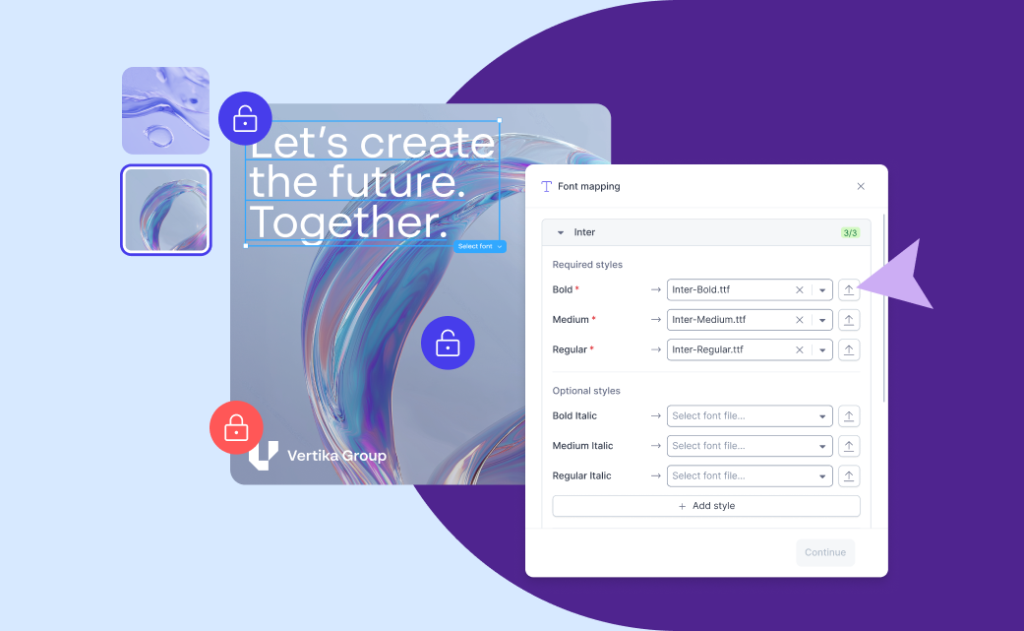
Papirfly templates include embedded brand controls that can lock logos, fonts, disclaimers, and more—while still giving local teams the ability to customize text, swap imagery, or localize CTAs.

This balance of flexibility and governance is what sets Papirfly apart from generic design tools.

Auto-formatting for all outputs

One template. Many formats. Papirfly eliminates manual resizing by producing channel‑ready versions for social platforms, print specs, and responsive email layouts—automatically.

Enterprise-grade scalability

Whether you need 10 or 10,000 assets, Papirfly supports content creation at scale. It’s built for marketing operations that demand performance across global teams, regional franchises, and multi-brand portfolios.

Content creation use cases: Where Papirfly delivers impact

1. Global marketing teams

Central teams can build brand-aligned campaign templates. Local marketers can adapt them instantly—without needing design skills. Content gets created fast, without going off-brand.

2. Franchise networks

Franchisees gain access to pre-approved content creation tools that reflect the latest brand assets. They can produce localized campaigns independently, without relying on HQ or agencies.

3. Employer branding & HR teams

Support employee advocacy, internal comms, and recruitment marketing with self‑serve content templates that guarantee brand consistency—and that non-designers can use confidently.

4. Creative operations teams

Free up time spent on repetitive edits. Templates reduce inbound creative requests and let design teams focus on high-impact creative, not banner resizes or layout tweaks.

Built-in approvals and governance

Papirfly includes native workflows to ensure content is reviewed before it’s published. Whether you need legal approval, brand sign-off, or local manager validation, everything happens in-platform—without slowing the content pipeline.

Version control that reduces risk

Every asset is tracked with clear version histories, so teams always work on the right file. No confusion. No outdated content in circulation.

Role-based permissions that safeguard control

Set permissions by user type, region, or team. Only the right people can edit, approve, or publish—keeping governance tight without blocking productivity.

Governance rules baked into every template

Templates carry embedded rules that reflect your brand’s specific compliance needs—from disclaimers to mandatory fields—ensuring every output is brand-safe by design.

Analytics for full content oversight

Usage insights show how templates are being used, where bottlenecks occur, and which assets drive performance—so you can continuously refine your content creation strategy.

Together, these capabilities give brand leaders complete visibility and control across the entire content lifecycle—from template creation to localized campaign execution.

Measurable content creation results

Customers using Papirfly for templated content creation typically achieve:

  • 80% reduced effort in campaign asset creation
  • $200 average spend avoided per asset
  • Reported 212% ROI

And perhaps most importantly, local teams feel empowered with campaign marketing tools that help them reach their goals.

With the right templates, content creation becomes a capability everyone can own—not a bottleneck that only HQ can unblock.

Your brand deserves a smarter content creation tool

Most design tools weren’t built for enterprise-scale content creation. They weren’t built for governance. And they weren’t built for speed.

Papirfly is.

Our solution combines the best of both worlds: intelligent templates that scale across every channel, and brand controls that protect your identity—at every touchpoint.

Empower your teams to create content at scale

Discover how campaign templates accelerate brand success.

Empower your teams to create
content at scale

Discover how campaign templates accelerate brand success.

Discover how campaign templates accelerate brand success.

Campaign templates interface showing on-brand content across digital, print, and social channels.

FAQs

Is Papirfly a content creation tool or a DAM?

Both. Papirfly connects Digital Asset Management and Templated Content Creation in one suite—so you can store, access, and create content without switching platforms.

Can templates be customized by non-designers?

Yes. Papirfly templates are built for all skill levels, with intuitive editing and brand-safe controls. No design software needed.

What types of content can be created with Papirfly?

Everything from social media graphics, videos, email headers to print ads, event signage, and product sheets, andmuch more. All design elements locked and on-brand. Open fields where you need to be, with approval workflows ensuring nothing goes out off-brand.

How does Papirfly support content governance?

Through smart locking, approval workflows, and audit trails that ensure every piece of content aligns with brand standards.

What if our brand evolves?

Updates to brand guidelines flow directly into all templates — so your teams are always working with the most current version.

Retail Marketing

Reclaiming ROI in omnichannel retail marketing

Your local teams — from retail distributors to shop owners and franchisees — are on the front lines of your brand. But when they’re stuck waiting for campaign assets or improvising without brand guidance, both speed and consistency take a hit.

This blog explores what effective retail distributor and dealer enablement looks like — and how consumer brand marketers can unlock faster, more consistent execution at scale without losing brand control.

Omnichannel execution is broken

You brief a campaign once. But before it hits the market, it’s been rebuilt, reformatted, and reapproved 15 times. Packaging needs one version. Shelf talkers need another. TikTok wants video. Ecommerce demands static banners. Then you localize it all — in five languages, with regional pricing, across every channel. The result? Weeks of lost productivity. A bloated production pipeline. Spiraling costs. Delayed launches. Internal teams spend more time managing tweaks than moving the brand forward. Omnichannel might be the new normal — but it shouldn’t mean chaos. In fact, it’s a challenge that should push retail marketing toward smarter execution.

What it’s really costing your team

Omnichannel retail marketing is complex by design. Customers interact with your brand across dozens of touchpoints — digital ads, shelf displays, mobile apps, influencer videos, packaging, emails, ecommerce — and they expect it all to feel consistent, responsive, and relevant. Delivering that kind of cohesion isn’t easy, especially when global teams are under pressure to localize campaigns in record time.

This complexity is made even harder by several external forces. Economic pressure is forcing teams to do more with fewer resources. Personalization is no longer optional — customers expect experiences tailored to their preferences, location, and behavior. Brands operating across regions must balance global consistency with local nuance. And the explosion of retail media channels demands near-constant adaptation to new formats and placements.

The rework spiral often begins innocently: a campaign is created for one format — a poster, a banner, or a video. But as it moves through different channels and markets, each adaptation requires changes. A new format means new specs. A new market means new messaging. Those changes require re-approval, which leads to further tweaks. Before long, teams are drowning in version control and redesigns.

What began as a single campaign idea has multiplied into a maze of fragmented tasks. It’s not strategic execution — it’s firefighting.

“Digital assets are alpha and omega in our industry. Digital assets help us market and sell our products to customers and resellers, and fund brand growth.

Without a DAM system, we would be forced to increase manual labour and the working processes would decrease efficiency immensely”

Rebecca Sjölander,
Trade Marketing and Asset Production Manager,
Helly Hansen

Make personalization scalable — not painful

Retail personalization isn’t just about knowing your audience — it’s about reflecting the right product, price, and message in every market. But when content production still relies on manual edits, personalization becomes a blocker instead of a booster.

For many retail teams, a single campaign must be adapted into thousands of variants: localized shelf-talkers, digital signage, and mobile banners — all tailored to region-specific SKUs, pricing, and translations. When those details are pulled and pasted manually, the process is time-consuming, error-prone, and impossible to scale at the speed retail demands.

With Papirfly’s Templated Content Creation, product and pricing data flows directly from your PIM system into brand-approved templates. Central teams build once — and instantly produce campaign-ready assets for every SKU, store, and screen.

No more spreadsheets. No more version chaos. Just accurate, compliant, hyper-relevant content delivered in minutes.

Central PIM system distributing a 20% sale update to multiple product visuals, reducing duplication across omnichannel retail marketing channels.

The solution: Build once, adapt with control

Papirfly’s Templated Content Creation (TCC) provides a way out of the chaos. Instead of rebuilding assets again and again, you create a master template once — and then adapt it quickly, safely, and at scale. At the heart of TCC is control. Your brand team can lock in essential design elements — like logos, layouts, fonts, and color palettes — so they remain consistent everywhere. You can then define editable areas for local teams to input pricing, product names, language, or offer details. This ensures the right balance between global control and local flexibility.

With auto-formatting capabilities, TCC handles the heavy lifting of resizing assets for multiple channels. Whether you need a print-ready flyer, an HTML5 banner, or a social video, the system generates the correct output — instantly. No manual reworking. No back-and-forth. The platform can also connect directly to your PIM or data sources. This means live product data, translations, or pricing can flow directly into templates, eliminating the need for error-prone copy-paste tasks and reducing compliance risks. Teams can go from campaign concept to activation in a fraction of the time — without sacrificing quality.

TCC doesn’t just improve speed. It protects brand integrity, reduces production waste, and enables teams across global retail organizations to act independently — without going off-brand.

Retail chair campaign shown across branded templates, illustrating consistent omnichannel execution and content reuse at scale.

Omnichannel ROI starts with execution

Retail marketers are navigating more complexity than ever before. Margins are tighter, campaigns are more frequent, and the expectations for personalization and performance are rising. In this environment, creative excellence alone isn’t enough. You need the operational backbone to deliver campaigns at scale, without delays or compromises. Execution isn’t just a delivery function — it’s a strategic lever.

With Templated Content Creation, Papirfly enables retail brands to unlock that lever. You eliminate repetitive tasks. You empower teams to act faster. You protect your brand identity while delivering local relevance. It’s time to stop recreating what’s already been made — and start making it work harder, smarter, and faster.

FAQs

Why is executing omnichannel campaigns so challenging?

Because many retail teams are still managing campaign assets in silos—different tools for different channels, duplicated work across markets, and no central oversight. The result? Delays, inconsistencies, and burnout.

With Papirfly, you centralise your brand content and workflows, so teams can create, adapt, and approve assets all in one place.

How can I stop teams from recreating the same assets?

It’s not just wasted hours—it’s misaligned messaging, off-brand visuals, and higher costs from rework or missed deadlines. Duplication often hides in localisation, adaptations, and last-minute changes.

Papirfly helps prevent duplication by enabling content reuse, templated brand assets, and role-based access for local teams.

I never know where things are in the process—how do I fix that?

If you’re relying on spreadsheets or disconnected platforms, it’s tough to know what’s been briefed, approved, or launched. Without visibility, delays and mistakes multiply.

Papirfly gives you a unified view of campaigns from concept to delivery—so nothing slips through the cracks.

How do I let local teams personalise content without losing control?

Scaling content across regions and formats usually means more risk—especially to brand consistency. The challenge is empowering teams to localise and personalise, without reinventing assets.

Papirfly enables on-brand content creation at scale, with guardrails and templates built in—so your brand stays consistent, even when content volume grows.

Retail Marketing

What your retailers really need from your brand team

Your local teams — from retail distributors to shop owners and franchisees — are on the front lines of your brand. But when they’re stuck waiting for campaign assets or improvising without brand guidance, both speed and consistency take a hit.

This blog explores what effective retail distributor and dealer enablement looks like — and how consumer brand marketers can unlock faster, more consistent execution at scale without losing brand control.

If your content delivery still runs on requests, you’re not enabling — you’re delaying

Retail marketing moves fast. And your brand depends on the people who activate it every day — your distributors, dealers, and franchisees.

Whether it’s a product launch, in-store promotion, or seasonal campaign, these teams are expected to move quickly and stay on-brand. But more often than not, they’re forced to wait on HQ or create assets from scratch.

If you’re fielding one-off content requests from local markets, you’re not practicing retail distributor and dealer enablement — you’re slowing your network down.

Why retail distributor and dealer enablement often breaks down — and how to fix it

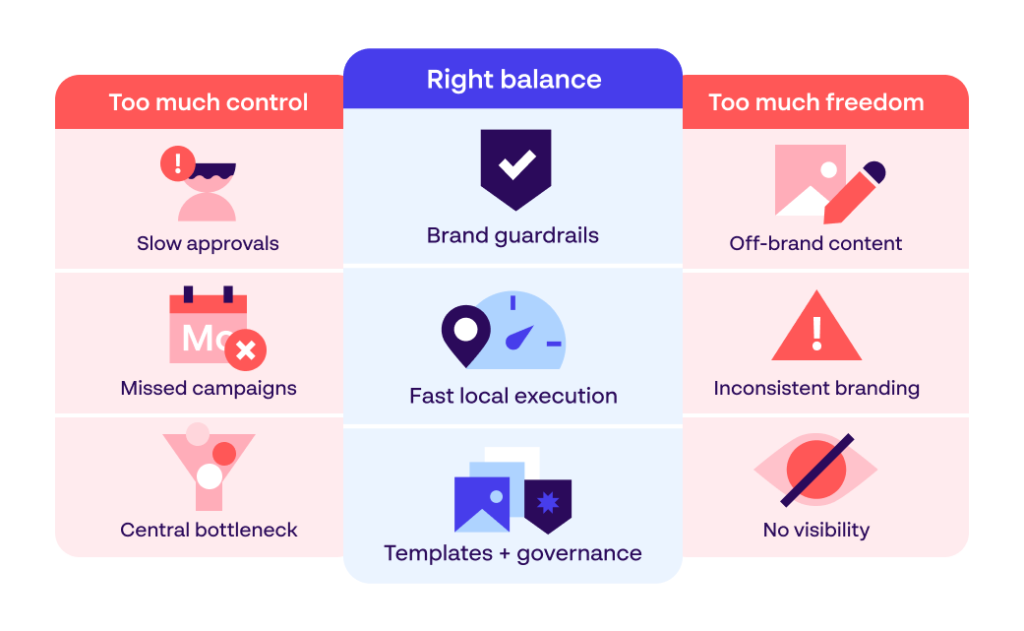
Brand marketing teams want consistency. Local teams want to get campaigns live. That tension lies at the heart of most enablement breakdowns.

Your intentions are right — protect the brand, ensure quality, and reduce risk. But in reality, these goals often result in:

Calendar icon representing delayed campaign launches due to slow asset delivery.

Delayed campaign launches due to slow asset delivery

Warning symbol showing off-brand adaptations made out of necessity by local teams.

Off-brand adaptations created out of necessity

Globe with a cross, illustrating limited local relevance when content can’t be personalized.

Limited local relevance when partners can’t personalize content

Central hub icon highlighting over-reliance on head office or agencies for simple tasks.

Over-reliance on central or agency teams for basic execution

Your partners don’t want to go rogue. They want to go live.

The tools that help local teams move faster — without going off-brand

Your dealers and retail distributors don’t want to improvise — they want to execute effectively. But they need the tools to do it right.

Modern retail distributor and dealer enablement means equipping your network with:

  • Editable templates that reflect current campaigns and branding
  • Pre-set controls to lock logos, fonts, and layouts
  • Simple interfaces that anyone on their team can use
  • Freedom to localize where it makes sense and fast approvals when needed
Editable brand template showing how retail distributors and dealers can align with current campaigns.
Locked branding elements representing pre-set controls for logos, fonts, and layouts.
User-friendly dashboard demonstrating easy content creation for non-designers.
Globe and pencil icon illustrating flexibility for local teams to tailor content.
Approval workflow showing how fast sign-offs support local content execution.

When brand teams provide these systems, execution becomes faster and more accurate. Instead of chasing approvals or rebuilding assets from scratch, franchisees can act confidently within clear parameters. That’s how local marketing scales — not by adding more people, but by removing friction.

Editable templates: A practical fix for campaign chaos

With templated content creation, you don’t need to micromanage every activation. Instead, you empower local teams and dealers to:

  • Create and localize content in minutes
  • Stay on-brand through intelligent locking and embedded brand rules
  • Reduce dependency on HQ or external designers
  • Speed up time-to-market without sacrificing quality

This isn’t just about content efficiency — it’s about brand growth. Because when your partners can activate campaigns confidently and independently, your brand shows up stronger everywhere.

What a brand portal should offer your retail network

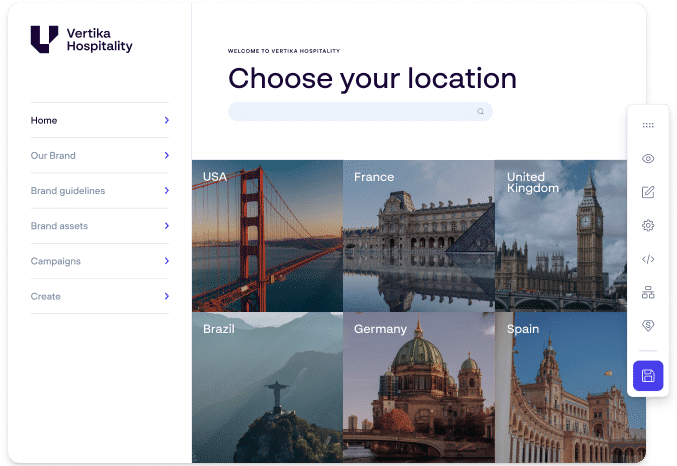
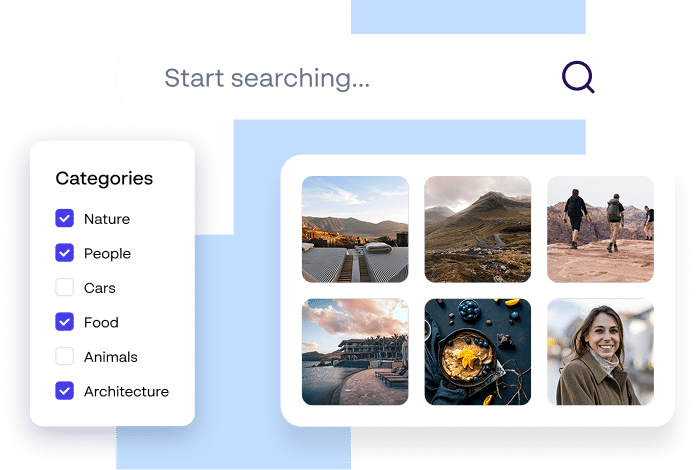
Even with great templates, success depends on access. That’s where a brand portal comes in. A centralized brand portal gives each trailer, dealer or shop owner a secure, easy-to-use space to find what they need — and nothing they don’t. Templates, campaign kits, product images, updated pricing — it’s all in one place, always current, and always aligned to their region or market.

No more searching shared drives. No more accidental use of outdated files. And no more chasing down the latest version of a campaign visual. A good portal not only saves time — it builds trust. Your partners feel equipped, supported, and confident representing your brand.

Scaling local marketing without compromising your brand
Retailer and dealer enablement isn’t just about content access. It’s a strategic shift — from reactive asset delivery to proactive brand empowerment.

When your content systems support speed, scale, and brand control, you don’t just protect your brand — you multiply its reach.

Ready to equip your local teams with the tools to move faster — and stay on‑brand?

Explore how Papirfly empowers retail marketers to scale content creation across every store, channel, and market.

Ready to equip your local teams with the tools to move faster — and stay on‑brand?

Explore how Papirfly empowers retail marketers to scale content creation across every store, channel, and market.

Explore how we help brands manage and scale

Branded assets like t-shirts and posters symbolizing how retail teams can create localized, on-brand content instantly.

FAQs

What is franchise and dealer enablement?

It’s the process of equipping local retail partners with the tools and content they need to execute campaigns quickly and on-brand.

Why do franchisees struggle to stay on-brand?

Because they often lack editable templates, brand-approved assets, and fast access to campaign materials.

How does templated content creation help?

It allows local teams to adapt marketing materials in minutes while protecting core brand elements like logos, layouts, and messaging.
What is the value of a brand portal?

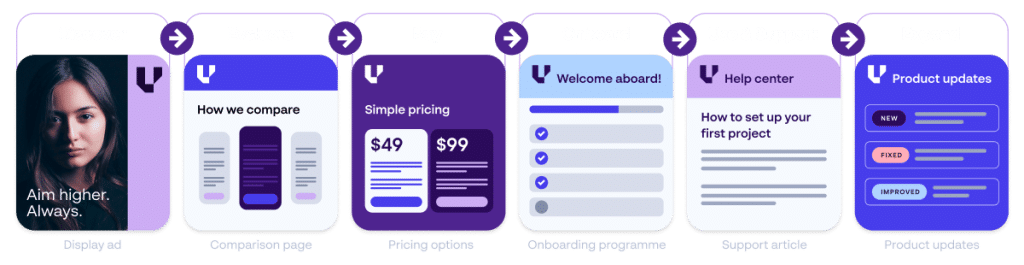
It centralizes access to templates, images, campaign kits, and ensures everyone works from the same source of truth.