
Content Creation

How design templates elevate your social media content strategy

Responsiveness. That’s the hallmark of a high-performing social media content strategy today. As platforms evolve and audiences expect instant engagement, the brands that thrive are those equipped to respond quickly – with clarity, consistency, and creativity.

Social media moves fast. From breaking news to viral trends, conversations can gain traction in minutes. This creates an opportunity, but also a risk. Whether you’re responding to a product mention, a cultural moment, or even a crisis, you must strike the perfect balance between speed and control.This is where templated content creation tools become mission-critical. Using design templates ensures your responses are not just timely – they are well-crafted and unmistakably on-brand as well.

Number of annual social media users statistic. Source: DataReportal

Real-time readiness: why it matters for social media content

Imagine a scenario: a prominent influencer calls out your brand on X (formerly Twitter), spotlighting a negative experience with one of your products. The reaction is gaining visibility. Your response will shape public perception – for better or worse.

Without a well-defined social media content strategy, several risks emerge:

  • Your visuals or tone might miss the mark, damaging brand recognition
  • Delayed responses may be interpreted as indifference or avoidance
  • Competitors may seize the narrative while you’re still crafting yours

All these outcomes can have seriously negative effects for your brand. That’s why it’s so important that your team has the content creation tools to produce social assets quickly, with confidence and control.

Quick guide to social marketing CTA

How design templates accelerate social media content creation

Tools like Papirfly’s Digital Asset Management (DAM) and Templated Content Creation suite enable marketers across regions, languages, and departments to create high-quality social assets in real time, without waiting for design support or approvals. From reactive social media content to evergreen campaigns, everything remains consistent, compliant, and compelling.

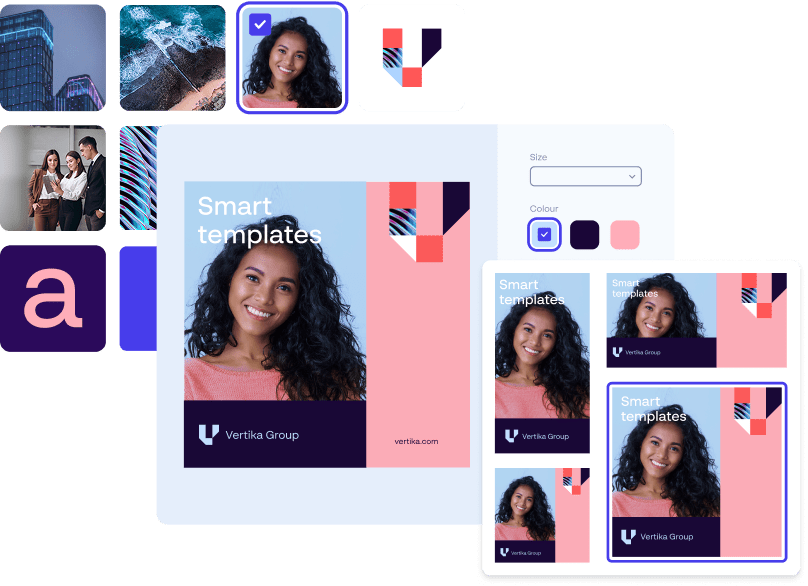
Your DAM provides a centralized hub where you can have all your planned content ready to go at the click of a button. Templated Content Creation tools then empower employees to create new assets, while ensuring consistent social media branding across every post, platform and team member.

The best templates solutions are:

  • Aligned with your brand guidelines
  • Customizable for local teams or campaigns
  • Ready to deploy at a moment’s notice

Achieving brand consistency across multiple channels

Every platform demands a slightly different voice, format, or visual. What resonates on LinkedIn may fall flat on Instagram. But your brand identity must remain clear across them all.

This is where design templates and similar AI tools for content creation show their full value. They empower your marketing teams to scale consistently across channels and formats – from stories to videos, posts to reels.

With templates, you’re not reinventing the wheel for every campaign or region. Instead, you’re reinforcing recognition at every touchpoint.

How proactive planning supports social media success

Social success isn’t just about what you post in the moment – it’s also about how well you’ve prepared. Build a proactive social media content plan that includes:

  • A clear calendar of campaigns and content types
  • Approved templates for paid and organic posts
  • A designated content creation workflow for reactive publishing
  • Monitoring tools that alert you to real-time brand mentions

Start building brand equity with templated content creation tools

Customers follow brands that are human – companies that feel like they’re part of the conversation, not chasing it. By equipping your teams with templated content creation tools, you’re not just streamlining operations. You’re ensuring your brand shows up in the right places, in the right ways, at the right time. This is key to fostering community and building brand equity over time.

In an unpredictable digital landscape, the brands that win aren’t the ones shouting the loudest. They’re the ones creating clarity, consistency, and connection. Templated content creation makes that possible.

Ready to scale your social media content strategy?

Explore how Papirfly’s Templated Content Creation suite empowers teams to create, localize, and launch social media content – without compromising control.

Does everyone create content that’s on‑brand, every time?

Find peace of mind with
better brand governance.

Does everyone create content that’s on‑brand, every time?

Find peace of mind with
better brand governance.

Find peace of mind with
better brand governance.

FAQs

How do design templates improve social media content creation?

Design templates enable teams to create high-quality, on-brand social assets quickly and consistently. They eliminate the need to start from scratch, reduce reliance on design support, and ensure brand consistency across platforms and teams.

Why is real-time readiness important for social media strategy?

Brands that are ready to respond instantly to trends, mentions, or crises are able to capture audience attention before competitors do – a huge advantage. One way to ensure teams can deliver on-brand content fast is by equipping them with templated content creation tools

How do design templates support brand consistency across multiple channels?

Each social platform has its own unique formats and expectations. Templates make it easy for teams to adapt assets to each channel, without ever compromising core brand elements such as logos, fonts, color palettes, and tone of voice. This supports brand consistency, reinforcing recognition and trust.

What should a proactive social media content plan include?

Key elements of a proactive social media content plan include:
– Campaign calendar
– Pre-approved design templates
– Workflows for reactive publishing
– Monitoring tools for real-time brand mentions

How do templated content creation tools build brand equity?

Templates help brands stay visible and relevant by making it easy for teams to create social media content, quickly, consistently and authentically. They also support the kind of human, conversational engagement that is a key driver of long-term brand equity.

Product, Thought Leadership

Co-op advertising model – professional services powered by unique innovative technology

What is co-op advertising and why do companies need it?

Co-op advertising is the sharing of the advertising costs between a major brand or manufacturer and its local retail channel partners. The local retailers get the benefit of additional marketing dollars to attract customers to their stores, and the manufacturers get the benefit  of local targeted marketing to increase sales. 

There have to be rules set up for this to be beneficial – manufacturers want marketing to be consistent with the brand corporate identity and marketing philosophy, and therefore will provide the marketing dollars to incentivise the retailers to market ‘on-brand’. The local retailers can target the specific demographic locally for the product and can increase their marketing power with a shared marketing dollars model. 

Usually the manufacturer will outline the potential funding available to a particular retailer and detail a set of rules to follow. The retailer will then get reimbursed at an agreed rate for marketing efforts that follow the rules. 

Local retailers may not have the resources or expertise to develop effective marketing strategies themselves, so the manufacturer will provide access to brand assets and run campaigns from which the local retailer can select and tailor to their needs. These assets will have the blessing of the brand leads, legal departments, and are accessible by retailers across the market at a fraction of the costs that the local retailers would incur doing it themselves. Manufacturers can also incentivise local retailers to target particular marketing strategies or products by increasing the reimbursement rate. 

While the co-op advertising model incentivises retailers to follow the brand rules by submitting for reimbursement of costs, this is often coupled with a compliance activity whereby the marketing activities of the retailer are checked via audits of their websites, social media sites, etc. to see what potential customers will actually experience. 

Why companies need co-op?

  • To control brand consistency across all franchises, dealers, and retailers. The financial support is a very strong motivation for individuals, dealers, and stores to follow corporate identity and advertising guidelines.
  • The budget each dealer is allocated depends on the volume of cars sold (that’s the logic used by a major car retailer). The more cars sold, the more money is reiumbursed, but only under the condition that the brand guidelines and other rules are followed.
  • Thanks to the co-op program and managed audit, there is a guarantee that the money a major car retailer’s centralised marketing function invests into each dealership is being used only for compliant and eligible marketing activities. In cases where the dealer doesn’t spend the money, the unused money is forfeit after a determined time period. 
  • To have one centralised place for money distribution, not only for tracking purposes, but also for approval process and auditing.
  • The side effect is that brand leads and regional managers can supervise and have an overview of marketing activities realised across hundreds of subjects, which allows them to see the whole market, or individual marketing efforts. The overview also helps for money redistribution.
  • The tool comes with statistics, which is useful to brand leads and managers to understand on which kind of activities the dealers are in investing the co-op funding.

How Papirfly is supporting our customers with co-op

Papirfly works with a number of customers on their co-op advertising programs and can support with SaaS platforms for complete brand management.

We can provide the DAM, where advertising assets are held, and the SaaS platform for the presentation and distribution of advertising assets to the retailer network. Retailers are able to quickly gain access to the appropriate brand assets and tailor them using our Create & Activate solution to their own local campaigns while staying on brand. Retailers can download the imagery and creatives and use that as the basis of the local campaign, and even utilise a local ad agency to finalise the ad. This removes the possibility of ads not being on brand, not aligned to the brand corporate identity and, potentially delivering messaging that is not inline with the brand.

We provide a co-op platform, seamlessly linked to the DAM (our Manage & Share solution), that enables all the retailers to access and download the co-op rules, corporate identity guidelines, and brand bulletins. These integrated solutions also provide access to the co-op and compliance platforms.

The co-op platforms that we provide can be configured to your needs, and are built to allow for easy set-up of the necessary workflows to guide the retailers through the co-op processes. 

This platform provides the process for retailers to get assets they have created to be reviewed and submit claims for co-op advertising funds, but the platform is only half the story. Just as important is the need for a team to run your co-op program who can audit that your brand rules are being followed and are compliant.

Papirfly provides the experienced professional services to run the co-op program, with a dedicated team of brand specialists that are proven and reliable.

How a major US client works with Papirfly’s co-op funding model and Professional Services team

For one of our major US automotive clients, we provide the platform that can handle the requirements and volumes of a major brand marketing in the US market. 

We also provide the Professional Services to run those co-op programs for the client:

  • We studied the brand philosophy and rules to understand the brand vision
  • We established a dedicated team that reviews creatives submitted by the retailers to ensure their brand compliance
  • We worked with the retailers to suggest improvements that can be made
  • We reviewed the co-op advertising payment claims and determined whether the claim rules have been followed 
  • We also provided a compliance review team that will actively review the marketing of the local retailer
  • We provide a dedicated support desk to answer retailers questions
  • We align with the clients business processes to ensure that the payments to retailers go through the required approval processes of the manufacturer and align with the back-end systems to create a seamless payment process

Using the co-op funding model for other use cases outside of car manufacturers

  • Any franchise business with multiple locations, besides automotive industry may also include fast-food restaurants, hotels, gyms, spas, or any other organisation with a franchise model
  • Manufacturers can support their retailers to increase in-store sales
  • Travel and tourism franchises like hotels, airlines, car rentals, etc. could partner with local attractions, restaurants, events, etc. to promote their destinations and packages
  • Education franchises like tutoring centres, language schools, online courses, etc. could partner with local schools, libraries, community centres, etc. to promote their programs and services
  • Health and wellness franchises like gyms, spas, clinics, etc. could partner with local doctors, nutritionists, therapists, etc. to promote their facilities and treatments
  • It can be used for governmental institutions/organisations to control budget handling. e.g. European Parliament and reimbursement of expenses to members for various activities, trips, food, etc.

Other possibilities and variations on how the co-op funding model can be used:

  • The managed service can be tailored to what the customer needs. The audit can vary depending on the media category etc. (e.g. a major car manufacturer offers financial support only for events, but dealer can still enter a marketing activity for CI compliance check to get support/advise on anything he is trying to publish)
  • The program can serve for CI compliance check only, but the motivation for dealers to submit creatives for review is higher when supported  with marketing money reimbursement
  • The co-op portal is linked directly to ‘My Creatives’”, which means that the brand leads can decide to only support (or offer higher reimbursement) for activities that use official templates that are available for dealers at dealer marketing portal (brand hub/point). The dealer can select a predefined template in brand hub, use it for his marketing activity and at the same time send a request for funding into the co-op portal. 

The benefits of having a Papirfly-run co-op model

  • Fixed contracted costs for the service
  • Experienced team with strong product knowledge
  • A world leading product suite focused on branding and co-op
  • Adaptability – with an experienced professional services team we can provide insights when you get challenges and adapt to meet your needs
  • Running all ads through the co-op portal guarantees how the money is spent thanks to the compliance audit there is a guarantee that the money is not being spent to promote other brands, for example
  • The audit team can control minimum advertising price and check that the advertised product is not being offered/sold below MSRP
  • The budget each retailer is allocated depends on the volume of sold products, which ensures return on investment of marketing budgets and ensuring local marketing efforts are given the time and attention they deserve
  • Through co-op, the brand leads can offer ‘certified providers’ for certain marketing activities – the logic being to have limited number of authorised agencies that work for the retailers. This is not only for better brand consistency and control, but is also often more cost efficient, e.g. cheaper cost for broadcast when you buy media in huge quantities, centralised creation of the marketing materials which can give you lower costs per ad

Reach every customer with co-op advertising

Want to know more about co-op advertising? With automotive, hospitality, retails and finance among the host of industries with companies thriving from a co-op model, take a look at how brands have successfully adopted this initiative.

Your next step is to take control of brand consistency, master the art of helping others speak directly to your target customers, and build strong relationships with those that sell your branded products and services. The potential to activate your brand in every location you serve, and achieve significant growth, is possible with Papirfly’s platform and support.

Book a demo today, and talk to us about how we can help you with your co-op advertising programme.

AI, Product, Thought Leadership

AI beyond the hype, – Adaptation and adoption

Papirfly has worked with AI for some time and has successfully implemented it in the production of illustrations for one of its customers. The company used the customer’s brand guidelines to train the AI to create new illustrations that are inline with the brand’s look and feel. This allows the customer to quickly generate new illustrations at a low cost and with a faster turnaround time compared to the traditional workflow of requesting and waiting for an illustrator. The AI-generated illustrations are still subject to manual approval.

The above intro text was written by ChatGPT. Our Product team took this text and asked ChatGPT’s AI for an executive summary on how to use AI to write marketing content as an experiment. We’ve all spent the last couple of weeks getting mind blown by the text and copy that a chat AI can write. But what now? The sharing hype is over, can this be used for anything useful?

AI: Looking deeper

At Papirfly we’ve been looking into AI use cases and the theory behind it for some time and similarly to others, we’ve been fascinated and impressed. AI has been, theoretically at least, hailed as the solution to many problems currently being dissected and analysed within “big tech”. It may seem obvious, but trying to implement the technology to fix those problems comes with its own challenges. It’s theorised that “AI can solve anything,” but we have some questions!

  • Where are the use cases that are suitable for it?
  • Why should AI solve those things?
  • Does the problem really need AI to solve it, or are we throwing technology at something because it’s “new and cool”?

Addressing the technology adoption curve

At Papirfly, we believe we’ve found a killer use case for AI (you could say we’re the “Innovators” on the technology adoption curve), but we need to help the technology find its rightful place where it can stand on its own in the product ecosystem, and support other companies in how to use the technology properly and responsibly.

What’s next on AI from Papirfly?

This short blog is Papirfly’s introduction to our longer series on AI, “AI: beyond the hype” where we’ll dig into more wide ranging topics on AI and how it might affect our customers and their customers. We want to ensure that we’re researching, analysing, and using AI in a responsible and sustainable way, and have some exciting use cases and thought leadership coming in the new year. Stay tuned!

Contributions by Natalie Wilding, Martin Pospisil, and Yngve Myklebust

Watch our on-demand webinar

ROI

The Total Economic Impact™ of Papirfly

A positive return on investment (ROI) is one of the only metrics that matters – simply put, do your gains outweigh the cost of your investment?

Concerning brand management tools, searching for online solutions that provide great value can lead to trying many ‘shiny new objects’ that address key business challenges – brand consistency, reliance on expensive agencies for assets, a bird’s-eye view of campaign activity, gatekeeping brand guidelines, to name a few.

In reality, few solutions generate a positive ROI whilst creating long-term business benefits that support advancing your brand strategy – allowing you to maintain gatekeeping control of your brand. In short, having the right information before you invest in brand management tools is pivotal.

That’s why Papirfly commissioned Forrester Consulting to conduct a Total Economic Impact™ (TEI) study to determine the financial and business benefits our customers experienced from our brand management platform.

And the results are in.

212% ROI over three years

Combining the results of four customer representative interviews and the financial analysis of their business, a composite organisation was formed.

The study found the composite customer experienced benefits of $1.72 million over three years versus costs of $553,000 – adding up to a net present value (NPV) of $1.17 million and an ROI of 212%.

Improved asset creation efficiency

Whilst external agencies can be important collaborators, Papirfly have empowered brands to reduce the requirement, and therefore cost, of regularly using external agencies when a high quantity of fast, high-quality marketing materials are needed across any location that brand operates in. Prior to adopting Papirfly, the study reports that customers’ global and regional teams primarily worked with agencies to create branded collateral – and the composite Papirfly customer saw a three year-benefit of $455,400 in reduced agency spend.

three year benefits

In addition to less reliance on external agencies, the interviews from the Forrester TEI study showed that, prior to adopting Papirfly, our customers experienced limited brand governance, a single source of truth for the brand was lacking, and brand guidelines and assets were stored in disparate systems or folders across the organisation.

Interviewees confirmed that after investing and using Papirfly, they had advanced asset production processes – to the benefit of $1.2m across three years for the composite organization – and reduced costs by enabling teams to create assets in-house. By centralising brand assets and guidelines in a single portal, content distribution was improved thanks to the centralised brand hub – to the benefit of $27,800 in three years.

Long-term on-brand benefits

Whilst an all-important ROI figure is key, it’s important to highlight some overall improvement that showed in Forrester Consulting’s findings as a result of the customer interviews:

  • Increased brand adoption granting all employees access to view assets in the centralised brand hub 
  • Improved brand consistency – interactive experience with the brand hub to more fully embrace guidelines
  • Maintained gatekeeping control – the ability to quickly and easily validate and approve any material created from our on-brand template technology
  • Enhanced content quality and improved business outcomes users across brand, marketing, talent acquisitions, and communications could increase focus on crafting relevant messaging and engaging content

Discover how Papirfly delivered significant ROI

Determining the value of your brand management platform is made easier with a study such as the Forrester Consulting TEI study. Whilst the results are from a composite organisation, the specific impact Papirfly can have on your business will be unique to you.

Download the study, and talk through the findings with one of our brand management experts.

Employer Branding

Attracting graduates: a new wave of employer brand

The graduates of today are the future leaders of tomorrow. So getting your company noticed at a pivotal time in the careers of these bright young prospects is crucial.

Gen Z and beyond have experienced turbulence much like any other generation. But when it comes to the outlook on careers, the environment and the future, they have been exposed to a much thicker wall of negativity, which employers will have a partial responsibility in helping them break through.

Employers need to not only work hard to bring their employer brand to this new wave of prospects – they need to inspire this generation into believing anything is possible once again. It’s a big challenge, but it’s a vital one to ensure that the right talent is nurtured, retained and driven in the right direction. 

Overcoming challenges with graduates

There are typically two main scenarios employers are finding themselves in with graduates.

  • They are inundated with applications for certain roles
  • For more specialised roles, there is a smaller pool of talent and competition is high

First let’s look at the most common situation: receiving too many applications.

This can be a problem for a number of reasons that will affect your ability to recruit quality graduates…

Problem…Too many people with similar skill sets are applying and it’s difficult to distinguish who might be most suitable based on their application alone, suggesting there’s a flaw in the application process.

Solution…If you are using an Applicant Tracking System (ATS), there should be options available to introduce more detailed screening questions. These answers should give you insight into an applicant’s personality, communication skills and general motivations for the role before considering their skill sets. 

Your team should also set some common rules for what a good applicant looks like. For example: they must include a cover letter, they must have tailored their cover letter to your company, they must have a nicely presented CV – those kinds of things. This sets parameters that can help you weed out those who haven’t made the effort. 

Additionally, ensure your employer brand’s mission and purpose are coming through enough on your job creatives – give candidates an accurate feeling of what it’s like to work for your brand, and they will likely deselect themselves if they don’t feel they are a good fit.

Problem…Too many applicants are under-qualified for the role they’re applying for – this may mean the application process is too easy or the information provided is misleading.

Solution…If you’ve been a victim of the ‘Indeed effect’, where applicants are just clicking apply to your role even if it’s not aligned to their skills, you can consider the following ways to reduce the amount of unsuitable applications you are receiving:

  • Consider promoting your roles on more specialist jobs boards, as this will prevent the vacancy from being accessible to anyone and everyone 
  • Review your advertising creatives – are they giving out the wrong message about the roles? Is the company’s expertise shining through? 
  • Make sure the essential skills, experience and qualifications are clearly defined in the job description or landing page 

Problem…There’s no time to view the volume of applications coming through with any kind of detail – leaving you missing out on talent and those who don’t hear back feeling disconnected to your employer brand.

Solution…Again, this is where putting in some key filter questions can come in handy. You can use the answers to help determine the quality of the application before committing to reading the CV cover to cover.

For more high-level roles, you may ask the candidate to include a portfolio or include a short task as a first or second stage of application. Make sure this is clear in your job description, as plenty of people who don’t have the skills you need won’t want to proceed based on that request alone.

Lastly, ensure your ATS is set up to give automated responses to applicants. Make it clear that if they are unsuccessful they will not be contacted (providing that there’s no time to respond to each individual), but be sure to encourage them to apply for future roles again after 6 months, a year, or whatever time frame you choose. 

Next, let’s explore scenario two: small or hard-to-reach talent pools for specialist roles. 

This can also create an equally overwhelming amount of problems for your team.

Problem…Your specialist roles aren’t being filled because your offering isn’t strong enough. 

Solution…Graduates in niche industry areas are likely looking for the role that’s going to benefit them and their careers the most.

When looking at your employer brand, think beyond just the salary and benefits. What are the candidates actually going to benefit from by being your employee as opposed to another brand? 

Candidates need to feel excited about the future, not just the initial role they’re taking. Financial security and a decent roster of benefits are an expectation for many and alone are often not enough to inspire a big career move. 

Problem…You may be losing talent to competitors. 

Solution…When an applicant turns down your job offer for another opportunity elsewhere, it’s important to keep the window of opportunity open.

Ask them politely what your company can learn from their experience and what they could be doing differently, and add them to future candidate pools. Teams can then follow up in 6 months or a year via LinkedIn to make them aware of any new roles available. 

Problem…You are not receiving a decent quantity of applicants.

Solution…Reviewing the media placements of your employer brand advertising should be your number one priority. Are your teams promoting the roles in the right places? Are they targeting aspiring developers with ads on Facebook instead of Reddit? Or hiring for a remote role in very specific locations?

Consider putting out an incentivised survey on LinkedIn or appropriate channels to gather first-hand insight into where someone might look for a specific role. 

Problem…You are struggling to find the exact skills needed for your specialist roles.

Solution…Graduates aren’t going to come with the exact skills needed to join your organisation and hit the ground running from day one. In the longer term, it’s worth really thinking about how important these skill sets are to the business. Do they warrant creating a company-sponsored degree? Or an in-house training programme? 

These kinds of opportunities help to mould prospects into the kind of employee your brand needs, and give them on-the-job training and experience. It’s a very time-consuming commitment, so you need to be sure that the investment is worth the outlay and disruption. 

What are the priorities for graduates?

Depending on the industry and the individual, priorities for graduates will vary from person to person. A recent study by Bright Network did help to shine a light on what graduates as a whole are prioritising, some of which we’ll explore here…

They want to be upskilled

95% of members want to be upskilled directly by employers. Having a clear path of progression and training allowance can help graduates understand how your company can take their career to the next level.

They want a genuine commitment to inclusivity and diversity

Many employers preach about inclusivity but fail to live up to the reality. Having HR provide training on important subjects such as unconscious bias, celebrating a wide range of holidays, a commitment to fair pay and having dedicated strategic training programmes are all small steps every company can take towards becoming more inclusive and diverse. But a few gestures aren’t enough – the commitment must be ingrained in your employer brand.

They want to know that employee mental wellbeing is a priority

53% of Millennials were already burned out from work pre-pandemic, up to 59% today. Gen-Z is a close second, with 58% reporting burnout post-pandemic, up from 47% in 2020. While working from home orders and more flexible working have been introduced because of the pandemic, it doesn’t mean the workload has reduced in any way. Having a company show they put people before profit and prioritise mental health will be a key driver for many graduates.

They want to work for a company that’s actively reducing their environmental impact

If graduates are painstakingly separating their recycling each week, using metal straws and reducing their carbon footprint, they want to know that the company they work for is doing their bit, too. It’ll take more than an annual beach clean to impress candidates too – the products, services and practices your brand undertakes need to work hard to reduce short and long-term impact. This is increasingly becoming a dealbreaker for candidates. 

Does your employer brand need to work harder to accommodate graduates?

With only 42% of students saying they feel prepared to enter the world of work, being there for them at this confusing time can help them build a stronger connection to your employer brand.

Make sure the application process is clear and uncomplicated. Don’t avoid questions about salary and progression. Have your company’s mission dominate your employer brand. They are the talent of the future, and in many cases the talent of right now too. 

How you communicate your employer brand is vast – social media, emails, videos, adverts and more. Staying on top of your messaging and adapting your creatives with a constantly moving market can be a challenge – but BAM by Papirfly™ can help you digitise your employer brand, simplify your processes and help teams create infinite promotional materials every month. 

Find out more or book your demo today.

Brand Management

Build brand recognition with smart design templates

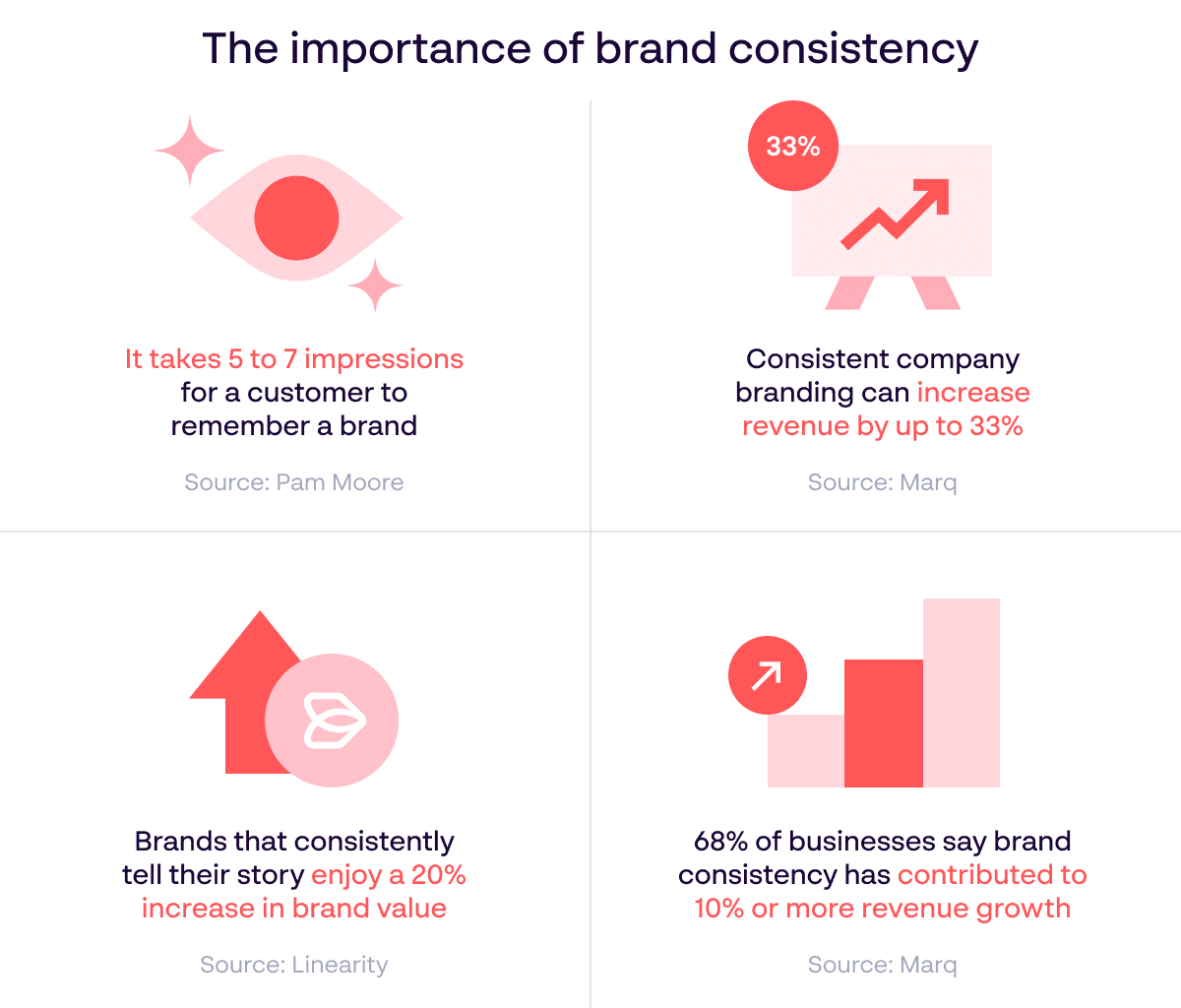
Establishing brand recognition is essential if you want to build your brand successfully. When you’re going to market, you should also know that it takes 5-7 impressions before people remember your brand. This means that keeping your brand consistent, so that it looks and sounds the same every time, is highly important to attract customers. Without this consistency, customers may not give you as much as 7 opportunities before dismissing you completely.

We know achieving this consistency is easier said than done, but it is possible – with the right structure, system and the technology at hand, brand recognition is within reach. Graphic design templates make it far easier to create and publish marketing material, and keep your brand looking the same every time.

Accomplish brand consistency, establish brand recognition


Achieving brand recognition takes time and effort. You have the recipe, and you know the drill, but at the end of the day, how your brand is presented is often out of your control. Sometimes colleagues will create material that breaks with your brand identity guidelines – or worse, they use old collateral. Sound familiar?

With design templates, this will no longer be an issue. This tool allows you to streamline design tasks and increase operational efficiency without risking a broken brand.

The power of online design templates

Graphic design templates are a powerful and lifesaving tool for marketers and brands everywhere. They allow you to automate the production of brand assets and marketing material, enabling anyone to create what they need, when they need it, with no special skills required.
Some amazing capabilities of online design templates:

Accessible online at any time:
  • When time is of the essence, keeping the templates always available is key. Log on, choose the desired template, and create a brand asset in an instant.
Self-serviced:
  • Usually, when it comes to creating brand and marketing assets, you either need a designer or designer skills. Not to mention the knowledge and capability to use design software. With self-serviced design templates, this is no longer a problem. Anyone can be a designer with this online editor, and you don’t have to worry about brand disruption. The templates have your brand identity covered.
Smart and flexible
  • Unlike Office templates or Adobe Indesign templates that can be altered by the users even though it is a “template”, graphic design templates are smart. The technology lets you pre-define what can and can’t be changed, giving you total control of your brand output. Every object and item has rules that narrow the design and creation options, you decide the level of flexibility.

Why building brand recognition is essential

59% of consumers prefer to buy from brands they trust, and 21% say they purchase new products because it was from a brand they like. In other words, branding and your company’s ability to profit are connected. And this reason alone makes it clear why brand recognition is essential for success.

Consider also that the ability to build brand recognition is a key driver for establishing brand loyalty, which again leads to trust and brand equity. To put it another way, the better known your brand is, the more likely it is that customers will choose your brand. When your customers then realise that your brand is what it claims to be, they’ll become loyal and start spreading the word.

If you are now thinking to yourself: “I know all this, but it’s impossible to practise in real-life, there are too many things getting in the way of my branding strategy and long-term tasks.” We understand. That’s why you need graphic design templates.

Key benefits of graphic design templates

With design template technology at hand, your branding processes will become a whole lot easier and you’ll be on your way to build brand recognition better than ever.

Your brand will always be up to date

By transforming your designs to online templates, keeping your brand updated is easy. Any change or alteration you make is done within the template and your users will always have access to the latest version. No more old and outdated brand assets.

Your brand assets are always available

Part of the challenge with brand inconsistency is when colleagues either create their own assets or use outdated files. By keeping your assets available online 24/7 and easily accessible, you eliminate this problem once and for all.

Your brand assets become self-serviced

Another part of the inconsistency challenge is the need to adapt to local needs. Today, with the large range of platforms, channels, and market needs, this is more important than ever. Adapting your assets is key to staying relevant in the market. Using online graphic templates, your colleagues and stakeholders will have instant access to the assets they need, and can modify them to fit their needs in a few simple steps.

Self-serviced templates streamline branding processes

Speed is of the essence in today’s digital marketing space. You need to be prepared for fast changes and updates, and you need to be able to deliver swiftly. Without technology and tools at hand, this is almost impossible. By allowing colleagues and stakeholders to create their own brand assets based on branded templates, you won’t risk putting off-brand content in circulation, and they can have their assets created in no time. It’s efficient and seamless.

Graphic design templates secure brand consistency

Another important factor in today’s fast-moving market space is that consumers are using a whole range of channels and platforms. This makes your market presence more complicated, but your customers also expect a consistent brand presentation across all channels. By having online templates for all the relevant platforms prepared and ready for use, it becomes far easier to have a quick turnaround time and be where your customers are.

Build brand recognition with an all-in-one platform

Our Template Studio comes as part of our brand management platform. Providing every person across your organisation with the tools to create studio-quality on-brand assets, with Template Studio you empower your people with the opportunity to champion your brand – and give your marketing team more time to focus efforts on core strategic goals.

Content Creation

How to create display ads at speed and at scale

The use of digital display advertising has become a marketing mainstay – and with nearly 70% of the global population now online, it won’t be going away anytime soon.

But creating visually appealing ads that stand out and get attention across multiple channels is no mean feat. And doing it at speed is more challenging still. That’s why an effective banner ad creator is on one of the most precious content creation tools a marketer can have.

How to create display ads that engage and convert

Display ads play an important part in how many consumers discover products and offers online. But getting noticed is a real challenge. The average person encounters hundreds of ads across their devices every day. At least half of them go completely unnoticed. The rest, many consumers would rather block.

Success doesn’t come from simply launching an ad and hoping for the best. It requires intention – building ads that feel relevant, look professional, and avoid being filtered out by ad blockers. The secret is to meet audiences where they are, with displays ads they actually want to see. The more targeted and meaningful your content is, the more likely it is to drive action.

That’s where display advertising software steps in.

Display ads created using templated content tool for fast, on-brand production

Streamline digital content creation with a banner ad creator

So, how can you create responsive display advertising that puts your brand in front of your audience – fast?

One solution is to use templated content creation tools. Papirfly’s smart, easy-to-use templates empower team members to produce studio-quality materials, whether they have design skills or not. Key elements are locked in, so there is no danger of going off-brand. The result is that anyone – regardless of design experience – can build on-brand banner ads in minutes.

Producing digital display ads at scale with templated content creation tools

As the digital marketing landscape grows more competitive, the right content creation tools become essential. Display advertising software is no longer a nice-to-have – it’s a core enabler for standing out in a saturated space.

While it’s easy to focus spend on ad placements, production time and resource costs often go overlooked. Papirfly’s Digital Asset Management and templated content creation suite addresses both these issues, offering a centralized solution packed with customizable templates and tools to help you work smarter.

From accelerating time to market to reducing agency reliance, Papirfly gives your teams the autonomy to create banner ads at scale – while staying perfectly on-brand.

Does everyone create content that’s on‑brand, every time?

Find peace of mind with
better brand governance.

Does everyone create content that’s on‑brand, every time?

Find peace of mind with
better brand governance.

Find peace of mind with
better brand governance.

Campaign templates interface showing on-brand content across digital, print, and social channels.

FAQs

Why is it challenging to create display ads at speed and scale?

Creating display ads quickly and at scale is difficult because it typically requires expert support to produce engaging, on-brand designs for different channels. Without the right content creation tools, production bottlenecks can slow teams down and inconsistent execution can dilute brand impact.

How do templated content creation tools support display advertising?

Templated content creation tools, like those from Papirfly, allow non-designers to create professional, on-brand display ads using pre-approved layouts. This streamlines the creative process and ensures consistency across regions and campaigns.

What makes a banner ad effective in today’s digital landscape?

Effective banner ads are visually engaging, contextually relevant, and professionally designed. They avoid intrusive formats, align with brand standards, and deliver clear, actionable messaging that resonates with target audiences.

What role does a banner ad creator play in digital content creation?

A banner ad creator makes building responsive display ads much simpler. With reusable templates and locked brand elements, it reduces reliance on designers, speeds up content creation, and ensures every ad meets brand guidelines.

How does Papirfly help marketers scale display ad production?

Papirfly combines Digital Asset Management and templated content creation, enabling teams to produce display ads faster and at lower cost. It centralizes brand assets and empowers local teams to create ads independently, without ever compromising brand consistency.

Brand Management

Elements of an excellent brand communication strategy

While reaching target audiences has always carried its challenges, cutting through the sea of noise amid the millions of competing organisations in today’s hyper-competitive market is one of the most difficult tasks for any business.

In addition, according to a recent study, only a quarter of stakeholders can differentiate between individual brands. With no stand-out qualities, it is likely that success for these enterprises is down, at least in some part, to chance.

Naturally, relying on the luck of the draw to attract customers and clients to a brand is no basis for ongoing success. But, how can you improve your brand, take control and truly shine? It all comes down to effective brand communication.

The role of brand communication

Winning business communication involves the use of many different techniques and mediums to convey a consistent, appealing and attractive image of the business to target audiences and shape positive perceptions.


Over time, as content imparts valuable information to customers and stakeholders, people begin to associate this enterprise with trust and value, boosting brand equity. If done successfully, robust brand communication can turn an uninformed prospect into a returning customer.

Think of some of the most well-renowned brands in the world, like Coca-Cola and IBM – you’ll likely associate these enterprises with positive terms, like ‘professional’, ‘expert’ and ‘trusted’ even if you’ve never been a customer.

This is the power of effective brand communication. It’s what differentiates generic cola drinks from Pepsi, and what helps keep the name of organisations ringing in the minds of the public for years.

As well as customers, communicating your brand effectively can also be an excellent way to better establish your brand, engage prospects and attract top talent in today’s connected world.

Now, more than ever, a strong brand has to be three-dimensional and stand up to the scrutiny of customers and candidates on the outside of the business, as well as existing employees on the inside. To do this, internal and external communication must be:

High-quality
  • To keep teams in the office productive and customers engaged, it’s crucial to communicate your brand, its values and its merits outwardly.
Consistent
  • While customers and employer brands are often regarded separately, the lines between both are blurry, making business continuity a must.
Authentic
  • With social sharing ubiquitous today, portraying a transparent and honest brand is key in retaining the admiration of employees and clients.

How to improve your brand communication strategy

Brand communication is one of the most important elements of an overarching marketing strategy. It’s how a brand portrays itself, how it forms deep connections with prospects and how it stands out in a saturated market.

But because this area is so complex and valuable, it can seem illogical to constantly update and refine your approach. However, the world of marketing is fast-paced. Platforms change. Customer and staff expectations shift. Best practices evolve. 

To keep up, it’s vital to implement brand communication strategies as living, breathing entities.

Choose the right media channels

To shape how your brand is perceived by its employees and customers, your brand should strive to have a presence in the places where your prospects will be, whether that’s in physical destinations or on platforms like Facebook and TikTok, for example.

This is crucial because as many as 13 touchpoints are needed to turn a prospect into a customer, or an employee into an ambassador. If this content isn’t within reach, how can you expect your brand to leave an impression?

By carefully considering where content is placed across multiple channels, not only is marketing more effective, but promotional efforts are more likely to generate a greater ROI for your company.

Nail a consistent look and feel

In order to boost the equity of a brand, and ensure prospects can recall the business, it’s important to maintain brand consistency on a global scale with a unified look, feel and brand voice. 

Although your collateral could be ticking all the right boxes and addressing the audiences’ specific pain points, if people aren’t able to attribute that goodwill to your unique brand, that positivity and trust are lost.

By nailing a consistent look and feel across your website and social media channels with the help of purpose-built Brand Activation Management software, a brand can become more recognisable and stand out from the competition. In the real world, this can improve revenue by as much as 23%.

Embrace crisis communication management

Brands dread the day when things go wrong. And while there is a small percentage of companies that have managed to dodge controversy, maintaining a spotless image – especially within a large or well-established business – is near impossible.

All it takes is a single brand ambassador to misrepresent the brand with a poorly worded post or a typo in a piece of corporate collateral to dent your reputation. While this is detrimental on its own, word can travel fast on social networks and magnify blunders small and large quickly.


To plan for every eventuality, a robust crisis communication plan is a valuable component of every effective messaging strategy. While these documents will vary from brand to brand, a good crisis plan should:

  • Note who has the authority to activate the plan under what circumstances
  • List the employees responsible for each task throughout the process
  • Draft messages for the possible crises your business could face
  • Collate the contact details of people and services valuable during an emergency

With a contingency plan in place, your brand can control the narrative in an adverse situation, and create a less stressful environment for workers both in and outside of the office.

Adapt brand personality for multiple scenarios

While a business must have a consistent brand voice, it’s important that this isn’t taken too literally. In order to appeal to candidates and customers on different platforms, the core message must be adapted to suit different spaces.

By taking a middle-of-the-road approach to brand voice, and failing to adapt the personality of the brand to different scenarios, messaging can seem stilted, irrelevant or unengaging as the content is not entirely relevant to the platform or audience.

Carefully tailoring internal and external communication using insight gathered from a strategic brand communication audit can drive better performance, as 74% of marketers say targeted personalisation generates greater engagement. 
A brand is a complex and incredibly valuable asset for any organisation, and it takes more than just an excellent customer communication strategy to form an image that employees, candidates and customers all look up to. To develop a well-rounded brand, it’s important to seek answers to the following:

  • What does your brand identity look like?
  • What values does your business image reflect?
  • How does your branding strategy align with overall business objectives?

Propel your messaging to new heights with BAM by Papirfly™

Messaging is a broad, vast and incredibly important topic when it comes to brand building and communication. From how you talk to your employees to how you market your products or services, this strategy is an integral part of your brand.

Due to its breadth and importance, it’s crucial to have a solid company communication strategy in place before embarking on a new campaign. By taking a gung-ho approach, you could risk compromising brand continuity, authenticity and quality.

However, developing a corporate communications plan that ticks all of the boxes is no easy feat – marketing is a fast-paced sector, and deadlines come and go quickly. To keep on top of your daily duties without compromising on quality calls for a dedicated brand activation solution, such as BAM by Papirfly™.


As well as featuring a suite of time-saving marketing tools, BAM is ideally suited to corporate communication because:

  • It allows teams the ability to develop quality, on-style content with confidence across several mediums, such as social media, leaflets, emails and more
  • BAM’s intelligent templates allow in-house teams with no design experience to effortlessly craft collateral that adheres to brand guidelines 
  • The built-in DAM allows crucial documents, like crisis communication plans, to be shared globally with ease, allowing increased agility
  • Our all-in-one technology allows existing designs to be quickly adapted for new platforms or localised to different regions in just a few clicks

If you would like to learn more about BAM and explore how else it can help take your brand to new heights, get in touch with our team, or book a demo to see our solution in action.

The best way
to manage your brand.
See it in action.

  • Boosting revenues
  • Doing more for less
  • Activating brands on a global scale

The 7 questions every team should ask before writing a DAM RFP

Learn the seven essential questions every team should ask when shaping DAM RFP requirements to ensure smoother onboarding, stronger adoption, and long-term success.
Retail Marketing

Why print in retail marketing boosts customer loyalty

In retail marketing, digital channels often steal the spotlight. Social media. Email. Paid search. Programmatic ads. Billions are poured into grabbing attention on screens big and small.

It might seem as if print had gone extinct. But here’s the truth: when done well, print materials are as powerful as they have ever been – if not more so.

At a time when consumers are bombarded by fleeting digital impressions, a well‑crafted printed asset such as a catalogue, flyer, or poster can stop them in their tracks. It’s tangible, memorable and trusted – and when combined with digital touchpoints it can deliver stronger engagement and conversion than either digital or print alone.

Let’s explore why print in retail still matters – and how you can use it to elevate your marketing strategy.

A scroll, a swipe, a click – digital content is often here one moment, gone the next. Print lingers. Catalogues stay on coffee tables. Direct mail sits on desks. Posters remain in sight until they’re replaced. That visibility makes a difference for brand awareness and recall.

But it doesn’t mean print is stuck in the past. Smart integrations – QR codes, personalized URLs, promo codes – allow you to bridge the physical and digital worlds seamlessly, driving audiences from paper to pixel in seconds while achieving brand consistency.

The most effective formats for print in retail today

Print adverts

Still a proven way to spark emotional responses. In fact, printed ads can generate stronger emotional response than digital, especially when there is genuine creativity in the content creation process. 

Using QR codes and social media integrations can help you blend print ads seamlessly into the digital landscape. Take this example from Ford. Their print ad incorporates a phone-shaped outline with a QR code that directs readers to a series of short films.

Magazine with Ford’s ad.

Direct mail

Some still see direct mail as outdated. Why send something to someone’s door when you can reach them instantly via email or social media? But the numbers tell a different story – direct mail continues to outperform, with response rates up to 10 times higher than email and open rates exceeding 90%.

Take Darwill’s recent campaign for a U.S. nonprofit. They mailed personalized donation letters twice a year, aligning each with key fundraising periods. By tailoring the message based on past donor behaviour and coordinating follow-up through digital channels, they achieved a 10% year-on-year increase in donations.

In today’s digital-heavy landscape, the physicality of direct mail feels different – more deliberate, more thoughtful. And when paired with digital touchpoints, its effectiveness increases even further. Direct mail hasn’t disappeared. It’s evolved into a strategic, data-driven part of the modern marketing mix.

Catalogues

Contemporary brands and retailers such as Nordstrom, Patagonia and Restoration Hardware still invest heavily in printed catalogues. Why? Because physical products stay with consumers long after any emails or social media posts are deleted.

Catalogues also create an immersive and curated brand experience that is not always easy to replicate digitally. They invite deeper browsing, which can drive sales in store as well and online.

Rock climber scaling cliff next to bold Patagonia logo in print ad.

Point of Sale (POS)

In-store POS materials remain essential for influencing last-minute decisions. Simple, static displays – especially in high-traffic or checkout zones – can outperform more extravagant digital signage when designed well and kept on-brand.

Nike continues to give us some great examples of how to grab attention by keeping it simple.

Nike store display featuring shoe and “Make Yourself Fit” slogan.

Why print in retail remains a highly effective marketing tool

Studies continue to back what seasoned marketers know:

  • Print gets more attention – readers of printed materials are more likely to notice product details, prices, offers, and CTAs.
  • Print is easier to process it takes less cognitive effort to understand a simple print ad, making it ideal for more detailed messaging.
  • Print elicits more emotional responses – it cuts through digital fatigue and feels more personal.
  • Print is trusted – zero risk of pop-ups or data breaches means consumers can interact with printed materials without anxiety or skepticism.
  • Print builds brand awareness – print executions are often more memorable, increasing the likelihood customers will recall your brand later.

Why it pays to combine print and digital channels

This isn’t about choosing between binary options – it’s about achieving the right balance between the two. A physical first touchpoint can prime audiences to engage more positively with your online campaigns. Likewise, insights from digital behaviour can fuel hyper-personalized printed materials.

The brands that win aren’t digital-only or print-only. They’re the ones who combine channels strategically, delivering a consistent, standout experience wherever their audience meets them.

Power up print in retail with Papirfly

Print isn’t dead. It’s evolving – and in a market saturated with digital noise, it’s a competitive advantage waiting to be used.

With Papirfly’s Templated Content Creation tools, you can:

  • Produce professional, on-brand print and digital assets in minutes
  • Keep every campaign consistent across markets and channels
  • Leverage accurate, real-time product data in your printed materials
  • Scale creative output without scaling costs

Ready to make print work harder for your retail brand? Let’s talk.

FAQs

Is print marketing still relevant in the retail industry?

Yes — more than ever. In a world saturated with fleeting digital impressions, print in retail delivers a tangible, trusted, and lasting brand presence. Formats like catalogues, direct mail, and in-store POS materials can capture attention and build brand recall in ways digital alone often can’t.

What are the most effective print formats for retail brands today?

Some of the strongest-performering formats for print in retail include:
Print adverts that spark emotional responses and integrate with digital via QR codes
Direct mail with response rates up to 10x higher than email
Catalogues that offer immersive, lasting brand experiences
POS displays that influence last-minute purchase decisions in-store

What are some of the benefits of using print in retail?

Printed marketing materials can help you achieve:
– Better engagement between customers and your brand
– More trust from customers towards your brand
– Deeper, more positive emotional connections with customers
– Content that is read more intently and actively
– Lasting impressions on customers compared to fleeting digital adverts

Are print or digital channels more effective for retail marketing?

The best strategies balance both. For example, a printed first touchpoint can prime customers to engage more positively with digital campaigns. Similarly, online behavioural insights can fuel highly personalized printed materials that feel more relevant and compelling.

How does Papirfly help retail brands get more from print?

Papirfly’s Templated Content Creation tools let teams produce professional, on-brand print and digital assets in minutes. Brands can keep campaigns consistent across markets, integrate real-time product data into print, and scale creative output without scaling costs.

Retail Marketing

What is ethical consumerism and why should you care?

Consumers today have never been more conscious of where their products come from, the impact of their purchases and the conditions of the employees working across their favourite brands.

As well as wages and working environments, customers are also paying close attention to where companies source materials, where goods are manufactured, as well as a brand’s values and commitments.

This ethical consumerism is such a great consideration for shoppers today – whether B2B or B2C – that customers are voting with their wallets. They are buying from companies that align with their personal values or demonstrate certain ethics, instead of the companies they may simply already be familiar with.

What is ethical consumerism?

Every product or service you provide has an impact on the world. A growing number of consumers realise this and want to buy from organisations that have a more positive influence on certain social and environmental issues.

This phenomenon is called ethical consumerism, and is a purchasing practice that has been gaining momentum and popularity in recent years all over the world. To illustrate just how prominent this market is, recent reports suggest that it’s now worth over £122 billion in the UK alone.

Beyond the environment and employee working conditions, ethical consumerism is a broad term that can encompass a range of things.

Ethical consumerism can encompass whether or not a company…

  • Tests on animals
  • Uses sustainable materials
  • Supports what they say they do
  • Uses animal products

Although many factors have contributed to the boom in ethical consumerism, one of the primary reasons for this seismic shift in customer behaviour is down to the rise of social media.

These platforms are home to billions of users, all following, researching and discussing their favourite brands every single day. And, as word spreads fast on these platforms, a single post shining a spotlight on a company’s unethical practices could quickly gain traction. With sites such as Glassdoor offering current and former employees to anonymously review companies, it can also affect your ability to attract the right people.

Why is ethical consumerism important for your brand?

As well as benefiting the world, incorporating policies and actions that appeal to the ethical consumer can have several direct benefits to your brand.

Encourage brand loyalty

Many of the world’s most well-known brands grow and succeed because they encourage people to come back and purchase, time and again. Repeat custom rarely happens naturally, and more often than not hinges on a brand developing a trusting relationship with its customers.

Fostering meaningful buyer relationships isn’t something that takes just one action of goodwill. However, by aligning your corporate values with your customers’ expectations, and becoming more responsible as a provider of goods or services, you help lay a solid foundation from which to build a loyal customer base.

To highlight how valuable brand loyalty can be for your business, consider that 50% of loyal customers will make more purchases with their preferred companies, according to Hubspot.

Bolster your reputation

Although the ethical market is growing, this paradigm shift in consumer behaviour has also brought about a rise in ‘corporate boycotting’. This is when consumers avoid specific companies or products because they fail to meet certain common standards or expectations.

By catering to the ethical consumer in your shop, you can work to meet the rising expectations of prospects and help avoid the negative impact on sales and brand reputation a boycott could bring.

Although the severity of corporate boycotts can vary, sportswear titan Nike was at the centre of a labour controversy all the way back in 1990 that damaged the brand so much that it caused the company to completely rethink how it operated and presented itself on the world stage.

Future-proof your brand

Year on year, ethical shopping continues to make up a larger and larger portion of the market, as individuals become more aware of their impact on the world around them.

Moreover, as Gen Z, one of the most ethically conscious cohorts enters the workforce, this consumer movement is unlikely to slow down. 

By taking steps to become a more responsible brand, you help ensure your product or service remains appealing to customers today and tomorrow.

3 brands accommodating the conscious consumer

With customer sentiment continuing to evolve, countless brands have made great strides in the way they operate and market themselves. 

To give you some inspiration and guidance on how you can become a more ethically-minded company, here are three of our favourite examples.

1. Reformation

Reformation, a fashion company focused on minimising its impact on the environment, aims to bring sustainable fashion to everyone.

To do this, the brand uses low-impact materials, rescued deadstock fabrics and repurposed vintage clothing. Beyond sustainability, the retailer is also committed to providing a safe and comfortable working environment for its garment workers, building its own factory in Los Angeles to make this a reality.

Launched in 2009, the retailer’s ethics resonate with customers, with Reformation being profitable every year since 2016, $150 million in 2019, and more than doubling to $350 million in 2023.

2. Salesforce

Salesforce, a global leader in cloud-based CRM, demonstrates that ethical consumerism isn’t just for B2C brands. The company has embedded sustainability and social impact into its DNA – turning responsibility into a competitive differentiator for its B2B offering.

Referring to the planet as a “Key stakeholder”, Salesforce reached net-zero residual emissions across its entire value chain and powers its operations with 100% renewable energy. It further underlines the value in their Sustainability Cloud solution to help enterprise customers track and reduce their own carbon footprints, effectively turning ESG reporting into a shared value.

This values-first approach resonates deeply with modern business buyers, positioning Salesforce as a tech partner that delivers both innovation and integrity – earning it continued growth, industry trust, and long-term customer loyalty.

3. Patagonia

Last, but by no means least, is Patagonia. This trailblazer in sustainable outdoor apparel, has long positioned ethical consumerism at the core of its business. The brand doesn’t just talk about responsibility – it embeds it into every layer of its operations.

From pioneering the use of recycled materials to launching the Worn Wear program, which extends product life through repairs and resale, Patagonia champions circular fashion. It allocates 1% of sales to environmental causes and has even gone as far as transferring ownership to a trust and nonprofit, ensuring that profits are used to fight climate change and protect undeveloped land.

This unwavering mission has earned Patagonia a loyal following of conscious consumers, with annual revenues topping $1.5 billion and continued growth driven not by trends, but by values.

How to embrace ethical consumerism

Because ethical consumerism is such a broad and varied topic, there are dozens of ways your business can cater to the ethical consumer – from changing the way you ship your goods, to the way you front your brand in the public eye.

Reduce your brand’s carbon emissions

One way to meet customer expectations is to reduce your carbon footprint as a store. While there are many ways you can approach this problem, we have selected a handful of simple potential solutions you may want to try:

✅  Install energy-saving bulbs in-store
✅  Ship orders to the same address together
✅  Turn off the air-con when it’s not needed
✅  Switch lights off overnight when the store is closed
✅  Encourage employees to cycle or walk to work
✅  Set up a customer recycling scheme to safely dispose of old goods

Even making microscopic changes to the way you operate, such as favouring digital receipts and printing documents double-sided, can all help reduce your emissions and create a more eco-friendly image for your brand.

Align corporate values with corporate actions

Another way you can embrace ethical consumerism is by ensuring your corporate values align with the actions your shop takes. 

For example, if your brand pledges to reduce its impact on the environment, but keeps all of its lights on overnight, people may feel as though you aren’t taking your corporate social responsibility seriously. This, in turn, can quickly harm your reputation.

Take some time to ensure your values correlate. If this means reducing the scale of your commitments to make sure your enterprise can actually achieve what it has set out to do, this will be better for your brand than overpromising and underdelivering.

As well as that, you should also ensure your values are easily found online or across your social platforms, as hiding this information away could seed distrust. Most importantly, your employees need to be able to be given online resources understand your values and ethical goals, as well as talk about them – whether verbally or in marketing materials.

Educate your customers

A third way of catering to ethically-minded customers is by using your reputation and platforms, such as your social pages or blog, to educate prospects on issues pertinent to your brand.

Tell people why you support what you do, and the steps you will take to achieve your desired goals. By committing to causes publicly, you help build trust with new and existing customers, while also raising awareness for good causes and charities.

Naturally, content is crucial in spreading the word about your brand’s values online and in-store. However, as campaigns and charities come and go often, enlisting the expertise of a third-party agency to produce assets may not suit your budget or timescale.

Bringing content production in-house is often seen as unworkable too, as the content creation process is traditionally time-consuming, and would likely clash with other employees’ responsibilities. As well as this, building branded visuals takes skills your team may not have access to.

Readying your brand for an ethical future

With customers more aware of social and environmental issues than ever before, ethical consumerism has seen a boom in popularity in recent years, and is a core consideration when building brand equity with customers.

Although this consumer movement may present a prime opportunity to grow the trust and authenticity of your brand in the eyes of your target audience, it’s important to be clear and honest when making commitments.

While there are many facets of this more conscious form of shopping, content is crucial in demonstrating your pledges to becoming a more responsible business. 

Whether B2B or B2C, creating signage, social media content and visuals for the web can be a costly and time-consuming practice, especially if you spend your budget on asset reproduction rather than high-powered creatives to articulate your commitments.

Building captivating visuals that showcase your ethics doesn’t have to be a grand investment in time or money. By providing teams with on-brand digital assets and template template design software working together, you can scale content production without any design expertise.

With such a demand from your audience to hear the right message, it’s key you communicate authentically and consistently so customers know your ethics align with theirs – in every single message!