

This content has been automatically translated and may include minor variations.
In today’s talent market, reputation isn’t a nice-to-have – it’s an essential building block of success. Candidates are more selective, more informed, and more value-driven than ever before. And if your organization can’t clearly communicate why it’s a great place to work, then talent attraction and retention become tougher, slower, and significantly more expensive.
A strong employer brand changes that. It helps you stand out in a crowded landscape.
It gives candidates a reason to choose you — and employees a reason to stay.
With decades of experience supporting global brands on their employer branding journey, we’ve seen firsthand how powerful a well-defined strategy can be. This employer branding guide walks you through everything you need to build a world-class employer brand that resonates across markets, channels, and teams.
Ready to strengthen your employer brand — and your ability to secure the right talent? Let’s begin.
What is employer branding?
Employer branding is how you shape and promote your company’s employer reputation. It’s the company culture, values, opportunities, and assets that help you attract top candidates, retain high-performing employees, and create an inclusive, productive work environment.
Done well, your employer brand inspires people to imagine themselves as part of your organization. It helps employees feel connected to a shared purpose. And it gives candidates clarity about what makes your workplace different.
When your employer brand is unclear or underdeveloped, the opposite happens – talented people overlook you, employees disengage, and hiring becomes reactive instead of strategic.
What does employer branding include?
Employer branding is more than your career site or your Glassdoor profile. It spans every touchpoint where candidates or employees meet your organization, including:
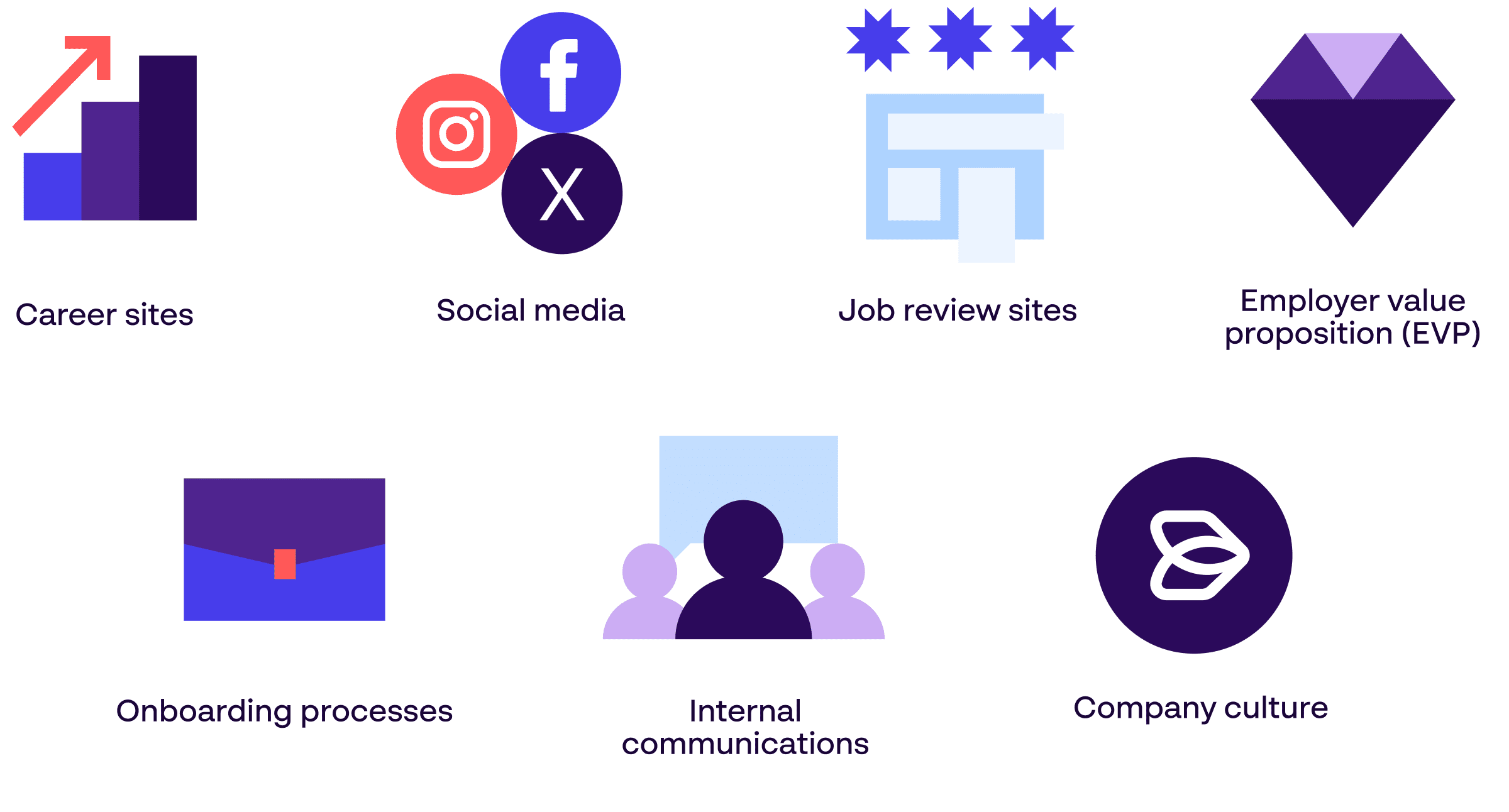
Because all these interactions shape perception, they must work together under one consistent, intentional strategy.
What is your Employer Value Proposition (EVP)?
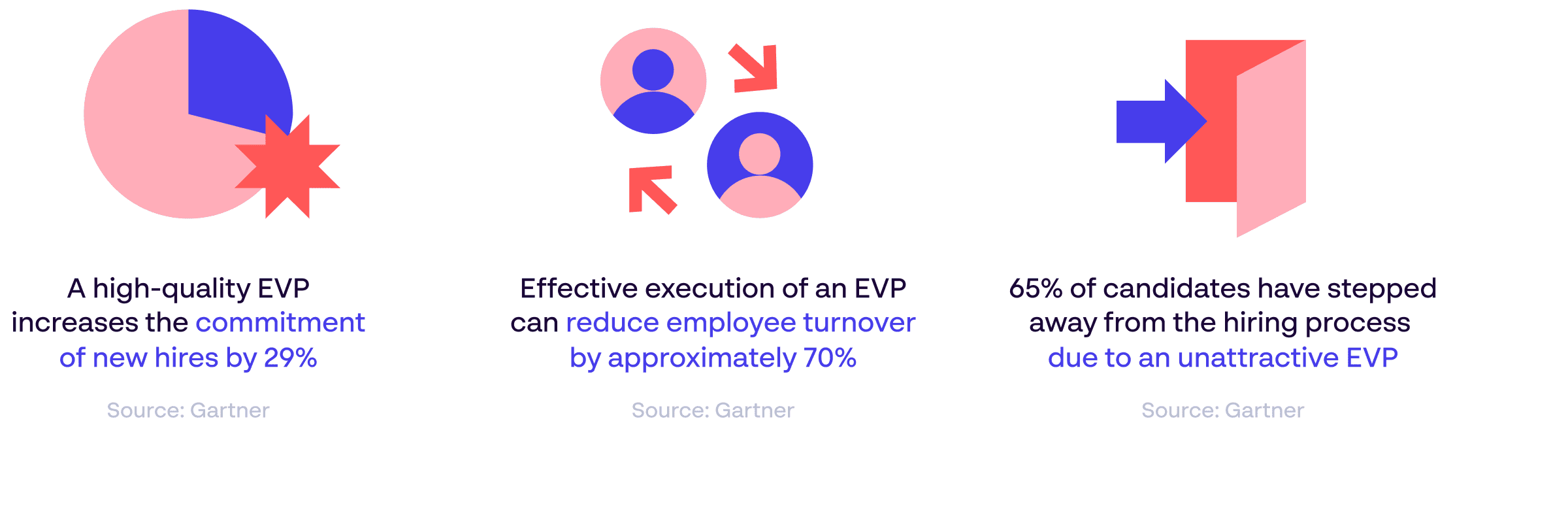
One of the most important elements of any employer brand is the Employer Value Proposition (EVP). Sitting at the centre of your brand, your EVP defines the benefits, values, and commitments that make your company worth joining – and worth staying with.
Most strong EVPs include:
- Company mission, values, and vision
- Compensation, benefits, and perks
- Growth and learning opportunities
- Flexibility and work-life balance
- Social responsibility and community impact
- Cultural DNA and employee experience
- Employer recognition efforts
If your EVP doesn’t include these elements, or is failing to connect with recruits, then maybe it’s time to time to refresh your EVP?
What is company culture?
Company culture is the personality and identity of your organization as a place to work – the habits, mindsets, and behaviours that shape daily life. From leadership styles to wellbeing initiatives, from team rituals to learning opportunities, culture influences how people feel, collaborate, and grow.
A positive, diverse, and inclusive company culture strengthens productivity, wellbeing, and talent retention. A negative one can lead to poor team performance and high turnover. Are you losing good employees to competitors? Read our blog post to discover the reasons why.

What are employee ambassadors?
Employee brand ambassadors actively promote the advantages of working for your organization by sharing their real-world experiences, whether that’s on social media, through review websites, or simply by word of mouth. They are important because their voices are authentic and therefore trusted.
Of course, not every employee is prepared to become a brand ambassador. But you can encourage take-up by introducing perks and benefits for employees who actively showcase your company’s brand in a positive light.
How does employer branding differ from consumer branding?
It’s simple. Your consumer brand attracts customers. Your employer brand attracts talent.
The two types of branding are distinct – but deeply connected. A company that treats its people well often earns greater customer trust, loyalty and recognition. Likewise, companies that are loved by their customers usually find it easier to attract and retain top talent.
Why employer branding matters
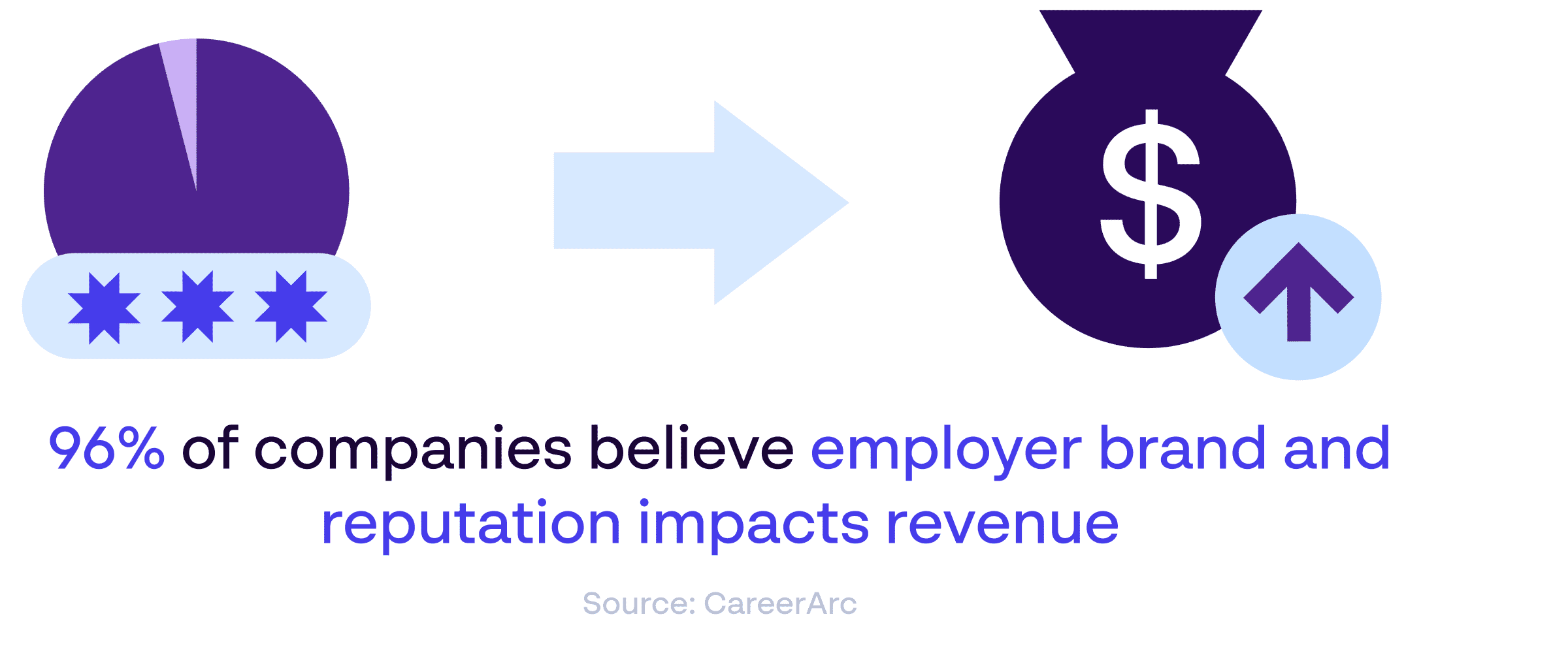
A strong employer brand builds your reputation in the talent market. Without it, you face an uphill battle in recruiting top talent.
But the benefits go well beyond hiring.
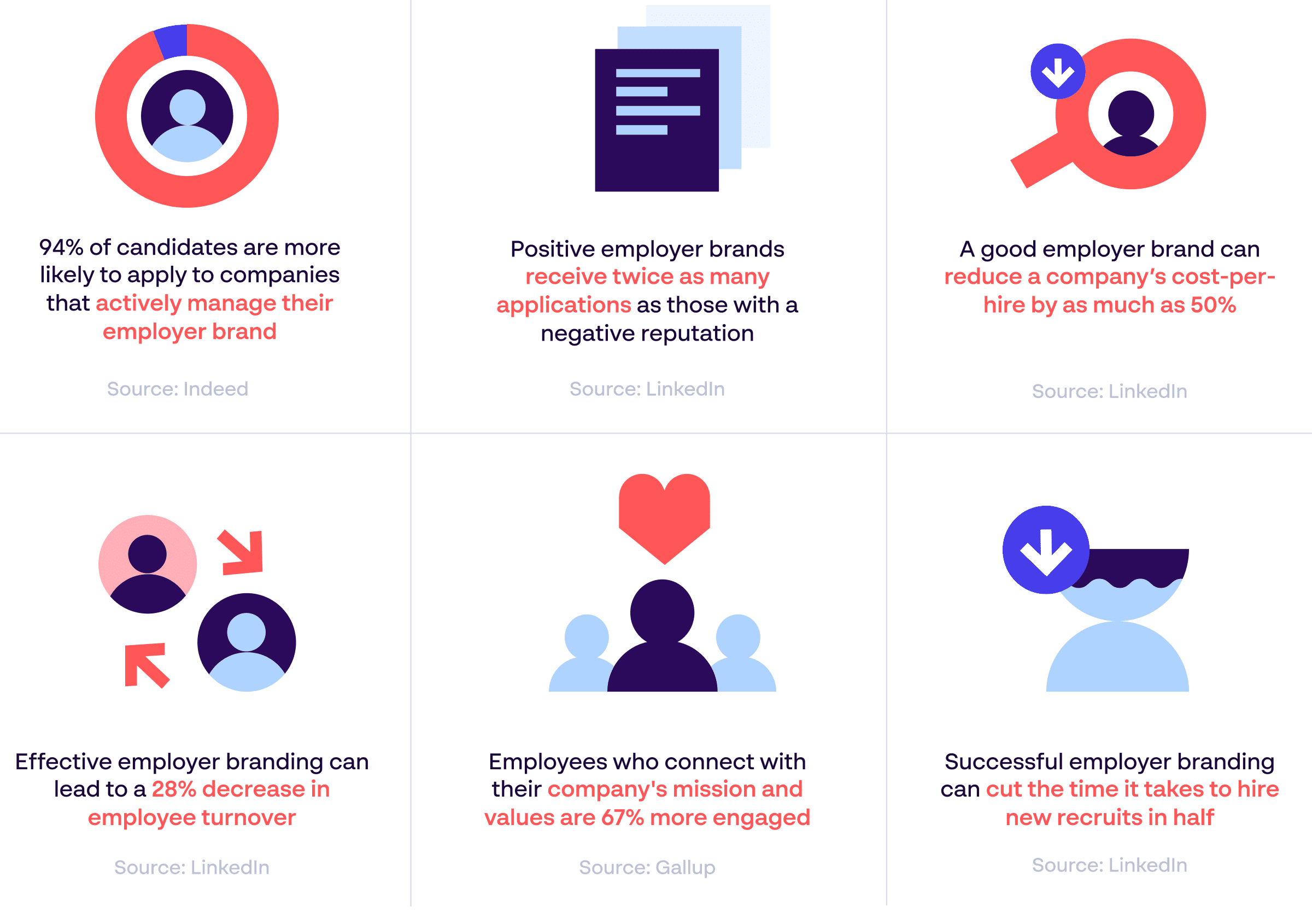
6 key benefits of a strong employer brand
1. Attract more of the right candidates
A strong employer brand helps you stand out from talent competitors. The more you have to say about the benefits of working for your organization, the more likely you are to appeal to potential job hunters – inside your industry and beyond it. This is true whether you’re trying to attract niche talent or delivering high-volume recruitment campaigns.
2. Reduce recruitment costs
When your brand is compelling, more candidates apply organically – reducing the need for costly advertising and agency support. Clear communication of your brand’s culture, perks, and values will also help people deselect themselves faster, ensuring you don’t waste time pursuing ill-fitting recruits.

3. Increase talent retention
The best way to minimize recruitment costs is to keep top-performing employees onboard. Strong employer branding supports employee retention by fostering a sense of belonging among your workforce, aligning people around shared values and business goals.
4. Boost employee engagement and productivity
A strong employer brand helps you foster feelings of belonging and pride. This is crucial because people who feel connected to their organization’s mission are more engaged – and engaged teams perform better.
5. Create a more positive company culture
Better employer brand management can help reinforce the benefits of working for your organization and create a sense of shared values and purpose. Results: greater employee engagement and less burnout.

6. Improve company reviews
Sites like Glassdoor, The Job Crowd and Work Advisor can have a major impact on your company’s appeal to recruits – and too many negative reviews can cause real damage. But with a strong employer brand, your employees become your greatest advocates, leaving positive reviews that grow your reputation among candidates.
How to measure the strength of your employer brand
There is no single employer branding metric. But there are several indicators you can use to judge how your brand is performing. These include:
- Application rate
- Acceptance rate
- Time to hire
- Cost per hire
- Talent retention rate
- Third-party reviews
- Source-of-hire trends
Social media content creation and employer brand storytelling
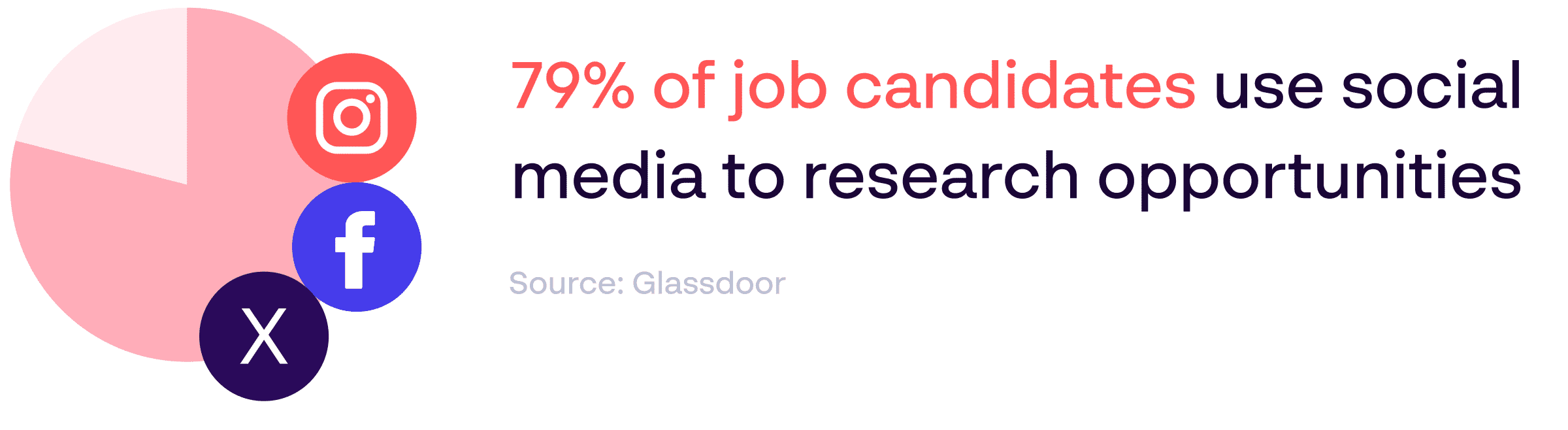
Social channels remain one of the most influential spaces for employer branding. You can use them to showcase real stories from real employees and give candidates an authentic taste of your company culture.
The potential for impact goes way beyond your company’s LinkedIn page. If your team members are active on social media, why not empower them to engage in their own social media content creation? It’s a much quicker way to build trust than through corporate messaging alone – and with social media templates, you can make it very quick and easy for them to create brand-aligned assets.
8 steps to building your employer branding strategy
An effective employer branding strategy is critical for ensuring all your efforts remain aligned and consistent at every touchpoint. Here are eight practical steps you can take to ensure your strategy is a success.
1. Audit your current employer brand
First, determine where you are right now:
- How is your brand perceived by candidates?
- What do your employees think about your company?
- Are you communicating your values and objectives effectively?
The answers to these questions will help you understand where your existing employer brand succeeds and where it struggles. It will also help you settle on the main identity, values and USPs you want to communicate to your teams and potential recruits.
2. Establish your preferred candidate personas
Just like you build your marketing around your target customers, you need to shape your employer branding around your ideal candidate groups – from experienced industry specialists to graduate candidates and apprentices. Candidate personas help you tailor your messages to your prospects, focusing on the benefits, values, and goals that speak to them.
3. Define (or refine) your EVP
As the centrepiece of your employer brand, your Employer Value Proposition must be clear, compelling, and authentic. Consider using marketing and communications teams as well as HR to help you create the best expression of your EVP possible.
4. Select your employer brand communication channels
Your employer brand strategy should cover all touchpoints where you will potentially communicate your employer brand. These include:
- Career site or page
- Social media channels
- Job and review sites
- Current employee profiles
- Networking events and career fairs
- Email marketing
- Job adverts
- Interview processes
- Internal newsletters
Mapping every touchpoint – and how you plan to communicate on it – will help you achieve strong employer brand governance.
5. Develop employer brand assets
A career page and job descriptions are a start – not the whole story. Bring your culture to life with varied, authentic employer branding content that helps candidates picture themselves at your company. For example:
- Short video interviews where employees share real experiences
- Regular internal newsletters that highlight team wins and milestones
- Dedicated careers portal that showcases values and opportunities
- Day-in-the-life videos or blog posts that illustrate everyday culture
- Concise slide decks that explain why people join and stay
The list goes on. The priority is brand consistency – every asset must reflect the same visual style, tone, and messaging. If resources are tight, consider using templated content creation to scale on-brand materials quickly and reliably.
6. Cultivate your onboarding process
You only have one chance to make a good first impression. A structured, thoughtful onboarding experience turns new hires into confident, productive team members and sets the tone for long-term talent retention.
Map the full journey – from interview to first 90 days – and provide clear guides, training paths, and check-ins. Evidence shows that well-onboarded employees are far more likely to stick around, so invest in the basics and make every new starter feel prepared and supported.
7. Create an employee advocacy program
Your people are your most credible storytellers. Formalize advocacy by making it easy and rewarding for employees to share their experiences. A simple program could include:
- Tailored training and visible career progression opportunities
- Public recognition for contributors
- Small, meaningful rewards or gifts
- Exclusive content and early access to company news
Employee advocacy should feel authentic, not transactional. Support volunteers with ready-made assets and clear guidelines so their posts amplify your employer brand to the maximum.
8. Be authentic
Promising perks or cultural realities you cannot deliver erodes trust fast — internally and externally. Before you publish your EVP or campaign, test it against real experiences inside the business. If the claims don’t match day-to-day reality, revise them. Authentic employer brands are credible, sustainable and ultimately more effective at talent attraction and retention.

6 organizations who excel at employer branding
1. Hilton
Hilton was ranked the best company to work for by Fortune in 2024, helping in no small part by their employer branding campaign – “Every Job Makes the Stay”. This innovative series of videos, ads, and other assets promotes the various roles available at Hilton to potential candidates while showcasing the skills of existing employees.
2. Starbucks
Starbucks is highly effective at harnessing social media to showcase employee experiences and success stories. From a YouTube jobs playlist to their celebrated “College Achievement Plan”, it’s a strategy that lands especially well with young generations of job seekers.
3. L’Oreal
It’s no accident that L’Oréal consistently ranks among the world’s top employers. Their teams have long understood that employer branding isn’t a one-off initiative, but a living identity that evolves with the business.
In recent years, they’ve reshaped their EVP to spotlight L’Oréal not only as a beauty powerhouse, but as a fast-advancing tech company. This has helped the company become a top destination for candidates who want to shape the future.
4. Netflix
Netflix’s employer brand is well-known for its emphasis on creative freedom, responsibility and innovation. Their company culture champions autonomy and empowers people to think boldly – a message consistently reflected across their recruitment touchpoints.
Pair that with transparent compensation, strong benefits, and a serious commitment to diversity and inclusion, and it’s clear why Netflix’s careers platform resonates so strongly. Candidates don’t just see job descriptions. They see a culture they can belong to.
5. Zappos
Shoe and clothing retailer Zappos builds its employer brand around one powerful belief: happy employees create exceptional customer experiences.
The belief is so fundamental, it even shapes the onboarding experience. Every employee hired, no matter the role, undertakes four weeks of training followed by two weeks as a customer service rep. Then comes a bold offer: $2,000 to walk away if the role isn’t right. This process ensures that those who stay are fully committed and aligned.
6. Unilever
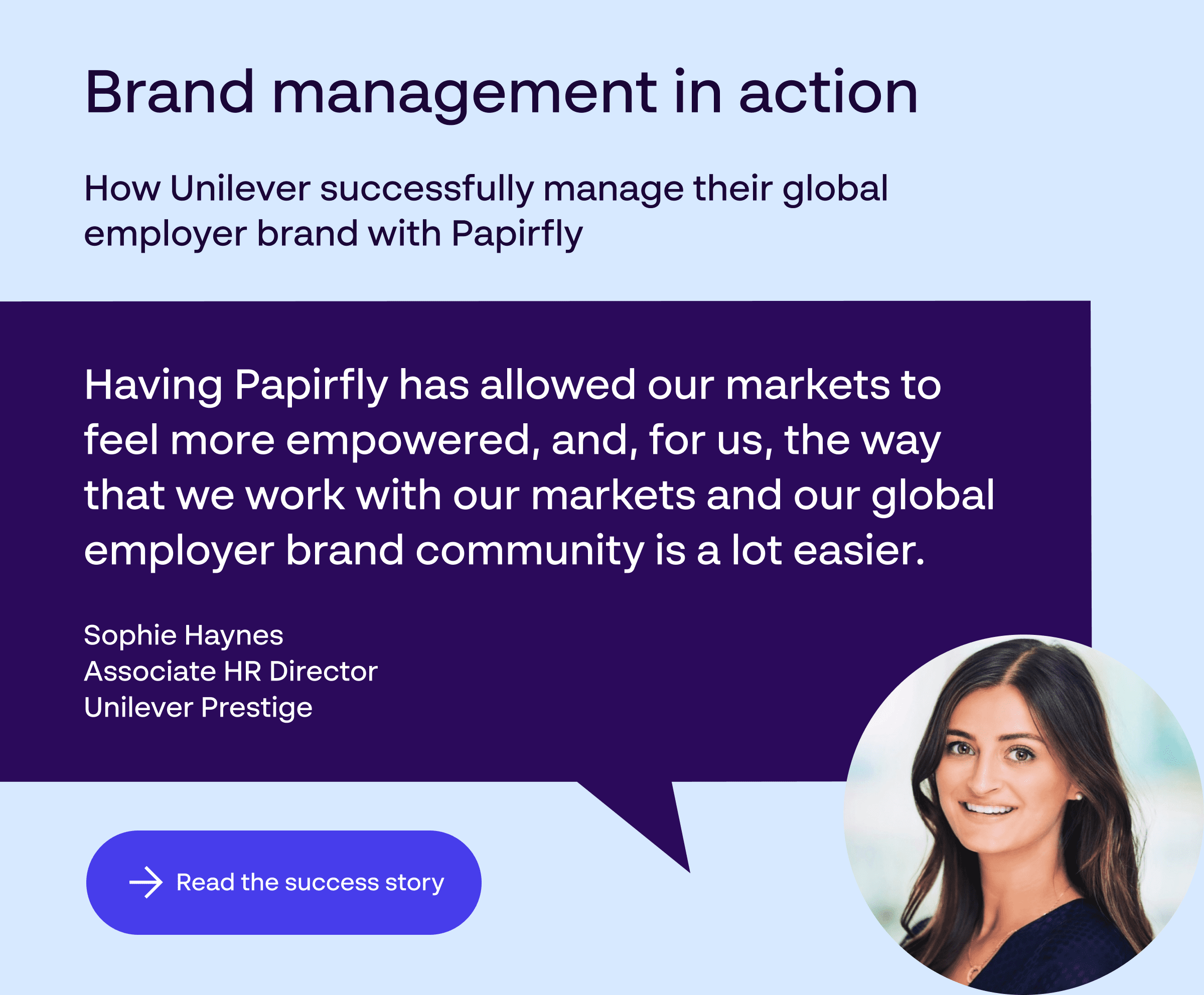
Unilever’s global employer brand stands out for its clarity, purpose and human touch. Their careers site showcases meaningful work, diverse opportunities, and a sustainability-driven mission – all brought to life by real employee stories from across the world.
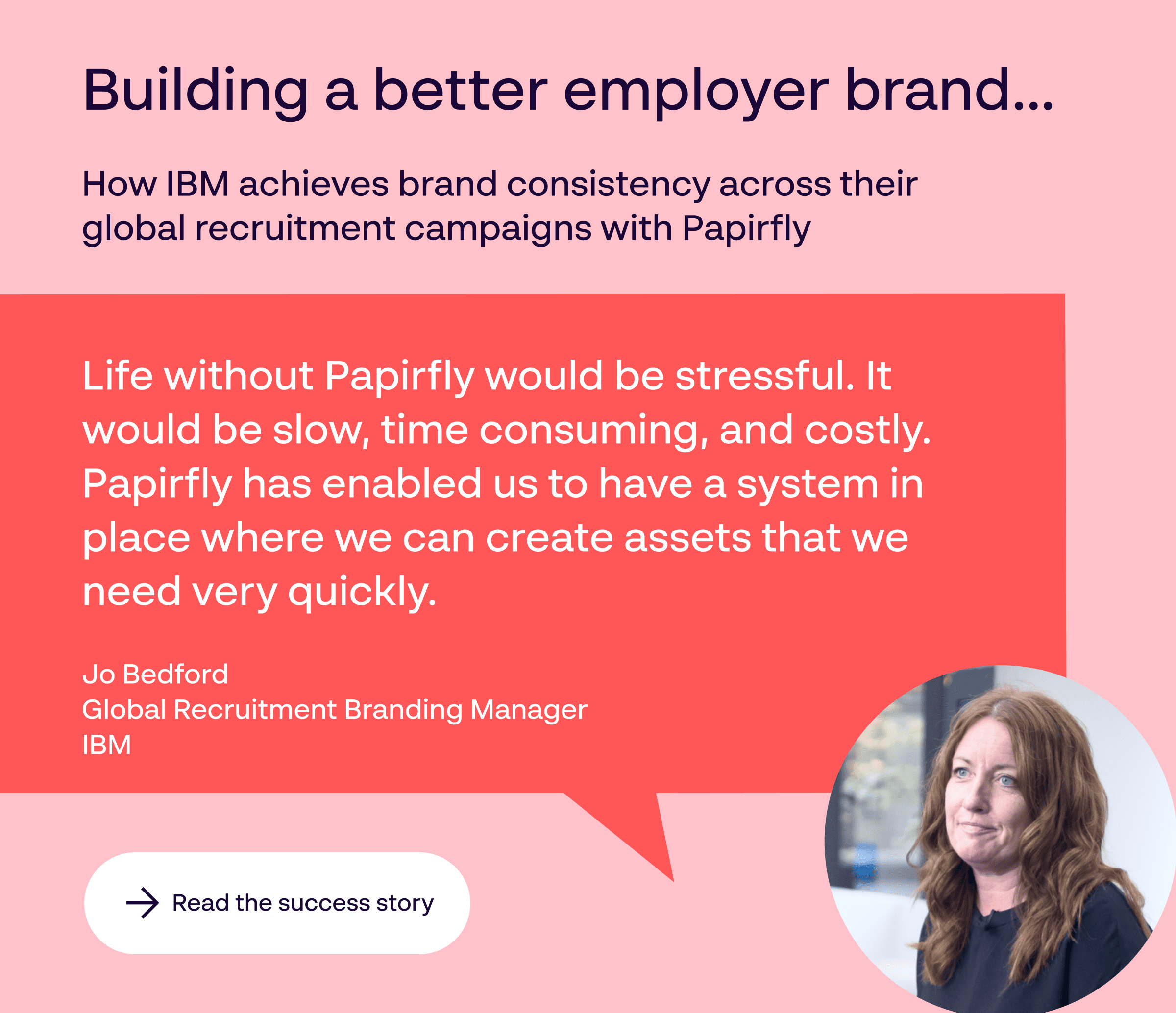
By using Papirfly’s brand management platform, Unilever has elevated this even further. Their teams can adapt the global employer brand for local audiences with ease, delivering messages that feel consistent, personal and culturally relevant, no matter where in the world they’re hiring.
Adapting your global employer brand for local recruits
Global brands thrive when their employer brand feels relevant everywhere. But this is easier said than done, especially when you need to communicate your EVP across diverse languages and cultures.
Steps you can take to support localization include:
- Creating specific candidate personas for each location
- Empowering local teams to tell their own stories
- Harnessing employer branding software and solutions to speed up asset production and maintain global brand consistency
- Using a Digital Asset Management system to give teams easy access to everything they need in one place
Want to know more? Check out our guide to translating your global employer brand to local markets.
AI and the future of employer branding
AI is already reshaping candidate experience and employer brand execution. Key innovation areas include:
- Personalized, always-on candidate communication – through intelligent chatbots and virtual assistants.
- Faster creation of job ads and recruitment marketing campaigns – by training AI prompt engineering tools on your EVP and other employer brand materials.
- Real-time insights – using AI to analyse vast amounts of recruitment, engagement, and retention data in seconds.
And the potential for AI in employer branding continues to grow day by day, giving teams more time than ever to focus on strategy, storytelling and experience.
Create and communicate a compelling employer brand with Papirfly
We hope you’ve enjoyed this complete employer branding guide and feel ready to use these insights to enhance the way you approach talent attraction and retention in the future.
One of the biggest challenges facing employer brand professionals is maintaining a consistent and constant stream of assets, while dealing with ever-tightening budgets. At Papirfly, we are making it faster, easier and more cost-effective to become an employer of choice – all through one integrated suite.
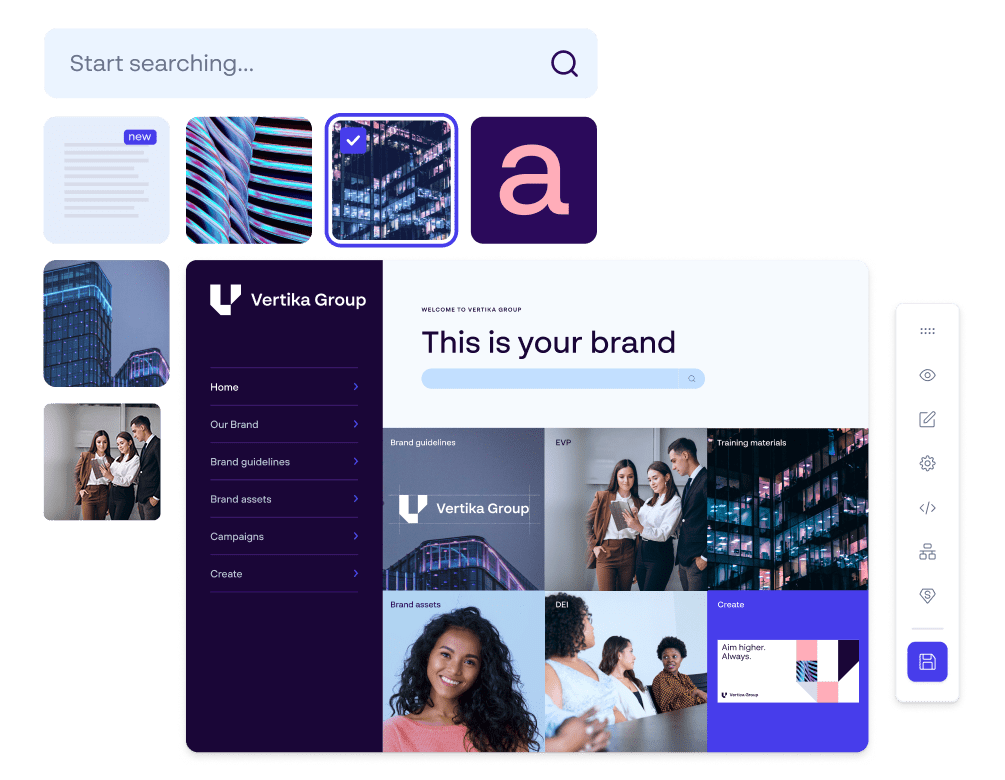
- Brand portal: Unite everyone on the values, visuals and voices behind your employer brand
- Digital Asset Management: Store, share and access a complete library of your employer branding materials in our globally renowned DAM system
- Templated Content Creation: Generate on-brand, studio-quality content at scale and at speed with intelligent design templates
- Campaign planning: Simplify campaign execution of all talent acquisition activities with one universal planner
- Data analytics: Measure and refine your employer brand strategy with enterprise-grade reporting and analytics
Ready to build an on-brand culture that attracts the best talent? Discover our employer branding software and solutions today.
Need help attracting top talent?
Our employer branding software is here for you.
Need help attracting top talent?
Our employer branding software is here for you.
Our employer branding software is here for you.
FAQs
What is employer branding and why does it matter?
A strong employer brand shapes how candidates and employees perceive your organization. When it is clear and consistent, you attract better talent, reduce recruitment costs, and retain high-performing teams – all essential for long-term business growth.
What should be included in an Employer Value Proposition (EVP)?
Your Employer Value Proposition (EVP) should articulate your mission, values, compensation, growth opportunities, flexibility, cultural DNA, and social impact. These elements help candidates understand why your organization is worth joining and staying with.
How does employer branding differ from consumer branding?
Consumer branding attracts customers, while employer branding attracts talent. Although different in purpose, both influence each other – organizations that treat employees well often earn higher customer trust, and well-loved consumer brands typically find it easier to attract and keep great people.
How can I measure whether my employer brand strategy is working?
There is no single metric, but you can track performance through application rates, acceptance rates, time to hire, cost per hire, retention, third-party reviews, and source-of-hire patterns. Consistent improvements across these areas indicate a healthy employer brand.
What steps should I follow to build an effective employer branding strategy?
Start by auditing your current brand perception, define your candidate personas, clarify your Employer Value Proposition, and map all communication touchpoints. From there, develop compelling brand assets, strengthen the onboarding experience, encourage employee advocacy, and ensure every message is authentic and aligned to your company culture.
Table of contents:
- What is employer branding?
- Why employer branding matters
- 6 key benefits of a strong employer brand
- How to measure the strength of your employer brand
- 8 steps to building your employer brand strategy
- 6 organizations who excel at employer branding
- Adapting your global employer brand for local recruits
- AI and the future of employer branding
- Create and communicate a compelling employer brand with Papirfly
- FAQs