

This content has been automatically translated and may include minor variations.
The world’s most recognizable brands don’t rise to the top by accident. They earn their place through unwavering brand consistency.
Brand consistency is the foundation of recognition, trust, and long-term brand equity. Every color, word, and asset shapes how your audience understands who you are and what you stand for. And when your teams are stretched across markets, campaigns, and channels, keeping everything aligned becomes even more essential.
Working with more than 600 global organizations, we see daily how disciplined brand consistency builds loyalty and strengthens market presence. This guide breaks down why consistency matters and how to maintain it – confidently and at scale.
If you want a brand that feels familiar everywhere it appears, let’s begin.
What is brand consistency?
Brand consistency is the practice of expressing your brand in a unified, coherent way across every interaction. From your website and social channels to a printed brochure or a 15-second video, your brand identity should always feel unmistakably you.
Consistency is the glue holding every message, visual element, and customer experience together. Maintaining a consistent style across all your marketing campaigns and channels strengthens recall, builds trust, and makes it easier for people to choose your brand over any alternative.
4 essential elements of brand consistency
For consistency to work, each of these four key elements need to be aligned.
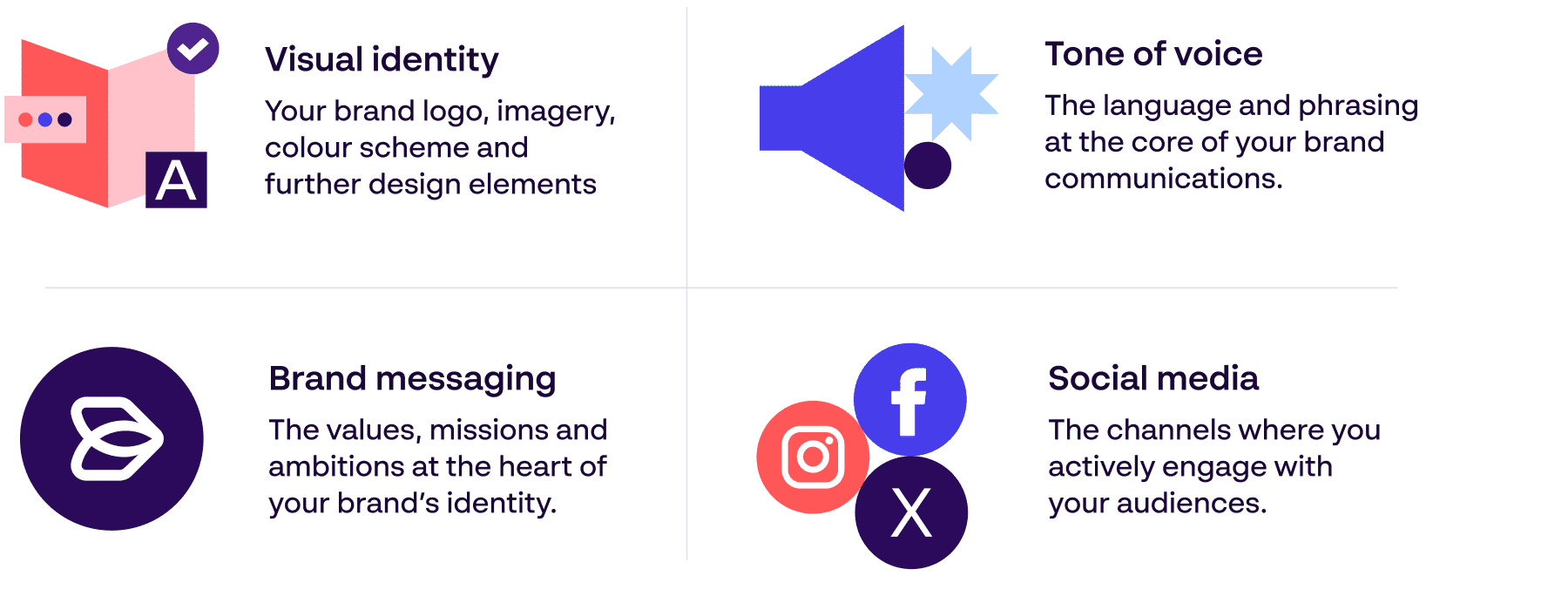
Visual identity
From McDonalds’ golden arches to the Starbucks Siren, visual elements are critical for consistency – especially as they are often the first connection an audience makes with your brand. Your logo, color palette, typography, and imagery must remain stable across every asset.

Tone of voice
How you communicate shapes perception. Do you keep things simple and jargon-free like Apple? Are you motivational and aspirational like Nike? No matter how you talk, your tone should be reflected in every message, from a simple Instagram caption to a multi-page brochure. A consistent brand voice reinforces credibility and helps audiences feel grounded in your brand’s personality.
Brand messaging
Your mission, vision, values, and promise must appear throughout your communications. When messaging aligns with your audience’s expectations, occasional customers become advocates who understand what your brand stands for.
Social media
Brand consistency on social media is essential, as more than 75 percent of consumers use social channels to evaluate brands. Every post, story, or video needs to reflect your personality and reinforce your brand identity. When these elements move in harmony, your brand becomes familiar, memorable, and trusted.
Why brand consistency matters
Brand consistency is a long-game strategy, and vital to ongoing success in any market.
You want customers to think of you first and foremost for whatever product you sell, service you offer, or cause you represent. And in our experience, consistency in your messaging is the path to fulfilling that ambition.
But the benefits don’t stop there…
Brand consistency differentiates your company
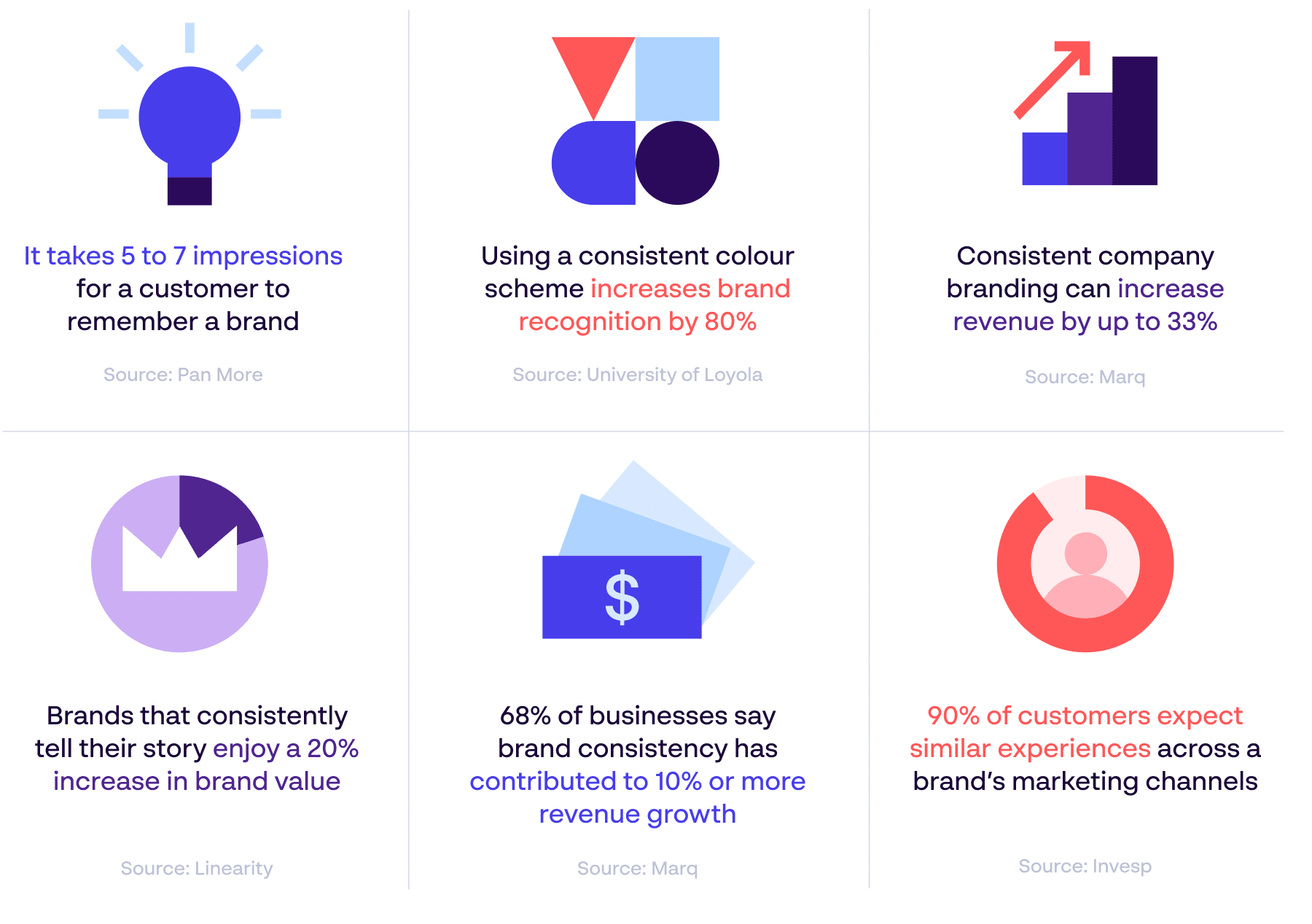
Brand consistency is a long-term strategy – and one that underpins sustainable growth. Customers need multiple interactions before they remember you, and each impression shapes your reputation and credibility.
When done well, brand consistency can:
Differentiate your brand in a crowded market
Consistent branding helps people instantly understand what makes you different. In competitive categories, clarity is a strategic advantage.
Increase brand recognition
It takes up to 7 interactions for the average customer to remember a brand. Consistency ensures that journey happens in as few interactions as possible, as the prospect gets the same impression each time.
Build trust and loyalty
A stable brand identity signals reliability. When every interaction feels aligned, audiences feel confident choosing you – again and again.
Boost the bottom line
With today’s consumers expecting quality and stability from companies, consistency is essential to a successful ROI. Brands that maintain consistency see significantly stronger revenue growth. Loyal customers return more often – and are more cost-effective than constantly acquiring new audiences.

Strengthen brand equity
Strong branding breeds authority, which in turn builds brand equity – a good indicator of how much your target audience loves, trusts and acknowledges your brand. In this way, consistent interactions and experiences play a key role in shaping the emotional and financial value of your brand.
Unite your employees
A coherent brand supports your employer value proposition. Potential candidates know what you stand for, and employees feel part of a shared identity. Learn more about staying consistent across all your employer branding.
What happens if a brand lacks consistency?
Inconsistency quietly erodes the value you work so hard to build. It can:
- Undermine trust in your brand
- Reduce conversion and repeat purchasing
- Damage brand reputation
- Confuse and irritate buyers, leading to poor customer experiences
- Weaken long-term profitability
- Limit your ability to recruit top talent
History is full of examples of how inconsistency makes it harder to grow a core of repeat customers. Learn from mistakes like Coca-Cola’s “New Coke” campaign – make sure your brand message stays aligned.
Is brand consistency only important for large corporations?
Not at all. Every brand — from early-stage startups to global enterprises — benefits from consistency. It helps customers understand who you are, builds credibility, and accelerates loyalty.

Key elements for creating and maintaining brand consistency
Achieving and maintaining brand consistency across platforms requires strategy, governance, and the right systems. Here’s how to put it into practice.
Brand strategy
Your brand and marketing strategy is where it all begins – defining the identity, direction, and experience you want to deliver. Ask yourself:
- Who are our target audiences?
- What values do we stand for?
- What visual and verbal elements reflect our personality?
- How should our brand adapt across channels or product lines?
The answers to these questions form the backbone of every asset you create.
Your brand strategy can also define whether your brand needs to adapt for different audiences and across different areas of the business.
Brand guidelines
Brand guidelines translate strategy into clear rules – everything from where the logo goes to how social posts are written. Here’s what brand guidelines need to define:
- Brand identity: logo usage, color palette, typography
- Visual identity: photography, illustrations, icons, graphic elements, layouts
- Tone of voice: language style, messaging frameworks
- Usage: approved applications and examples of misuses
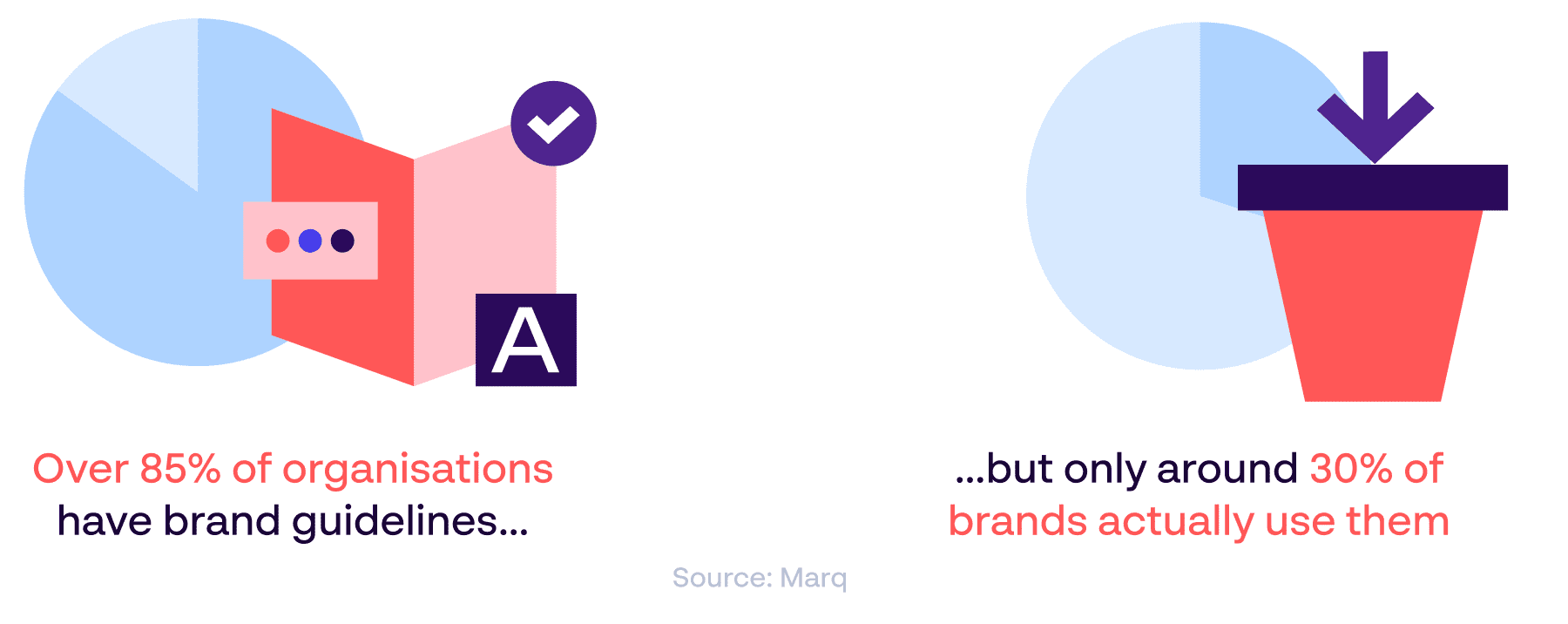
Having robust brand guidelines alone is not enough. You also need to ensure they can be accessed and understood by anyone who needs to produce brand-compliant assets. Want to know more? Read our must-have guide for global brand managers.
Brand hub
A digital brand hub brings your brand to life, consolidating guidelines, examples, design templates, and FAQs in one destination. It helps teams produce accurate, on-brand work without guesswork.
Brand templates
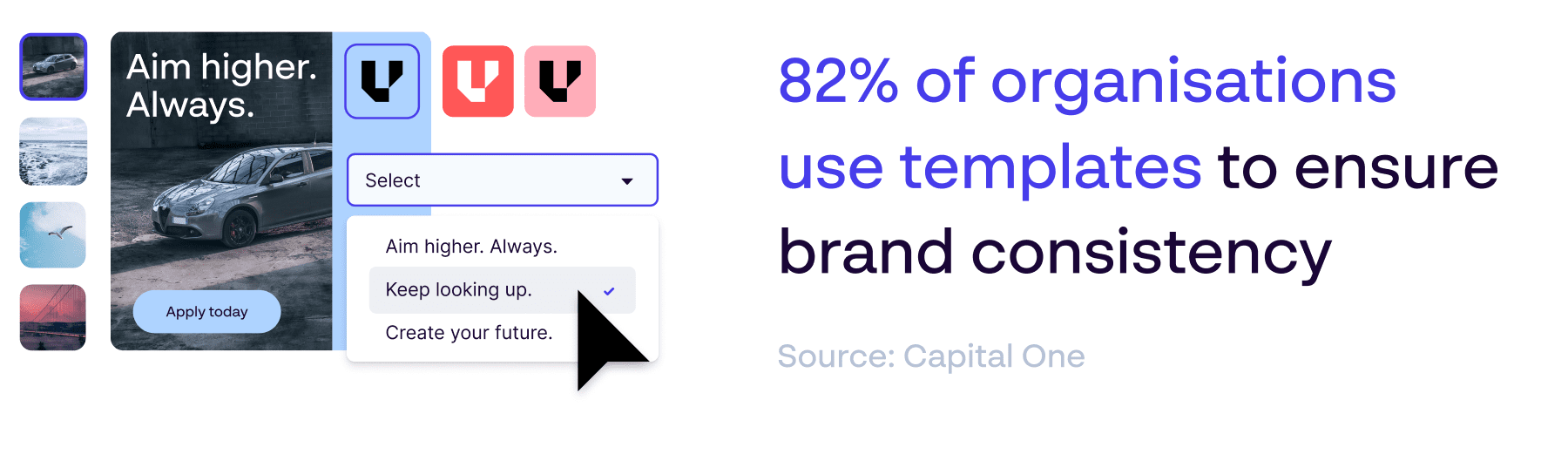
Smart design templates take the essence of your brand guidelines and put them automatically into action, ensuring every asset aligns with your brand rules – even when produced by non-designers.
Templates also:
- Speed up asset creation
- Streamline approval workflows and minimize time spent proofing and amending creative assets
- Make it easy for local teams to adapt assets for their audiences
- Help create a more professional, high-quality brand image
If you want to achieve consistency without sacrificing creative freedom, then digital design templates are a must-have.
Recycling assets
Repurposing content strengthens consistency and reduces costs. A single video, presentation, or campaign can produce dozens of channel-specific assets, all aligned with the same core brand identity.
Digital Asset Management
Modern Digital Asset Management (DAM) software supports brand consistency by creating a single source of truth for your brand. This ensures teams always access the correct, approved, on-brand assets, and prevents outdated or off-brand files from slipping into the world.
With a strong DAM, you can also:
- Tag assets by audience, market, or channel
- Control permissions
- Maintain version accuracy
- Review and approve creative assets before publishing
A solid DAM system is a vital tool for any brand team. It’s why we dedicate so much time and energy to making our DAM solution one of the leading DAMs globally, as detailed in the latest Forrester Wave™ Report.
Proven ways to measure brand consistency
While there is no single metric used to measure brand consistency, organizations can:
- Run a brand audit – reviewing all assets created in a set timeframe to see if any deviated from your guidelines and identify measures you could introduce to fix the problem.
- Track template and approved asset usage – measuring how regularly marketers are using your brand compliance software.
- Monitor brand hub views – indicating levels of engagement with your brand guidelines.
6 brilliant brand consistency examples to learn from
1. Google
When most people these days see a combination of red, blue, yellow and green, their minds immediately go to Google. This four-color palette has spread from the heading of their search engine across all their products and platforms – creating near-universal recognition.
2. Nike
The iconic Swoosh and “Just do it” line have helped transform Nike into one of the world’s premier clothing and footwear companies – mainly because they have been applied so consistently across all the company’s products, brand materials, and packaging.
3. Starbucks
A globally consistent experience – from the Siren logo to the cosy in-store ambience – have helped make Starbucks the go-to name in the highly competitive coffee industry. Their product might not be too much from their competitors. But consistent messaging and branding has placed them head and shoulders above the rest.
4. Apple
From sleek product designs to minimalist ad campaigns, every element of Apple’s brand communications promotes the same kind of simplicity, innovation and premium quality. This consistency is one of the reasons the company has gained such a cult-like following.

5. Patagonia
The best brands are founded on beliefs and values that connect with customers on a deep, emotional level. By placing their ethical commitment at the core of their brand guidelines, Patagonia have been able to use brand consistency to build a devoted fan base.
6. BMW
BMW has a long-standing reputation for quality, dependable vehicles. But with hundreds of dealerships across Europe and beyond, there is constant pressure to maintain that brand consistency from location to location. Through Papirfly’s DAM and Content Creation suite, BMW NE has closed the distance between HQ and their individual dealerships, keeping communications coordinated and on-brand at all times.

3 common brand consistency challenges – and how to overcome them
Achieving brand consistency is easier said than done. Here are three of the biggest pain points, with advice on how to navigate each of them.
1. Maintaining consistency across multiple channels
Different formats and requirements make consistency difficult. Establishing intelligent design templates for each channel is critical to fixing this problem. It takes responsibility off your team’s shoulders, ensuring every asset – from display ads to in-store materials – follows the same rules.
2. Global and local alignment
One of the greatest brand challenges for large organizations is maintaining consistency on a global scale. How do you allow local adaptation without losing overall brand control? The answer is to combine a DAM with structured design templates. It’s the ideal way achieve a consistent presence across every location while also allowing local teams to add a personalized touch.
3. Rebranding
After any rebrand or refresh, there’s always a risk of old brand elements accidentally showing up. Make sure your brand hub is updated immediately and retire any creative assets that are no longer correct.
Want to know more about rebranding? Download our essential guide to a successful rebrand.
The role of AI in building brand consistency
AI is reshaping how teams maintain consistency at scale. Today and in the near future, it will support:
- Automated, on-brand customer interactions
- Intelligent tagging and contextual search in DAM systems
- AI-assisted content creation guided by brand rules
At Papirfly, we’re continuing to explore how AI can help improve all areas of brand management.
Papirfly – built for consistent brands
Maintaining consistency shouldn’t be a constant struggle. Our DAM and Content Creation software empowers over 600 brands worldwide to create, manage, and activate their brand with clarity and control.
- Brand Portal: Empowering every person who uses your brand with one online brand portal
- DAM: Establishing a single source of truth for your on-brand assets with our globally renowned DAM
- Templated Content Creation: Intelligent design templates that allow you to create an infinite number of brand-compliant assets quickly and consistently
Discover how our brand consistency software and services can help you stay on message at every touchpoint with unrivalled ease.
Achieve consistency across your enterprise
Empower your team to deliver on‑brand assets every time.
Achieve consistency across your enterprise
Empower your team to deliver on‑brand assets every time.
Empower your team to deliver on‑brand assets every time.

FAQs
Brand consistency is the practice of presenting your brand in a unified and recognizable way across every channel. It ensures your visuals, tone of voice, messaging, and customer experiences feel unmistakably aligned – no matter who creates the asset or where it appears.
Consistency accelerates recognition, builds trust, and strengthens long-term brand equity. When every interaction reinforces the same identity, customers feel confident choosing you – and are far more likely to return.
Inconsistency usually appears when teams work in silos, assets live across disconnected systems, or brand guidelines are hard to access. It leads to outdated materials in circulation, unclear messaging, and off-brand content making its way into the world.
A combination of structured brand governance and the right technology makes alignment far easier. Digital Asset Management centralizes approved assets, brand portals educate teams, and Templated Content Creation ensures every asset is produced on-brand.
Absolutely. Consistency strengthens recognition and credibility for brands of every size. Whether you’re an early-stage startup or a global enterprise, showing up the same way everywhere you appear helps audiences quickly understand who you are and why they should trust you.
Table of contents:
- What is brand consistency?
- Why brand consistency matters
- Key elements for creating and maintaining brand consistency
- 6 brilliant brand consistency examples to learn from
- 3 common brand consistency challenges – and how to overcome them
- The role of AI in building brand consistency
- Papirfly – built for consistent brands
- FAQs