
This content has been automatically translated and may include minor variations.
Central marketing publishes a refreshed brand manual. Six months later, half the sites across the network still use old logos, regional managers design posters in Canva, and franchisees have quietly invented their own visuals.
It’s a familiar scenario for anyone running marketing across a hotel group, food and beverage (F&B) brand, resort brand or franchise network.
This guide covers what hospitality branding involves, the common problems multi-location brands face, and how to build a marketing strategy that supports the brand at every location – plus the tools that make consistent execution possible at scale.

Thon Hotels (European Hotel Group)
Industry: Hospitality | Region: Northern Europe
90+ hotels. Five countries. One consistent brand.
Thon Hotels centralized brand assets, templates, and guidelines with Papirfly. Local teams now create signs, menus, posters and SoMe in minutes.
“We can see that the consistency in the brand has greatly improved. It’s now very easy to see that it’s Thon Hotels because it always looks the same!“
Pernilla Eidslott
Marketing Advisor
What is hospitality branding?
Hospitality branding is how a hotel group, food and beverage chain, or any type of hospitality franchise network expresses a consistent identity across every location a guest might encounter. It spans far more than a logo or color palette – it’s the sum of every signal a guest and employee experiences.
Hospitality branding typically includes five components:
- Brand strategy (the positioning and promise the group wants to be known for)
- Visual identity (logo, colors, typography and imagery)
- Guest experience (how the brand feels from check-in to a welcome email)
- Marketing execution (the campaigns and local promotions that bring it to life commercially)
- Location-level activation.
Location-level activation is where everything either holds together or falls apart – it’s the day-to-day reality of an on-site team producing a flyer, a social post or a seasonal offer.
Why hospitality branding matters
Guests choose brands they trust. In a category built on repeat visits and word-of-mouth, a recognizable, consistent brand shortcuts the decision when guests are comparing similar-looking properties or locations.
Brand strength drives direct demand. Whether it’s a hotel booking or a restaurant reservation, brands guests search for by name outperform those only discovered through a third-party platform.

Direct digital bookings are projected to generate more than $400 billion in hotel gross bookings by 2030, overtaking online travel agencies
Source: Skift Research, 2024
Direct digital bookings are projected to generate more than $400 billion in hotel gross bookings by 2030, overtaking online travel agencies.
Source: Skift Research, 2024
Brand consistency is harder when you scale. Top-performing hotel brands have achieved a cumulative RevPAR premium of 41% over weaker competitors (Source: CBRE, 2025), and that premium depends on every location delivering the same experience.
Brand drives employee alignment. A clear brand gives on-location teams and franchisees a shared reference point, reducing the guesswork that leads to off-brand decisions.
Common hospitality branding problems multi-location brands face
Most hospitality marketing leaders recognize the following problems:
- Brand guidelines exist but aren’t followed. A polished brand book gets circulated once and sits unopened, because it isn’t built into the tools on-location teams use day-to-day.
- Local teams create off-brand collateral. Without ready-made templates, on-site and regional teams turn to whatever software is on hand – often generic tools with no brand controls.
- Central marketing is the bottleneck. Every local request for a poster, menu, or social asset routes through a small central team, who end up producing one-off collateral instead of developing the brand.
- Franchisees have minimal control. Franchisees own and operate the location premises but don’t own the brand, leaving a gap between what they’re expected to represent and what they’re equipped to produce.
Note: these are structural challenges and not a failure of any one team.
Assets are scattered across drives, agencies and email. Logos, photography and templates live across shared drives and inboxes, with no single source of truth for any location to draw from.
So what can your brand do to fix this?
How to build a hospitality branding and marketing strategy
Getting from a brand manual to consistent execution across every property or location takes a deliberate sequence.
- Define your brand strategy. Establish the positioning, guest promise and values that every other decision needs to support.
- Build a visual identity that travels. Design a visual system flexible enough to work across location sizes, markets and media, not just the flagship property.
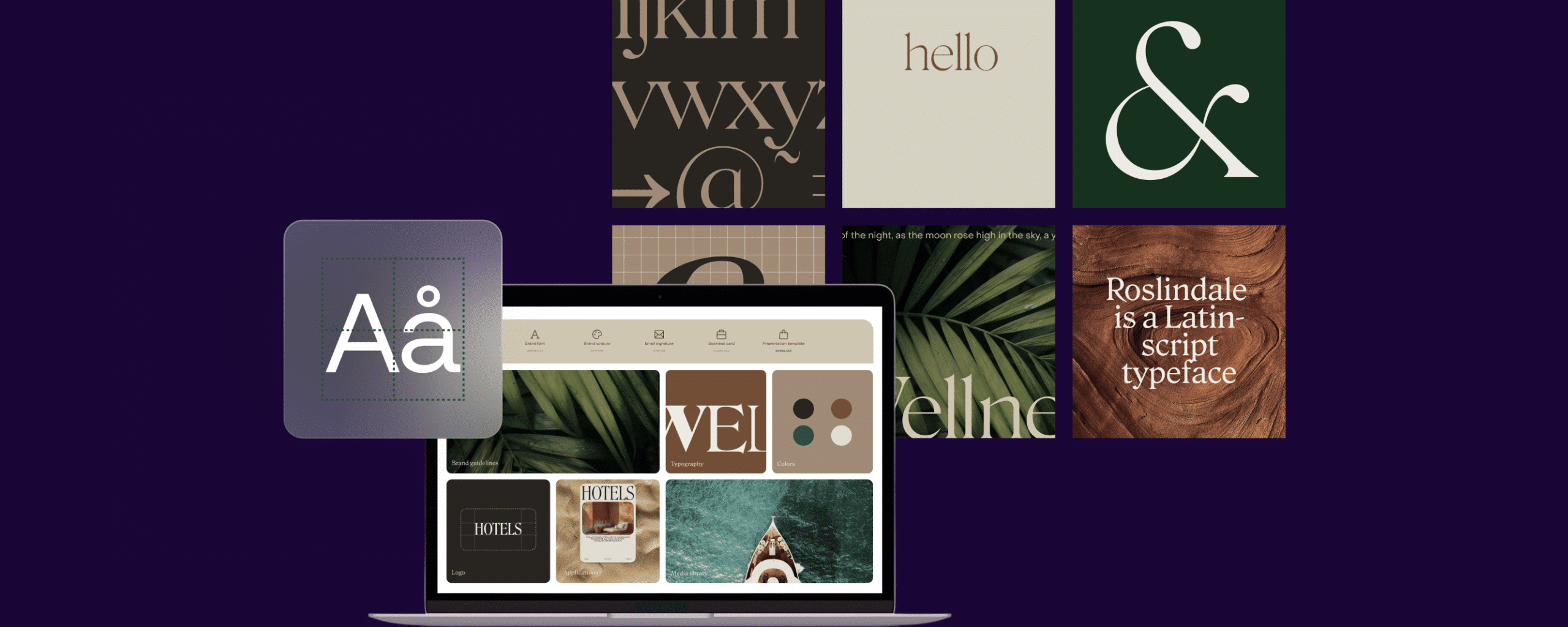
- Showcase the brand identity in living brand guidelines. Move brand rules out of a static PDF and into a format that updates centrally and reflects instantly wherever teams work.
- Plan a hospitality marketing strategy that supports the brand. F&B calls for fast, promotional campaigns; hotels call for slower, experiential ones. Align campaigns, promotions and channel plans so marketing activity reinforces your target audience.
- Empower properties to execute locally. Give property, restaurant and franchise teams templates and self-service tools to produce their own on-brand marketing.
- Measure and adapt. Track which properties and locations are publishing on-brand content and which assets get used, so the strategy evolves.
How Papirfly helps hospitality brands stay consistent at scale
Each problem above has a practical fix, and it starts with connecting the brand to the systems location and franchise teams already work in.
A single source of truth for every brand asset
Digital Asset Management (DAM) replaces scattered drives, agency folders and email attachments with one governed library. Every location, region or franchisee pulls the current logo, photography and campaign asset – never an outdated version found in an old email.
A live brand portal every location can access
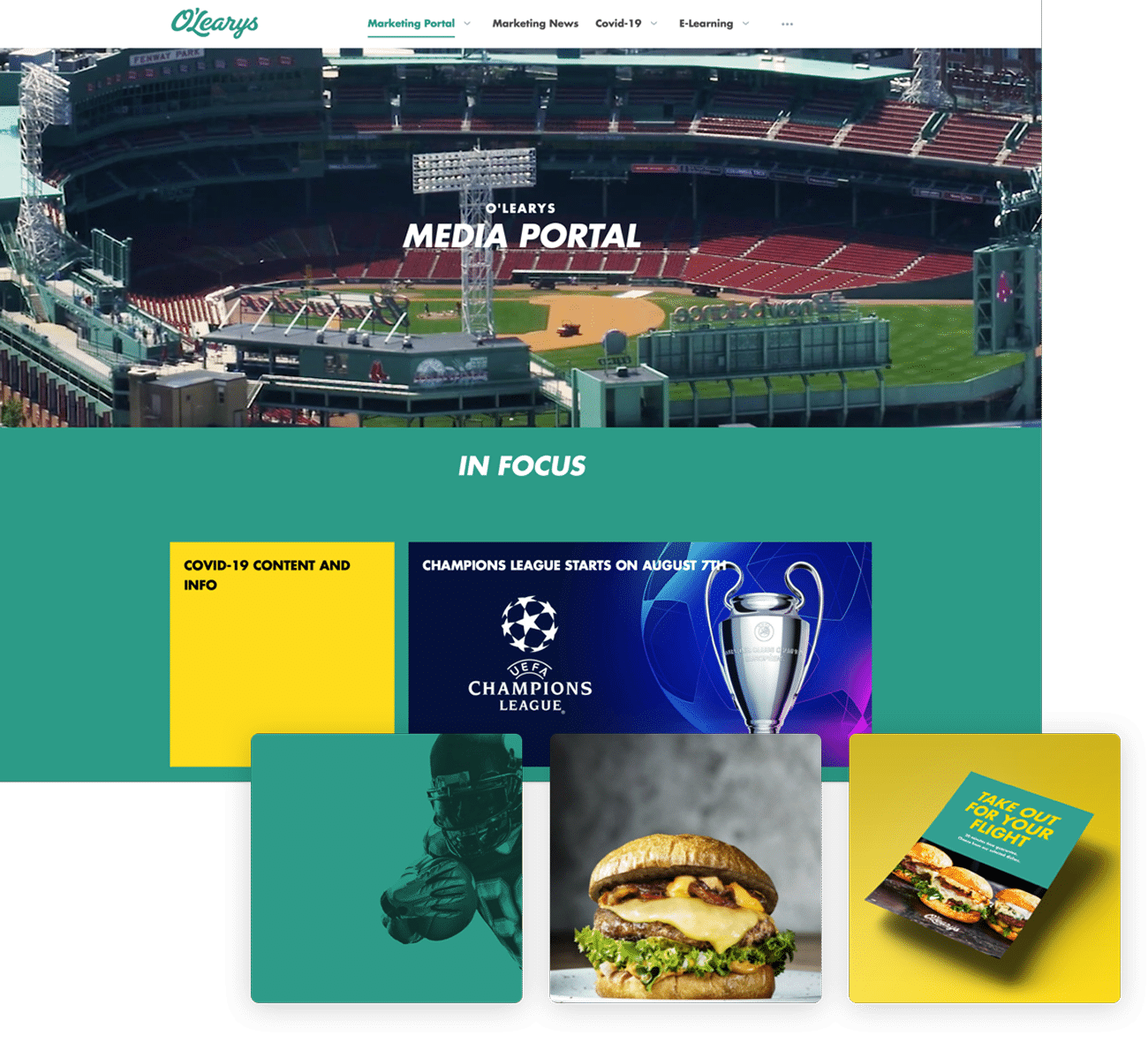
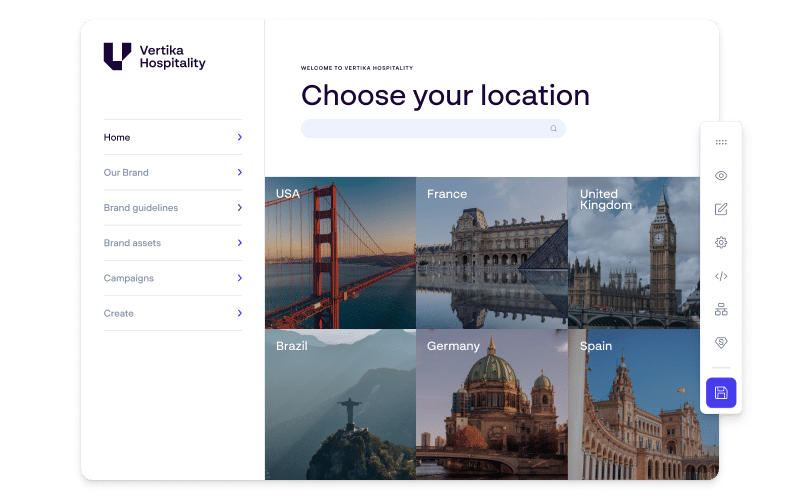
A brand portal gives every location, region and franchisee a self-service home for guidelines, assets and campaign context, accessible the moment they need it. This turns a brand manual from a document into something teams actually use.
Templated content creation for multi-location networks and franchise teams
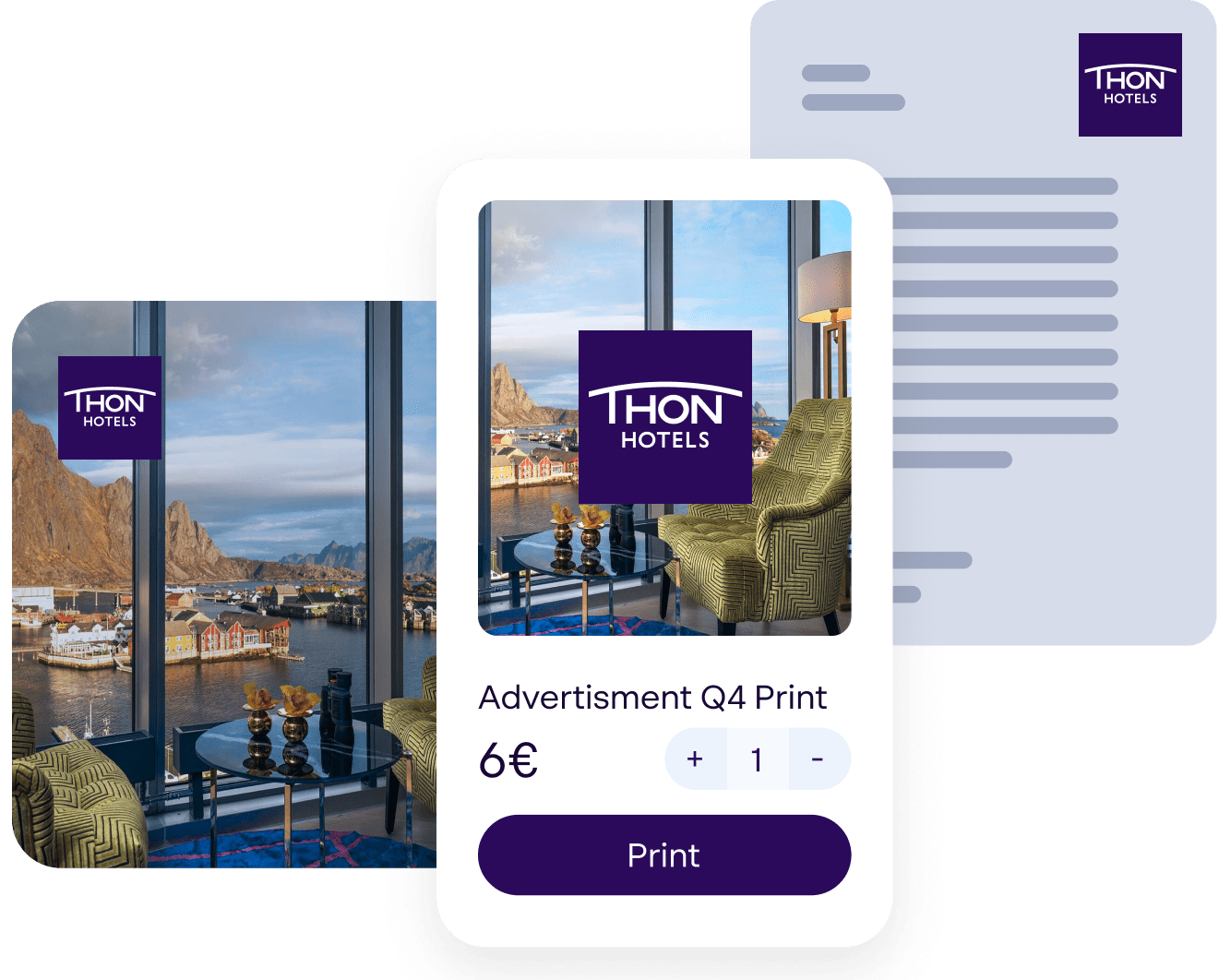
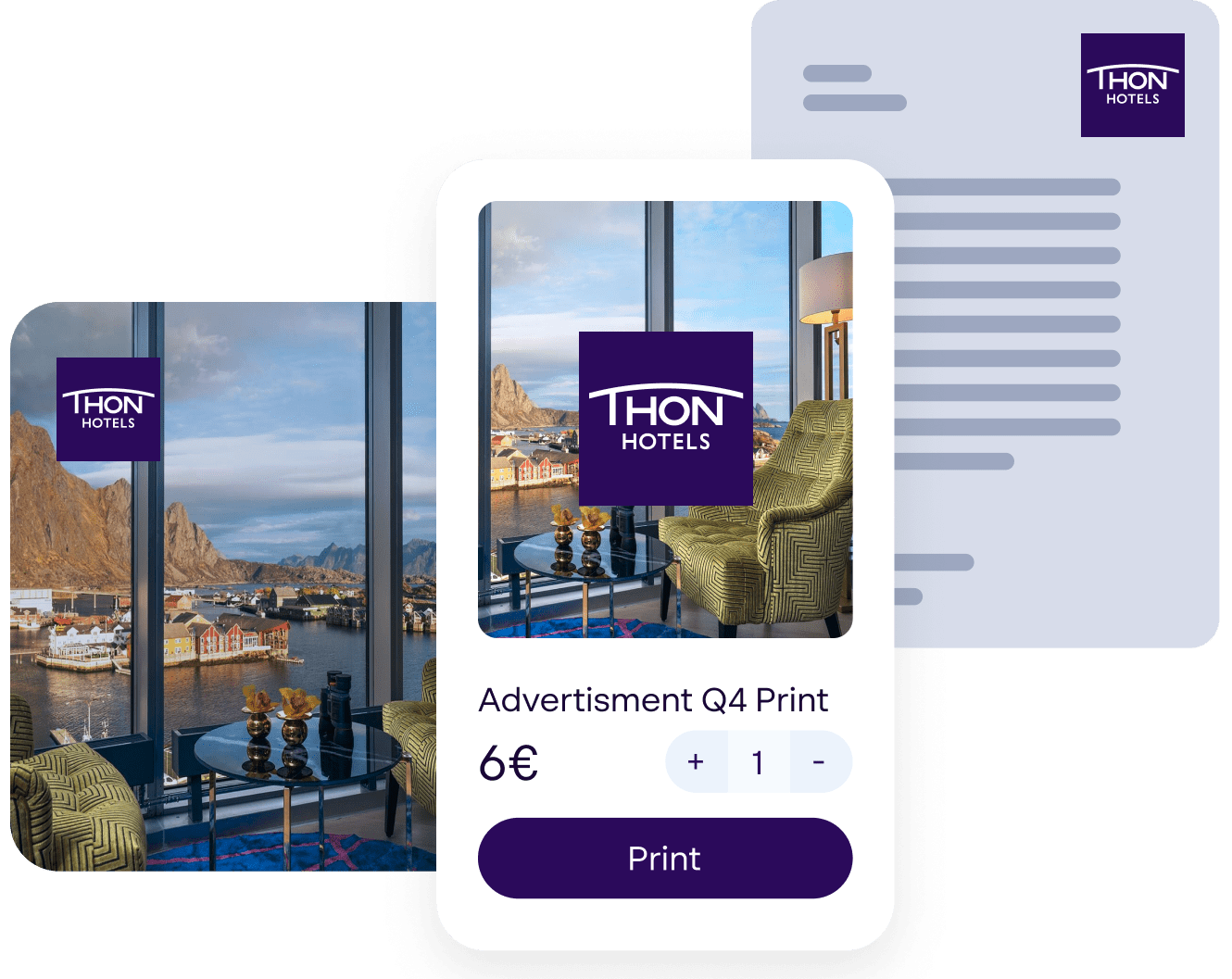
Template-based content creation lets non-designers at location level produce studio-quality, on-brand marketing in minutes; a poster, a social post, a menu insert, and more. Central marketing builds the template once; every location localizes it correctly without being able to touch and tweak fundamentals like the logo or official color palette.
Made for multi-region and franchise hospitality groups
Together, a DAM, brand portal and templated content creation work as one system built for groups managing multiple brands, regions or franchise agreements from a lean central team. Brand consistency stops depending on head office chasing every location.
How Thon Hotels revamped its marketing operations with Papirfly
Papirfly’s customer Thon Hotels runs more than 90 properties across Norway, Belgium, Sweden, Denmark and the Netherlands with a small central brand team. Before Papirfly, the central team was buried in case-by-case asset requests, and some properties were resorting to Word to produce their own collateral.
Pernilla Eidslott
Marketing Advisor at Thon Hotels
“We can see that the consistency in the brand has greatly improved. Actually, my manager was told at a convention by a competitor that they also noticed the change – that it’s now very easy to see that it’s Thon Hotels because it always looks the same!”
Hospitality branding in the franchise model
Franchisees own and operate the location, but the brand belongs to the franchisor – and that tension sits at the center of every franchise hospitality group’s branding challenge. Brand consistency here can’t be enforced by central marketing alone; it has to be built into the system that franchisees work in every day.
A brand portal paired with templated content creation resolves this by design. It gives franchisees self-service access to the brand they signed up to represent, alongside ready-made campaign templates they can localize for their own market.
Franchise brand management teams must use templates in order to lock specific elements – logos, colors, fonts – to make off-brand work structurally impossible, rather than something a franchisee has to remember not to do. Central teams can also track which assets are used and which properties are publishing on-brand content.
O’Learys (Global Sports Bar Franchise)
Industry: Hospitality | Region: Global
130+ restaurants. 15+ markets. One consistent brand.
O’Learys centralized all brand assets, templates, and campaigns. Local restaurants can quickly create and adapt on-brand menus, social posts, and more.
“Having a brand management platform with everything in one place, is an essential demand for seamless organizational operations.“
Mikaela Bäckius
Project Manager Brand
Get started with Papirfly for hospitality branding
Hospitality branding is a multi-location, multi-team execution problem, not just a strategy problem. Brand guidelines, a brand portal, DAM and templated content creation are what keep it consistent once it has to travel across dozens or hundreds of properties.
The unlock is empowering property and franchise teams to execute locally without breaking the brand. That’s the shift hotel groups and like Thon Hotels and F&B franchises like O’Leary’s have already made.
Achieve hospitality branding consistency
See how Papirfly scales across your network.
Achieve hospitality branding consistency
See how Papirfly scales across your network.
See how Papirfly scales across your network.
FAQs
What is hospitality branding?
Hospitality branding is how a hotel group, restaurant chain, resort brand or franchise network expresses a consistent identity across every location, covering brand strategy, visual identity, guest experience, marketing execution and property-level activation.
What is the difference between hospitality branding and hotel marketing?
Hospitality branding is the identity and promise a hotel group builds and protects. Hotel marketing is the campaigns and channels used to promote that brand commercially – marketing should support the brand, not define it independently.
How do hotel groups keep branding consistent across multiple properties?
They pair clear, living brand guidelines with tools that make on-brand execution easy at every property. A DAM, a brand portal and templated content creation together remove the guesswork that leads to off-brand collateral.
Does hospitality branding apply to restaurants and F&B brands?
Yes — the same brand governance challenges (off-brand local marketing, franchisee inconsistency, scattered assets) apply to restaurant chains and F&B franchises, and are solved the same way: a brand portal, DAM and templated content creation.
How do you manage brand consistency with franchisees?
Give franchisees self-service access to approved assets and templates through a brand portal, with locked elements like logos and colors. This home for brand consistency ensures off-brand variations aren’t possible, and track which properties are executing on-brand.
What tools do hospitality brands use to manage branding at scale?
Most multi-location groups rely on Digital Asset Management for a single source of truth, a brand portal for self-service access, and templated content creation so non-designers can produce on-brand marketing locally.
How often should a hospitality brand refresh its branding?
Most hospitality groups review their brand every 3–5 years, or sooner if guest expectations or a merger shift what the brand needs to represent. Guidelines themselves should be updated continuously as campaigns and properties are added.
Table of contents:
- What is hospitality branding?
- Why hospitality branding matters
- Common hospitality branding problems multi-location brands face
- How to build a hospitality branding and marketing strategy
- How Papirfly helps hospitality brands stay consistent at scale
- How Thon Hotels revamped its marketing operations with Papirfly
- Hospitality branding in the franchise model
- Get started with Papirfly for hospitality branding
- FAQs