

This content has been automatically translated and may include minor variations.
Attracting and keeping the right talent has never been more challenging. Every organization wants people who bring energy, ambition, and a strong cultural fit – but your competitors want them too. And today’s candidates have unprecedented access to information. A quick search, a social review, or a conversation in an online forum can shape their impression of your workplace long before they meet you.
That is why a clear, credible employer brand strategy is essential. It helps you articulate what you stand for, what you offer, and why someone should build their career with you. Done well, it sets you apart in a crowded market and strengthens talent retention by helping employees feel connected to your mission.
Below, we break down what an employer branding strategy is and outline 13 practical steps to create one that attracts, engages, and retains top talent, wherever they are in the world.
What is an employer branding strategy?
An employer branding strategy is a documented approach for communicating your organization’s values, culture, and employee experience. It defines how you project your employer brand to current teams and future candidates, and ensures every touchpoint feels consistent, human, and aligned with your identity.
Your strategy exists to:
- Differentiate your brand from talent competitors
- Show why people should want to join your organization – and stay
- Demonstrate how your company culture is evolving and getting stronger over time
An effective employer branding strategy requires clarity, commitment, and ongoing refinement. When done intentionally, it becomes a powerful tool to attract top talent and build high-performing teams.
Why your employer branding strategy matters
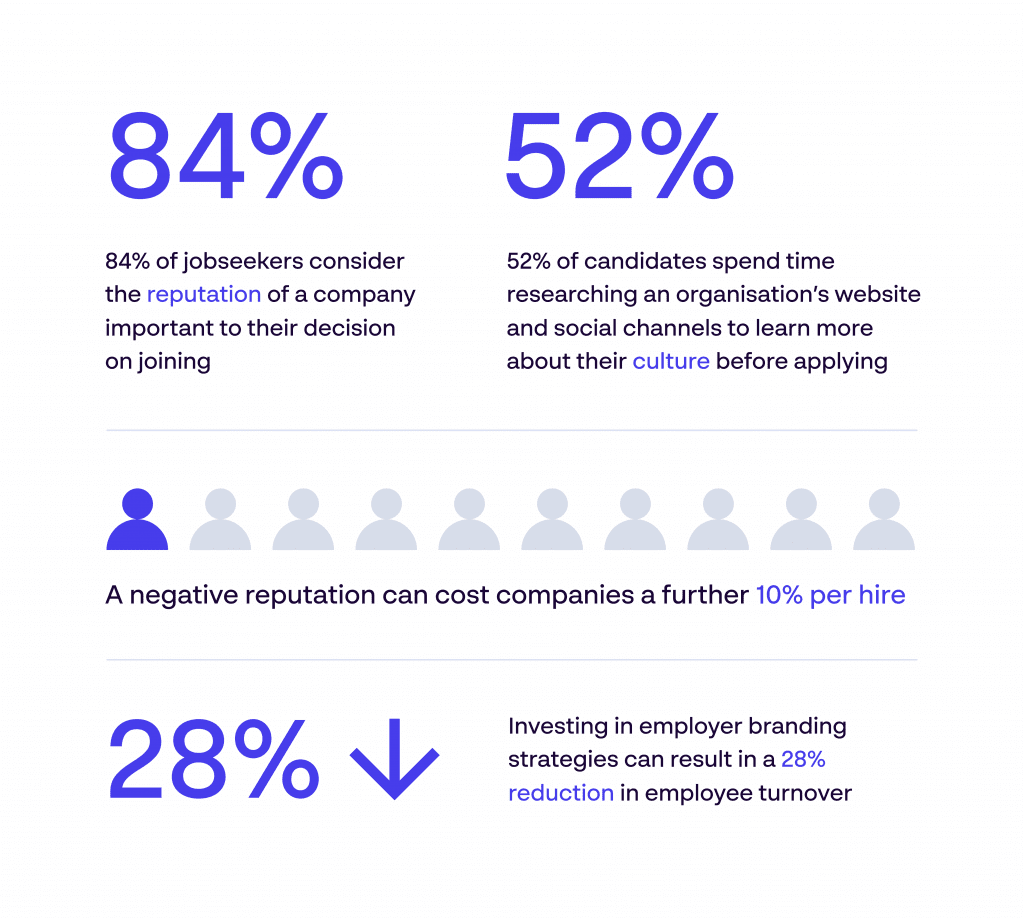
Your employer brand is visible long before you engage a candidate directly. Review platforms, social media, internal stories, and your own marketing channels all shape perception. If your narrative is unclear or if negative experiences overshadow the positives, you risk losing great people to organizations that communicate better.
A strong employer brand strategy helps you build deeper connections with talent. And when you do that, you can:
- Increase your appeal to high-quality candidates
- Strengthen engagement by aligning people with shared values
- Reduce hiring and talent retention costs
- Inspire voluntary advocacy
- Create a unified vision for your organization that everyone shares
13 steps to building a strong employer branding strategy
Effective employer branding strategies can be the difference-maker in an ideal candidate’s decision to join your organisation over the other options available. Following these best practices gives you greater control over the messages you project, and the ability to influence how these individuals see your brand.
1. Audit how people perceive your brand
Before building your employer brand strategy, you must have a clear understanding of your employer reputation right now. A structured audit of candidate and employee perceptions can help you identify any gaps, misalignments, or misconceptions that need addressing.
Here are some key channels to include in your audit:
- Employment review sites – What are people saying about your company culture? Are there any negative reviews and, if so, how are you addressing them?
- Social media – What conversations are happening about your workplace? Invest in social listening tools to track mentions across social media.
- Employee feedback – What are your teams experiencing day to day? Use internal surveys or open team meetings to identify key issues.
- Google alerts – How is your brand represented publicly and how does it compare with your intentions?
2. Build your candidate personas
Your employer brand must speak to the people you want to hire. Candidate personas help you define their motivations, values, and expectations, so you can target the right people for the right roles.
Consider:
- Personality traits
- Career goals
- What causes they care about
- Where they go for information
- The influences shaping their decision
3. Establish your differentiators
Your differentiators are the reasons someone chooses you over another employer. These should reflect your mission, values, cultural strengths, and areas where you excel.
Ask yourself:
- What do we offer that competitors do not?
- What does our culture enable people to achieve?
- Which principles guide the way we work?
- Where does our brand excel and stand out from the crowd
The answers to these questions will form the backbone of your employer brand storytelling and will help make you more attractive to potential recruits.
4. Define the marketing channels that matter most
Your audiences will not all engage through the same touchpoints. Identify where your candidates spend time and commit to sharing clear, consistent messages across those channels.
Some of the most common channels are outlined below.
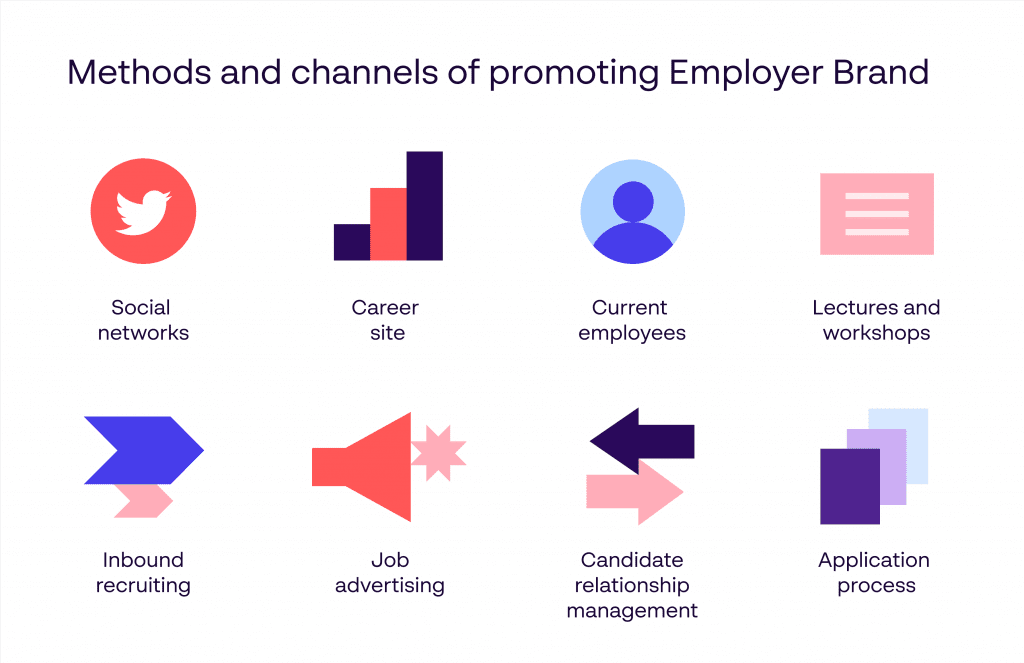
Whichever channels you’re communicating on, authenticity is essential. Messaging should feel human, grounded, and reflective or real employee experience. If not, it risks breeding candidate distrust.
5. Create your Employer Value Proposition
Your Employer Value Proposition (EVP) is your promise to current and future employees. It outlines what people gain from being part of your organization – professionally, emotionally, and socially. This makes it a centrepiece of your employer branding strategy.
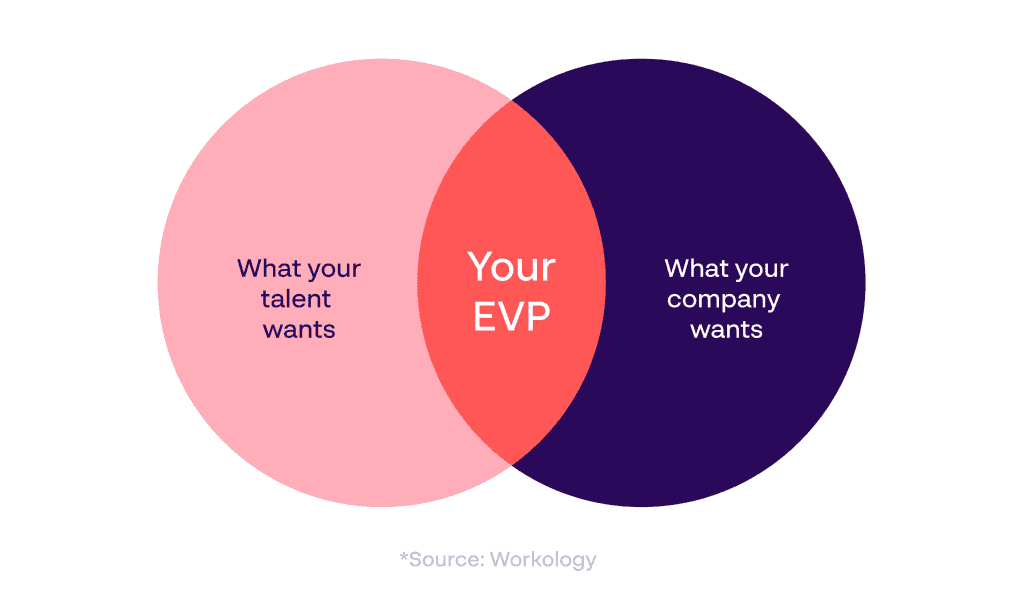
Elements often include:
- Company purpose
- Workplace culture
- Core business values
- Professional development
- Flexible working opportunities
- Work-life balance
- Benefits and perks
- Support for wellbeing
- Community and social impact
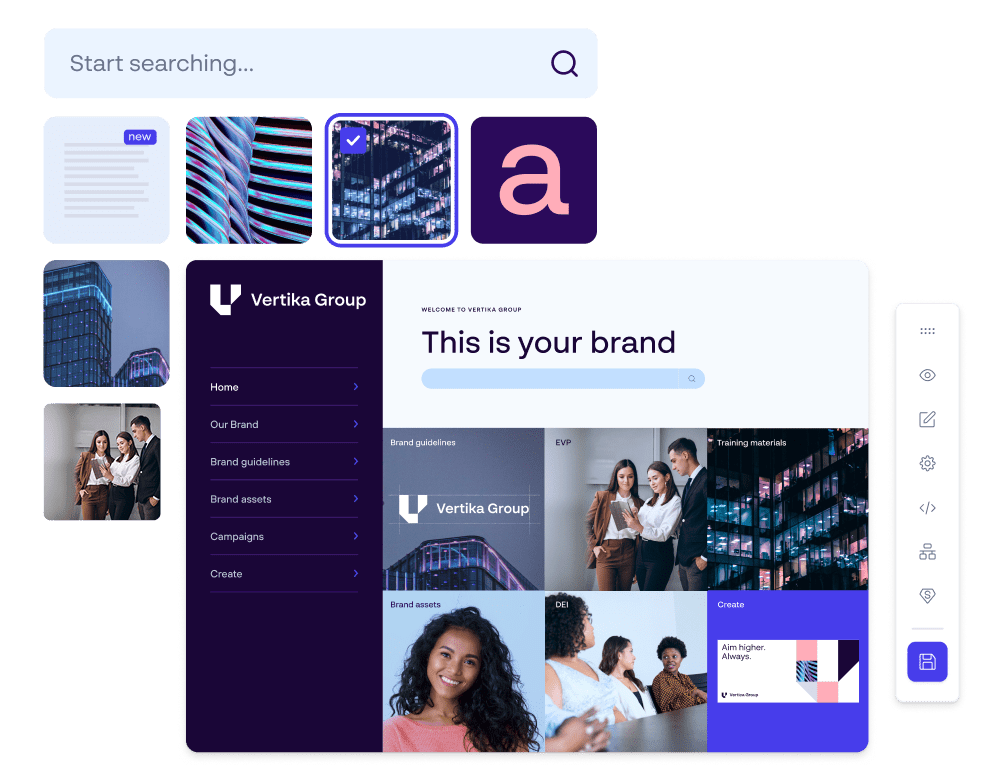
Your EVP should be clear, honest, and visible. Consider using Digital Asset Management for employer branding to ensure everyone across your organization can access your EVP whenever they need.
6. Develop or refine your employer brand guidelines
Brand consistency strengthens credibility. Dedicated brand guidelines ensure your visuals, tone, and narratives align globally while giving local teams what they need to adapt content responsibly.
Include:
- Visual rules
- Messaging frameworks
- Localization guidance
- Cultural considerations
- Best-practice examples
These elements all help drive consistent branding across social media and other key channels without limiting creativity.
7. Invest in employee development
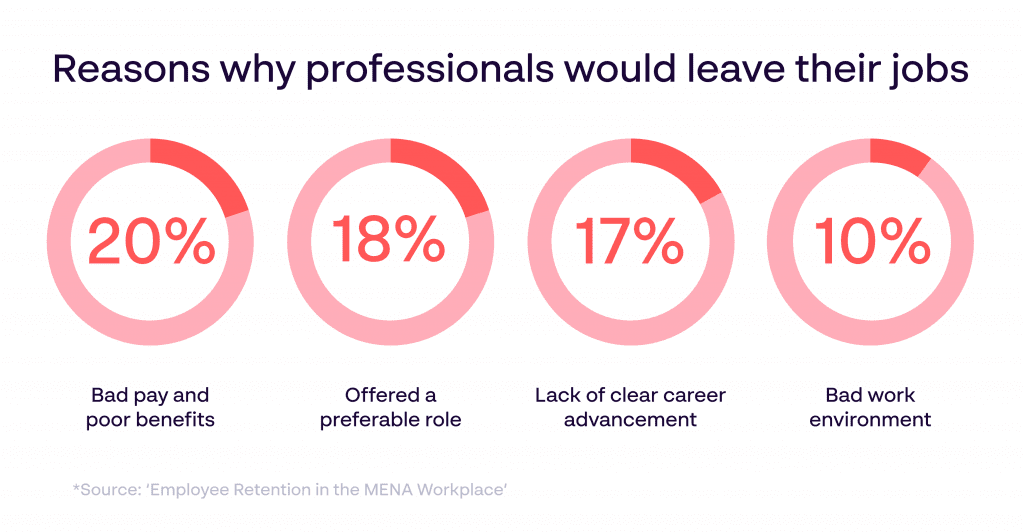
Career growth directly influences employee retention. When people feel supported, motivated, and able to progress, they stay longer and contribute more. When they don’t, employee turnover can soon become a problem.
This is why having robust training and development programs is so important. They are not just a means of upskilling your staff. They also help you:
- Increase engagement
- Reduce workplace boredom
- Deepen connections with your employer brand
- Build employee advocacy
- Strengthen your company culture
- Become an employer of choice
Losing good employees to competitors? Read our blog post to find out why.
8. Align stakeholders internally
Everyone responsible for hiring, culture, or brand experience must be aligned on your approach to employer branding. This may include HR and talent acquisition, internal comms, marketing and brand teams, regional leads, and more.
Gather input early to ensure the strategy reflects real needs and is supported across the organization. Once stakeholders are aligned, you can start educating the wider teams to make sure everyone is on the same page.
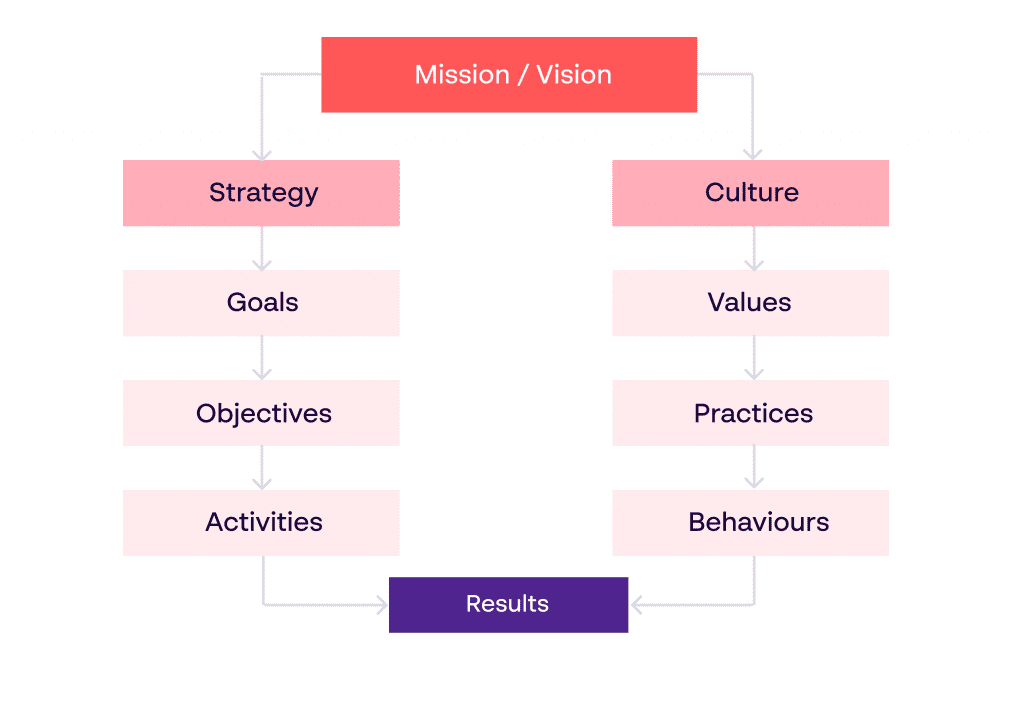
9. Measure your success
Building your employer branding strategy is just the start. You need to monitor performance and refine your approach to ensure you stay aligned with evolving candidate and employee expectations.
Key metrics to track include:
- Time to hire
- Cost per hire
- Application volume
- Talent retention rates
- Brand sentiment
- Frequency of employer brand marketing
If results fall short, revisit your messaging, touchpoints, or processes – and continue course-correcting until you see the results you’re looking for.
10. Keep listening to employees
Employee expectations shift – and so does your company culture. Regular conversations, surveys, and focus groups help you stay grounded in what your people value.
This is especially important for global teams. Ensure you hear perspectives across locations, not just from headquarters. Getting relevant, on-the-ground insights is critical if you want to create a world-class employer brand that resonates with audiences everywhere.
11. Use video to tell your story
Whether it’s for organic advertising or high-volume recruitment campaigns, video is a great way to bring your culture to life. It shows real people, real workplaces, and real stories, making it easier for candidates to imagine themselves with you.
Video content marketing can be especially useful for large organizations that need to humanize their brand and reassure potential candidates they are friendly and approachable places to work.
12. Build employee advocacy
Your people are your most credible storytellers. When teams genuinely understand and support your message, their voices carry far more influence than any official campaign ever could.
Authentic advocacy cannot be forced. It comes from positive experiences and the freedom to speak openly. Create brand ambassadors by encouraging employees to:
- Build their personal brand
- Share stories
- Showcase achievements
- Take part in culture or community initiatives
13. Plan the logistics of your localization
Global brands thrive when their employer brand feels relevant everywhere. But achieving this consistently requires careful adaptation of content. Clear guidelines for language, cultural nuance, and imagery help teams create localized employer branding materials while staying true to your overall brand identity.
The future of your employer branding strategy
A strong employer brand is one of the most powerful tools you have for talent attraction and retention. It supports company culture, strengthens employee engagement, and creates a workplace people are proud to advocate for.
With the right employer branding solutions – from Digital Asset Management to Templated Content Creation and brand portals – you can empower global teams to deliver consistent, high-quality employer branding materials with ease.
When every team can communicate your culture confidently and consistently, you build a workforce that feels connected, inspired, and ready to move your organization forward.
Activating your employer brand?
We have the world-class tools you need.
Activating your employer brand?
We have the world-class tools you need.
We have the world-class tools you need.
FAQs
What is an employer branding strategy?
An employer branding strategy is a documented plan for communicating your values, culture, and employee experience across every candidate and employee touchpoint. It helps you differentiate your organization from talent competitors and ensures you present a consistent, compelling identity that people can trust.
Why is employer branding so important today?
Candidates now form opinions long before speaking with a recruiter. Review sites, social media, and internal stories shape perception instantly. A strong employer brand strategy helps you stand out, reducing hiring costs, strengthening employee engagement, and building a more unified, purpose-driven company culture.
What should be included in an Employer Value Proposition?
A clear Employer Value Proposition (EVP) communicates what people gain by working with you – from your purpose and values to growth opportunities, flexibility, wellbeing support, and social impact. It should be transparent, meaningful, and easily accessible so teams can communicate it consistently.
How do I know if my employer brand strategy is working?
Tracking the right metrics is essential. Monitor time to hire, cost per hire, application volume, retention rates, brand sentiment, and the performance of your employer brand content. These indicators show you where you are progressing and where refinements are needed.
How can global organizations maintain brand consistency across regions?
Brand consistency comes from a balance of clear guidelines and thoughtful localization. Global rules for tone, imagery, cultural nuance, and messaging help create a unified identity, while giving local teams the freedom to adapt content in ways that feel authentic and relevant to regional audiences.