

This content has been automatically translated and may include minor variations.
A world-class employer brand is one of the most powerful assets any organization can build. When done well, it positions you as a place where people can grow, contribute, and feel valued. It supports talent attraction and talent retention, and can set your company apart in a competitive hiring landscape.
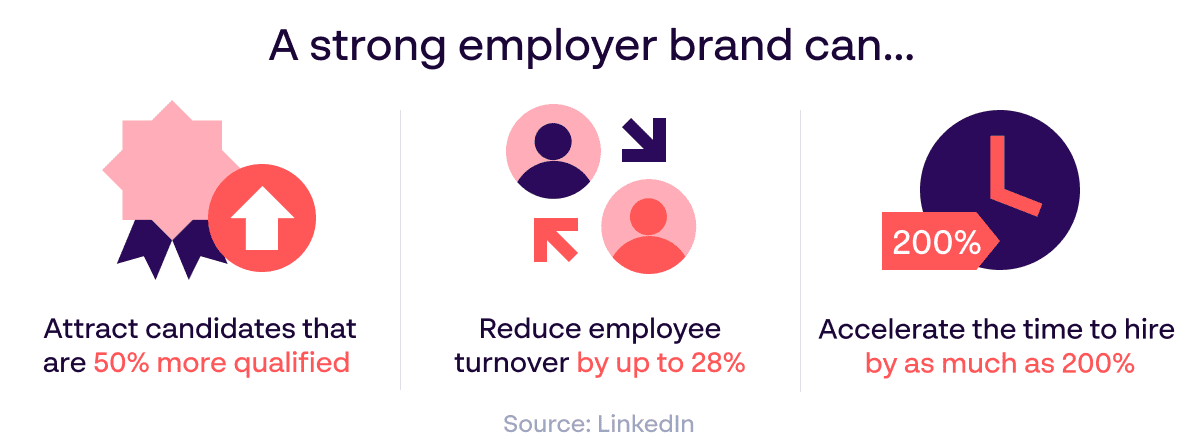
But the opposite is also true. A poorly maintained employer brand can lead to greater employee churn, sluggish hiring processes, lower morale and engagement, and potentially hurt your brand’s reputation beyond the talent pool.
To build a great employer brand that truly resonates, it helps to understand what separates the world’s strongest from the rest. Companies like Google, Salesforce, and HubSpot consistently ranks as exceptional places to work because they invest in the fundamentals that make their employer brands credible and compelling.
Drawing on industry research and decades of real-world experience, here are the seven characteristics that define world-class employer brands.
1. A world-class employer brand strategy
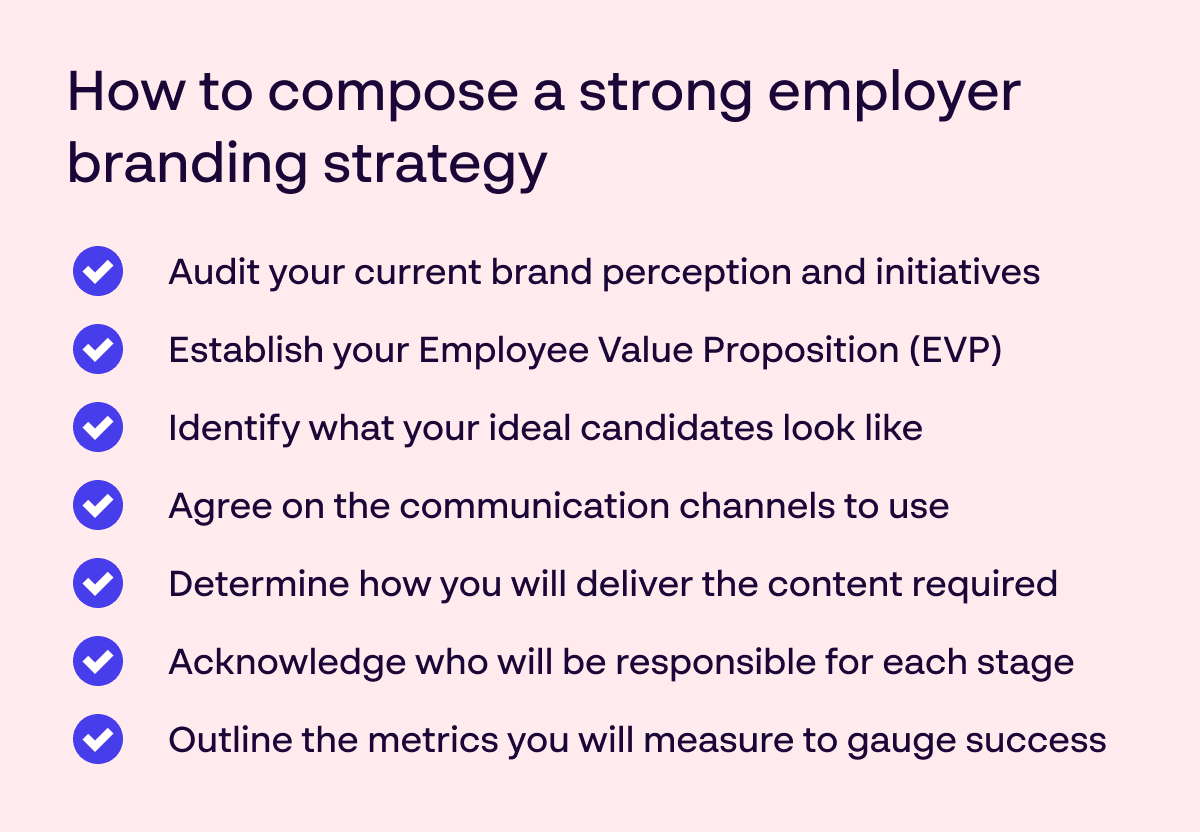
Every effective employer brand begins with a well-conceived strategy. Without it, messaging becomes fragmented, candidate experiences feel inconsistent, and teams struggle to articulate what sets you apart.
A strong strategy answers foundational questions:
- How is our employer brand currently perceived?
- Who are our ideal candidates?
- What matters most to them?
- Where do they spend their time?
- What messages should we communicate throughout the candidate and employee journey?
Red Bull offers a powerful example of the link between solid strategy and employer branding success. Seeking a better way to identify promising talent across their global pool, they created Wingfinder — a tool built from deep analysis of the traits and capabilities they prioritize. The technology worked because the strategy behind it was sharp, intentional, and aligned with their long-term hiring goals.
2. A commitment to listening
Employer branding is not just about attracting candidates. It is about building an environment where your people feel heard, understood, and supported.
This is why it’s so important to listen to your staff. The insights you gain help you align your brand and your people, driving strong employee engagement and retention.

L’Oreal demonstrates what listening looks like in practice. When crafting their Employer Value Proposition (EVP), they asked employees directly what mattered most. The result was a clear and authentic EVP grounded in real experiences.
Listening does not need to be complicated. A simple internal survey can unlock meaningful insights. Example questions include:
- How would you describe the company culture to a friend?
- What made you decide to join our organization?
- What aspects of our workplace do you find most and least motivating?
- If you could change one thing, what would it be and why?
3. An authentic company culture
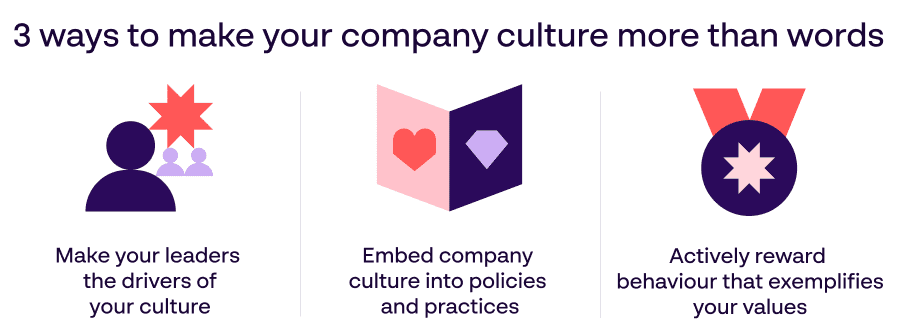
Your employer brand must reflect what employees actually experience, rather than an idealized version of the workplace – otherwise you won’t be able to make good on your promises and new hires will soon leave.
Are you guided by tradition or driven by innovation? Is your structure formal and hierarchical, or open and collaborative?
There are no right or wrong answers here. What matters is that your values are reflected in everything you say and do.
4. A localized approach to communication
World-class employer brands all get one thing right – localization. They communicate with precision and cultural awareness, recognizing that what resonates in one region may fall flat in another.
The dangers of a one-size-fits-all approach are all too clear. Take the example of the Jolly Green Giant, who was mistranslated into Arabic as the “Intimidating Green Ogre”. You also risk excluding individuals who fall outside your central narrative or alienating specific cultures and groups.
SAP provides a counter example of how thoughtful localization fuels success. By carefully adapting content to local audiences, they present an entirely consistent brand identity that enables them to maintain a vast talent pool of over 150 nationalities.
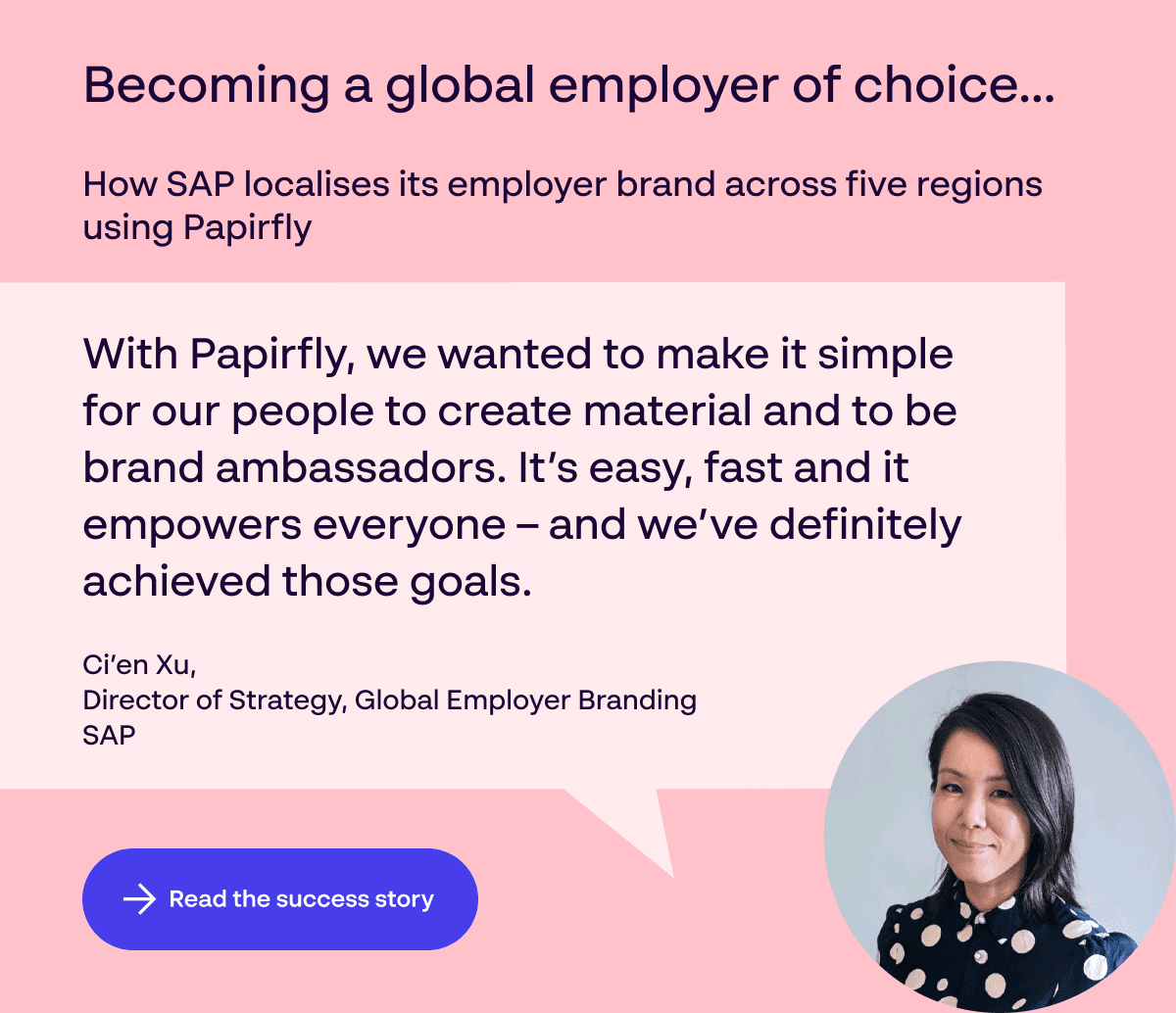
Achieving SAP’s level of precision requires scalable processes. Many enterprise teams rely on content creation solutions to adapt messaging quickly and accurately. Pairing these employer branding tools with Digital Asset Management software can allow your teams to organize materials by region, audience, and channel, reducing the risk of off-brand or culturally inappropriate content.
5. A forward-thinking commitment to DEIB
Diversity, Equity, Inclusion, and Belonging are essential to any modern employer brand. Candidates want to work where they feel seen, supported, and welcomed. Existing employees expect environments that empower them and provide equal opportunity.
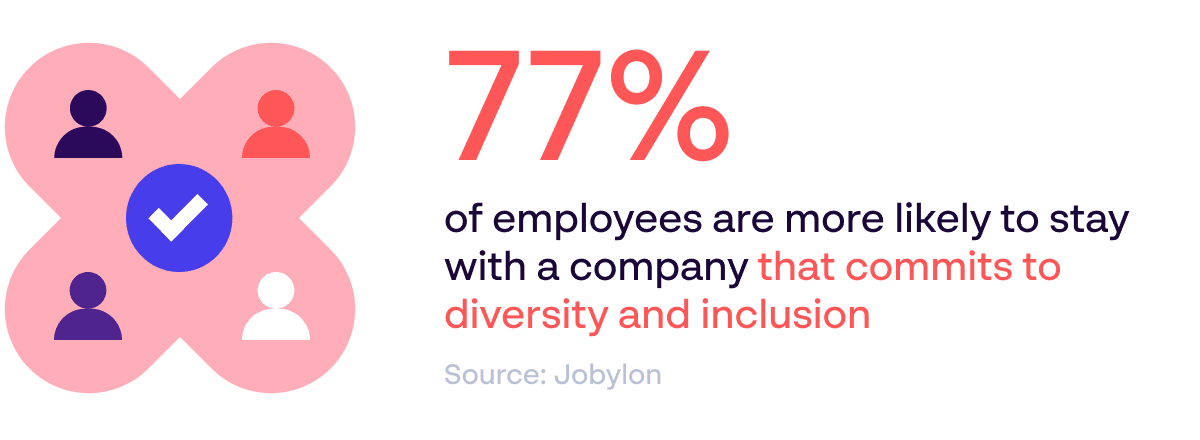
Mastercard provides a strong example of how to create a more equitable organization. Their global Business Resource Groups (BRGs) operate across 47 countries, and their public commitment to equal pay reinforces a company culture grounded in fairness and representation.
Your own DEIB strategy should reflect your people, your values, and your goals, so it is unlikely to mirror Mastercard’s approach exactly. But some key steps that can help you take your strategy to the next level include:
- Appointing internal DEIB champions
- Increasing transparency around hiring and promotion processes
- Using AI to sense-check recruitment marketing campaigns for inclusive language
- Establishing inclusive interview practices
6. A consistent employer brand
Maintaining a consistent brand is critical for building trust – because inconsistencies create doubt. A mismatched tone in a handbook, outdated logos on recruitment materials, slightly incorrect colors in a social graphic – any of these can undermine the credibility you work so hard to build.
That is why leading brands like Rolls Royce and Google commit to rigorous consistency at every touchpoint.
That’s why leading employer brands like Rolls Royce and Google commit to rigorous consistency, remaining true to their brand guidelines across every touchpoint. Here’s how you can achieve that level of brand cohesion:
- Create a robust set of employer brand guidelines your teams can follow
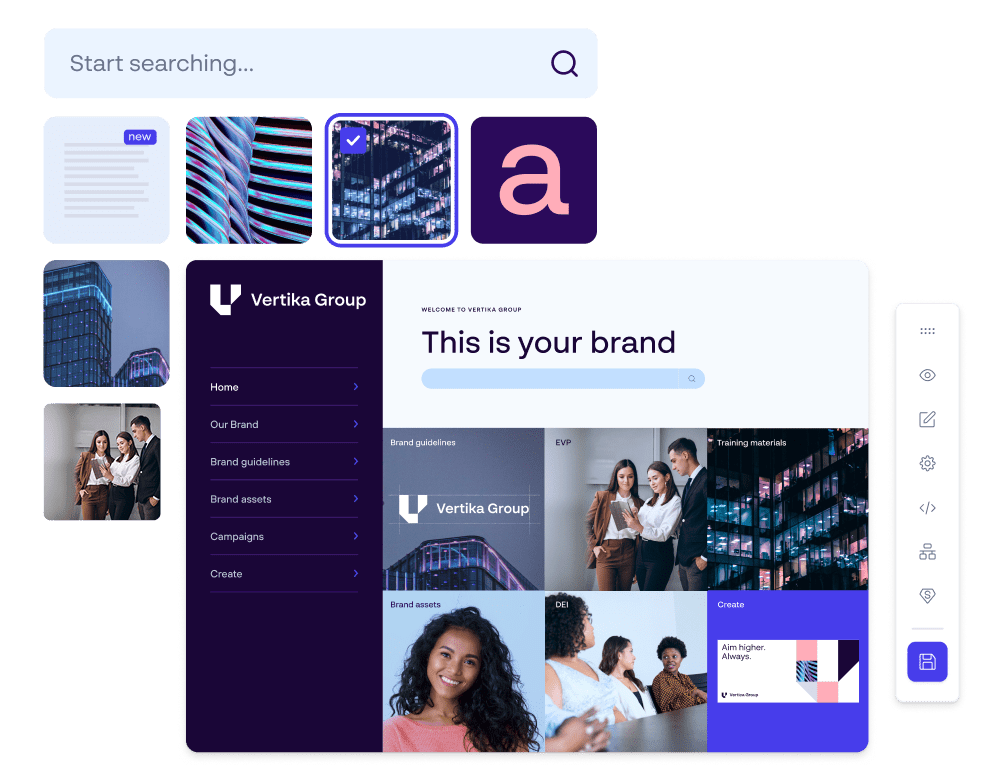
- Set up a digital brand hub to centralize every aspect of your brand identity
- Use content creation tools like design templates to minimize human error
- Recycle assets to maintain quality and efficiency
7. A proactive drive for employee advocacy
Employee voices carry more weight than ever. People trust real experiences from real team members, and top employer brands use this to their advantage.
Adobe highlights employee stories across its channels, while Nokia actively encourages employee to engage in social media content creation. These programs work because they show the world an authentic, unfiltered view of life inside the company.
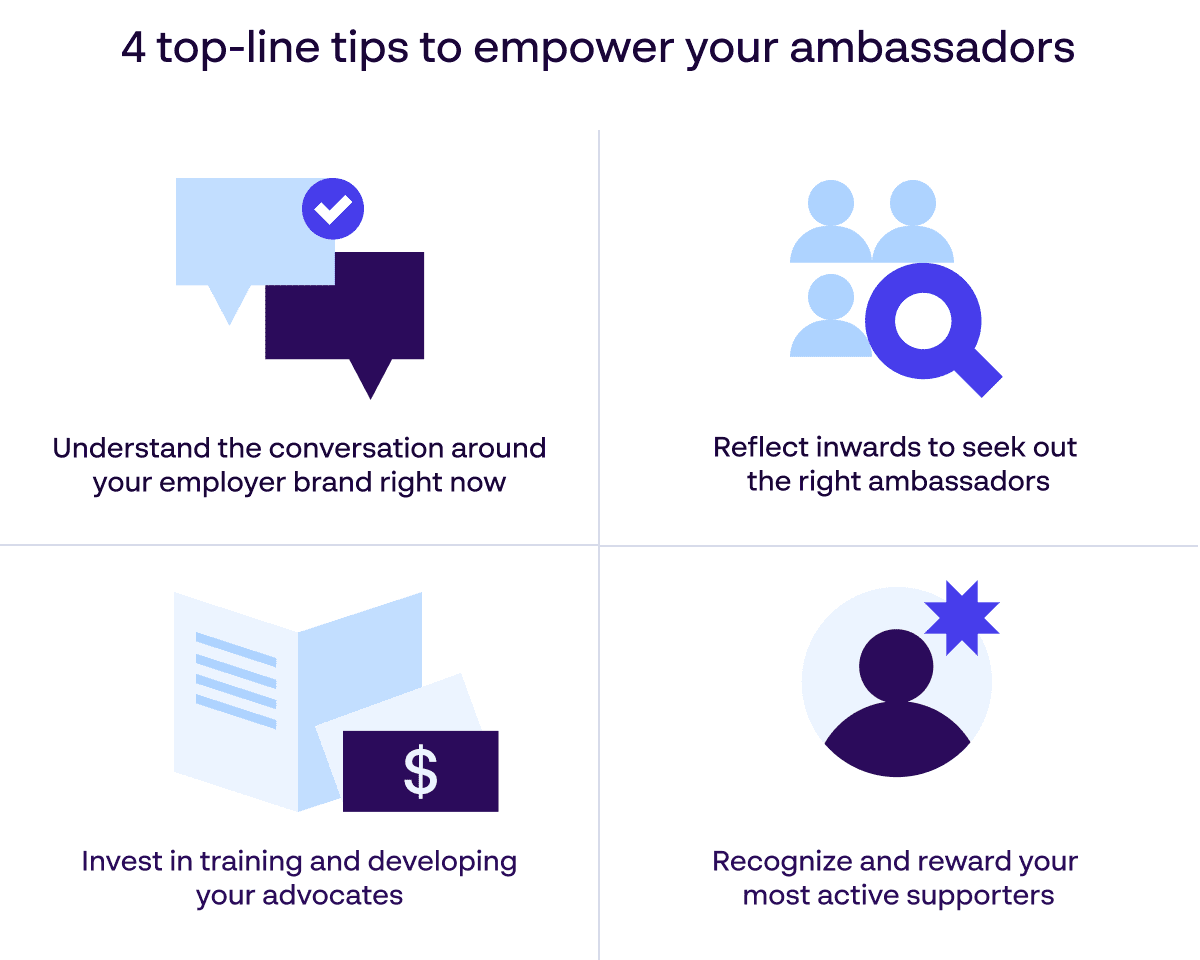
Looking to encourage more of your employees to advocate for your employer brand? Discover 6 steps to turn your employees into true brand ambassadors.
Ready to elevate your employer brand?
Take steps to create a world class employer brand that will help keep your staff proud of the brand they work for, and attract the best talent to keep you growing.
Explore how to achieve better employer branding management today.
Ready to elevate your employer brand?
We’re here to help you attract
and retain top talent.
Ready to elevate your employer brand?
We’re here to help you attract
and retain top talent.
We’re here to help you attract
and retain top talent.
FAQs
What makes an employer brand truly world class?
A world-class employer brand is built on strategy, authenticity, and consistency. It reflects real employee experiences, communicates with clarity across regions, and demonstrates a genuine commitment to DEIB. When these elements work together, your organization becomes a place where people feel valued and inspired to stay.
Why does employer brand strategy matter so much?
A clear strategy gives structure to every decision, from talent messaging to recruitment experiences. Without it, communication becomes fragmented, and candidates struggle to understand what sets your organization apart. A strong strategy ensures alignment, focus, and a more compelling story for prospective and current employees.
How does employee feedback influence the employer brand?
Listening to employees ensures your employer brand reflects reality rather than aspiration. Their insights help shape your EVP, guide cultural improvements, and strengthen engagement. When people feel heard, they are far more likely to stay, contribute, and represent your brand positively.
Why is localization important in employer branding?
Different regions have different cultural expectations, values, and communication norms. Localizing your content ensures your message resonates everywhere you operate. It also prevents misinterpretations and builds a consistent yet culturally sensitive employer brand across global teams.
How does consistency affect employer branding?
Consistency builds trust. Every time your visuals, messaging, and tone of voice align, you reinforce reliability and quality. Even small inconsistencies can create doubt and weaken your credibility. Tools like brand hubs, Digital Asset Management, and Templated Content Creation help teams stay aligned at scale.
Table of contents:
- 1. A world-class employer brand strategy
- 2. A commitment to listening
- 3. An authentic company culture
- 4. A localized approach to communication
- 5. A forward-thinking commitment to DEIB
- 6. A consistent employer brand
- 7. A proactive drive for employee advocacy
- Ready to elevate your employer brand?
- FAQs