

This content has been automatically translated and may include minor variations.
Every employee has a personal brand, whether they’re actively shaping it or not. From the way you show up on LinkedIn to how you communicate in an email, your personal brand influences how colleagues, customers, prospects, and candidates perceive you.
When organizations empower employees to strengthen their personal brands, it benefits both sides. Your employees gain visibility, confidence, and influence. As an employer, you get credible brand ambassadors who help extend your reach, build trust with potential candidates, and position you as an employer of choice.
A strong corporate brand can fuel a strong personal brand. And when both work together, the impact is multiplied. In this blog post, we outline which roles benefit most from building their personal brands – and what they need to do it well.
Sales professionals
Sales teams are often the first point of contact prospects have with your organization. They represent your values, expertise, and credibility in every email, video call, and follow-up message.
A compelling personal brand helps sales professionals build trust faster. Prospects will almost always look up the person reaching out to them – and a weak online presence can undermine confidence before the first conversation even starts. On the other hand, a thoughtful, active, and professional presence can make prospects far more open to engaging.
Sales professionals should have:
- Access to brand-approved social assets, email templates, and video content marketing
- Tone of voice guidance to ensure consistent communication
- A clear understanding of brand values
Customer service professionals
Customer service teams carry your brand through every interaction, with long-standing customers as well as new ones. When they make being helpful and knowledgeable part of their personal brand, the positive impact can be far-reaching: stronger satisfaction, greater loyalty, and a more trusted corporate reputation.
Customer service professionals should have:
- Access to up-to-date, detailed documentation
- Tone of voice guidance to ensure consistent communication
- A clear understanding of brand values
Managers and director-level professionals
Leadership visibility matters. Customers, candidates, and employees want to see real people behind the brand – people who demonstrate expertise, integrity, and clear thinking.
When leaders create content, share insights, or comment thoughtfully on industry trends, they elevate not only themselves but the entire organization. Customers and candidates get proof that you are the experts you claim to be. And when team members share and comment on the content their leaders are posting, the impact is amplified.
Managers and directors should have:
- Access to skilled creative support (copywriters, videographers, designers)
- A strong connection to brand values
- A defined area of expertise to build thought leadership around
HR and employer branding teams
One of the most effective ways to attract top talent to your organization is to show the world what it’s really like to work there. HR and employer brand teams are uniquely positioned to share cultural moments, people stories, and behind-the-scenes insights. They can help reinforce your employer branding in an authentic and transparent way.
HR and employer branding teams should have:
- A deep understanding of your employer brand and employer brand strategy
- Access to a rich library of brand assets
- Clear guidance to help them represent the organization consistently assets
7 ways to motivate employees to build their personal brand
Personal brand building only works when people feel connected to the organization they represent. If your company culture and brand experience don’t align, employees won’t feel comfortable amplifying your message externally.
Here what you can do to encourage employees to build their personal brands:
- Make your guidelines simple, accessible, and easy to apply.
- Give employees editable, on-brand assets and resources they can adapt confidently.
- Offer dedicated work time for personal brand development – don’t just assume it will happen after hours.
- Help them get started by connecting them with marketing and design teams or external creative partners. You could even do in-house sessions on how to build a personal brand.
- If possible, allow them to access relevant websites and platforms – including social channels – through your company network.
- Recognize and reward employee advocates – not everyone will participate naturally.
- Last but not least, make sure you have a clear and compelling employer brand before asking employees to promote it. When people feel supported, prepared, and proud of the brand they represent, they’re far more likely to participate.
Building a personal brand: the essentials
Below is a practical checklist to help your people get started.
Professional photography
A high-quality headshot helps employees make a credible first impression. If you can’t bring in a professional photographer, find someone internally who knows how to take a great photo.
LinkedIn (or equivalent) training
Not everyone is comfortable with social platforms. Offer guidance, coaching, or workshops to help employees navigate posting, engaging, and building a presence through social channels.
Access to a company device
If you expect employees to represent your brand online, even occasionally outside working hours, you need to ensure they always have access to the right tools, whether that’s a laptop or mobile device.
Clear mission and values statement
Employees must understand what your organization stands for. Without this foundation, their personal brand will feel disconnected or inconsistent.
Brand and tone of voice guidelines
This could be a more focused, employee-friendly version of your official guidelines document. Include examples, approved terminology, and simple do’s and don’ts.
Central digital resource for brand assets
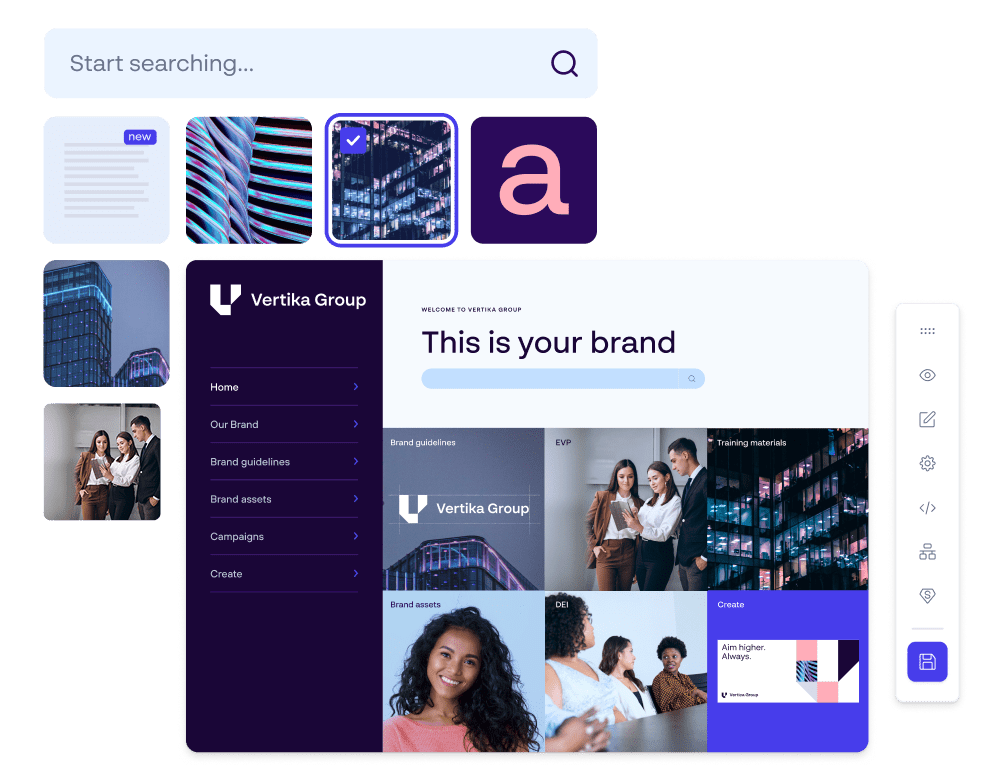
A centralized Digital Asset Management solution or brand portal ensures employees can easily find approved visuals, social media templates, and documents. And studio-quality, brand-compliant assets will do wonders for building their reputation online.
Simple approvals process
Don’t expect employees to come up with every idea on their own. Regular brainstorming sessions help identify relevant subjects – from industry trends to company updates.
Support from internal expert or external creative partners
Not everyone feels confident writing or filming themselves. Offer editorial, design, or coaching support to help employees bring their ideas to life.
Empower your employees to build their personal brand with Papirfly
One of the biggest hurdles for organizations is producing high-quality, on-brand content at scale. This can become especially challenging when employees are operating as active brand ambassadors.
Papirfly empowers teams and individuals to create, localize, manage, and activate content confidently through:
- Templated Content Creation for brand-safe videos, social assets, emails, and more
- Digital Asset Management for instant access to approved brand materials
- Brand portals that house guidelines, values, and storytelling resources
With these capabilities, employees can create content that reflects both their personal expertise and your brand identity, without risking inconsistency or losing control. A stronger personal brand for your people means a stronger presence for your organization.
Want to become an employer of choice?
Unlock the power of your employer brand.
Want to become an employer of choice?
Unlock the power
of your employer brand.
Unlock the power of your employer brand.
FAQs
Why is building a personal brand important for employees?
A strong personal brand helps employees establish credibility, build trust with prospects and customers, and elevate their professional impact. When employees show up consistently and confidently online, they become powerful ambassadors for the organization as well.
Which employees benefit most from developing a personal brand?
People in sales, customer service, and HR and employer branding roles benefit significantly, as do those in leadership roles. The visibility of these employees directly influences how customers, candidates, and colleagues perceive the organization.
What support do employees need to build a strong personal brand?
Employees need access to brand-approved assets, tone of voice guidelines, and relevant digital tools that can help them create consistent, professional-looking content. They also benefit from the support of marketing or creative teams.
How can organizations motivate employees to strengthen their personal brand?
Organizations can provide:
– Professional training
– Easy-to-use guidelines
– Dedicated work time for social media content creation
– Access to social platforms
– Creative support
– Recognition and rewards for participation
What are the essential elements employees need to get started?
Key essentials include a professional headshot, a strong understanding of the company mission and values, and training in how to build a presence on LinkedIn. They may also benefit from support with ideas generation and access to a centralized hub for brand assets.
Table of contents: