

This content has been automatically translated and may include minor variations.
In retail, one truth always remains: the customer defines the journey. No matter how big a brand grows, success depends on understanding how people think, shop, and connect.
For today’s consumers, personalization is key. Shoppers want and expect tailored retail experiences – and are increasingly likely to respond to them. In fact, research shows that 49% of consumers have made an unplanned purchase after receiving a personalized recommendation.
This is why retail content personalization is a top priority for modern retail marketers. Done well, it transforms every interaction into a meaningful connection that builds trust, loyalty, and lifetime value.
Personalization in retail: what it really means
Think of each personalized moment as a building block in a relationship. Every recommendation, message, or tailored experience tells your customer: we know you and value you for who you are.
Over time, that familiarity becomes confidence. Confidence leads to repeat purchases. And when personalized engagement continues beyond the sale, it evolves into loyalty.
The key is knowing how to use personalization effectively — and where to draw the line between helpful and intrusive.
Guide to creating personalized retail experiences online
When data is used responsibly and transparently, it enables brands to create retail experiences that feel effortless and intuitive. The goal isn’t to overwhelm customers with offers, but to make them feel recognized and understood throughout their journey.
Here are five practical ways retailers can personalize the online experience:
1. Personal greetings – Including a customer’s name in navigation or account pages instantly signals that their journey is unique to them.
2. Retargeting ads – Give customers a second chance to engage with products they viewed but didn’t purchase.
3. Value-driven emails – Send product updates, restock alerts, or tailored offers based on individual preferences.
4. Localization – Adjust offers and messaging to reflect regional conditions, seasons, or cultural events, ensuring relevance from first click to checkout.
5. Pick up where they left off – Save customer baskets and browsing history to make returning seamless.
Every small touchpoint reinforces recognition, which strengthens both trust and conversion.
The rise of hyper‑personalization in retail
Personalization in retail is evolving — and artificial intelligence is driving the next step forward. According to Salesforce, 51% of consumers expect brands to anticipate their needs and make relevant suggestions before they even ask.
This is the essence of hyper-personalization.
By using real-time insights from browsing behavior, CRM data, and purchase history, brands can tailor retail content marketing and in-store experiences to each individual. But hyper-personalization doesn’t happen overnight. It requires unified data, responsible governance, and the right tools to manage content dynamically.
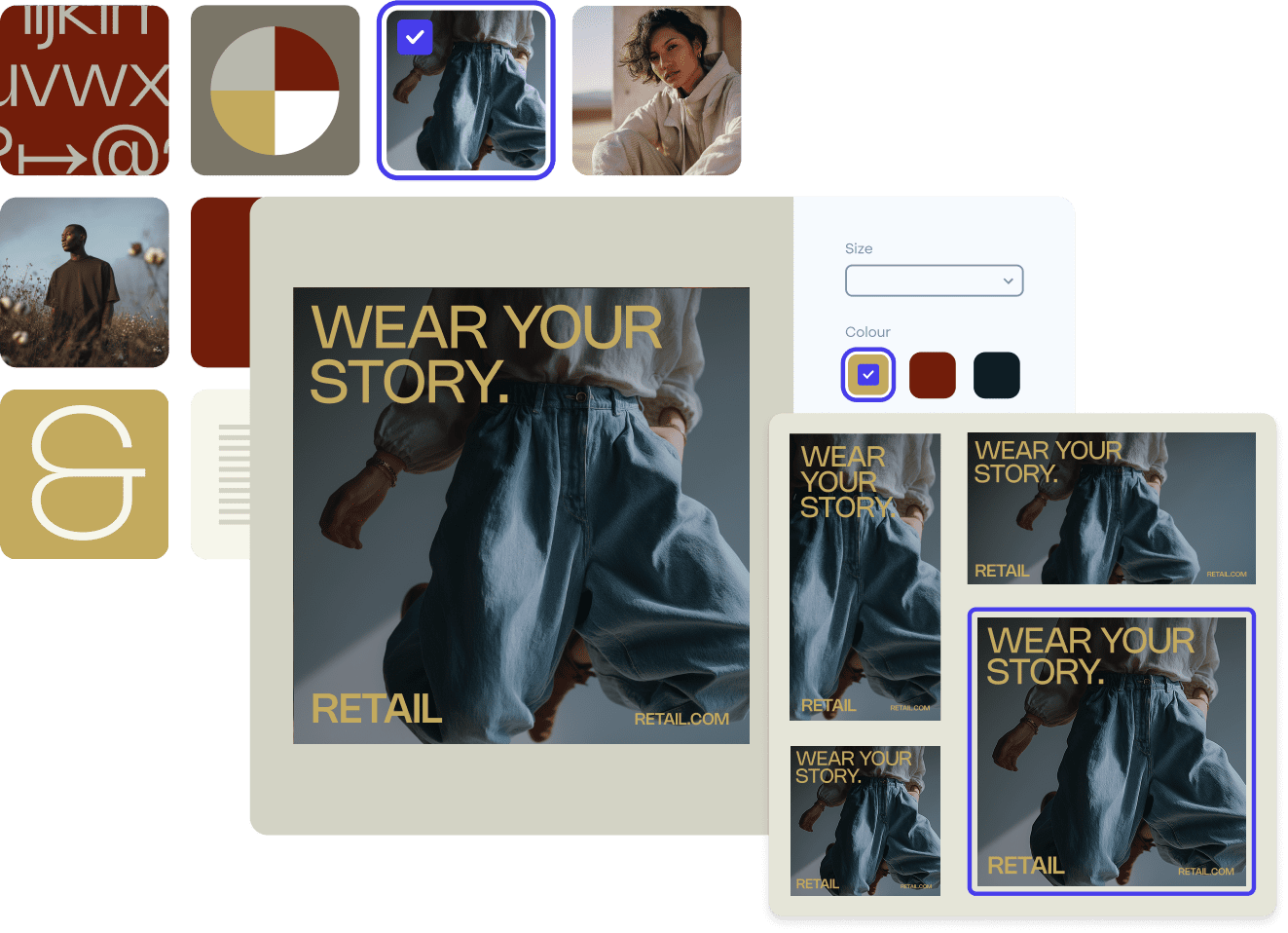
One solution is to adopt Digital Asset Management and Templated Content Creation systems. These make centralizing and delivering brand assets much easier. And with automated updates, retailers can turn turning complex personalization workflows into streamlined, scalable processes.
Result? Faster campaign delivery, fewer errors, and customer experiences that feel genuinely one-to-one.
Bringing personalization in‑store
Digital personalization is essential. But it’s not the be-all and end-all. In-store personalization is also key. By connecting human experience with technology, retail brands can deepen their relationship with customers and convert curiosity into loyalty.
Here are our top five tips for in-store personalization marketing:
1. Localize your in‑store approach
Each store has its own audience, culture, and context. Empowering teams to tailor local retail marketing while staying on-brand ensures relevance without losing consistency. With templated content creation, store managers can personalize signage and POS materials using pre-approved templates that reflect local insights. Learn more about the power of using print in retail marketing.
2. Continuously measure and refine your displays
Encourage staff to observe how customers move through the store and interact with displays. Use data, feedback, and A/B testing to continuously improve store layouts and promotions.
3. Connect mobile and in‑store engagement
Retail apps and loyalty programs make it possible to send personalized offers when a customer enters the store – a great way to convert online behavior into real-world action.
4. Link offline activity to online channels
Digital receipts and loyalty cards create opt-in opportunities for ongoing, personalized communication. In this way, retailers can use in-story activity to inform improvements to digital marketing plans.
5. Mirror online insights in‑store
If a trend is performing well online, replicate that success in physical spaces. This doesn’t just boost sales – it also strengthens your brand by ensuring every retail touchpoint tells the same story.
Why personalization in retail matters now more than ever
Personalization is no longer a competitive edge — it’s a baseline expectation.
Every interaction, from an email subject line to a store greeting, shapes how customers perceive your brand. A single poor experience can damage trust, but personalized relevance can build it back stronger.
Papirfly helps retailers do personalization right. Our Digital Asset Management and Templated Content Creation solutions empower global and local teams to personalize retail marketing campaigns responsibly, ensuring every asset is on-brand, relevant, and delivered with precision.
Personalization made possible
At Papirfly, we help marketers create scalable personalization strategies that balance creativity with brand governance in retail.
With our retail marketing tools, you can:
- Create customizable, on-brand content at scale with speed and accuracy.
- Use brand portal software to manage localized campaigns across global markets.
- Maintain brand integrity while delivering experiences that resonate on a personal level.
- Integrate your DAM and PIM systems to unlock retail marketing performance.
Make every touchpoint one‑of‑a‑kind
Deliver personalization that builds long‑term value.
Make every touchpoint one‑of‑a‑kind
Deliver personalization that builds long‑term value.
Deliver personalization that builds long-term value.
FAQs
What does personalization in retail really mean?
Personalization in retail means tailoring every interaction to reflect each customer’s preferences and behaviors, from online recommendations to in-store experiences. It’s about creating relevance at every touchpoint, turning routine transactions into meaningful brand relationships.
Why is personalization so important for today’s retail brands?
Modern consumers expect brands to recognize and anticipate their needs. Personalization builds trust, drives retail customer engagement, and increases conversions. In fact, 49% of consumers say they’ve made an unplanned purchase after receiving a personalized recommendation.
What is hyper-personalization in retail
Hyper-personalization is the next evolution of retail marketing. It uses AI, behavioral data, and CRM insights to deliver real-time, one-to-one experiences that feel genuinely individual. This could include everything from personalized web content to dynamic in-store promotions.
How can retailers personalize the in-store experience?
Retailers can connect human experience with technology through localized messaging, mobile offers, digital loyalty programs, and data-driven store layouts. Tools like Templated Content Creation allow local teams to personalize signage and POS materials while staying fully on-brand.
What role does technology play in scaling retail content personalization?
Tools like Digital Asset Management (DAM) and Templated Content Creation make it possible to manage and personalize retail marketing campaigns efficiently. They centralize approved assets, automate updates, and ensure that every personalized message aligns with brand standards.
How can retailers balance personalization with consistency?
The key is to use personalization responsibly, guided by clear brand governance. By combining creative flexibility with centralized retail marketing tools, retailers can deliver personal, localized experiences that stay true to their brand identity and values.