

This content has been automatically translated and may include minor variations.
Every brand director knows the moment. An old logo appears on a regional site, or a partner runs an unapproved product shot, months after the guidelines were signed off and circulated. It is rarely carelessness, and it is almost never a failure of the guidelines themselves.
It is a failure of brand governance at the last mile. Somewhere between the central team publishing an approved asset and a local market putting something into the world, the connection broke. The asset was hard to find, out of date, or simply never reached the person who needed it.
That distinction matters, because it changes what you fix. Organizations that respond by rewriting guidelines or commissioning more assets are treating a distribution and enforcement problem as a creative one. Digital Asset Management, brand portals, and templated content creation all exist to close that specific gap.
Why brand governance in local marketing struggles at activation stage
The evidence points at activation rather than creation. A recent MarTech Intelligence Report on Digital Asset Management (DAM) platforms – which features Papirfly among the vendors profiled – found that 67% of DAM decision-makers struggle to reuse, update, or retire existing content (Source: Forrester Consulting for Orange Logic, 2025).
Assets exist, they are stored somewhere, and someone approved them. What has failed is everything that happens after approval: surfacing the current version, retiring the expired one, and making the approved route the easiest route.
This is the gap between having brand guidelines and enforcing them. Guidelines describe the intended outcome; governance is the operational system that makes the intended outcome the path of least resistance for a local marketer working at speed.
For a brand director, the practical test is simple. If a regional team member needed the current campaign kit for their market right now, could they find it, confirm it was approved, and use it correctly without asking anyone? Where the answer is no, off-brand output is not a risk – it is a certainty.
More local markets and multichannel campaigns means more brand risk
Every additional market, region, or partner adds another point where governance can quietly erode. The same report notes that organizations managing 11 or more marketing channels need platforms built to distribute content across their entire ecosystem, not only the channels the central brand team can watch closely (Source: MarTech Intelligence Report, Digital Asset Management Platforms, 2026).
That figure is worth sitting with. Most enterprise brands passed 11 channels some time ago, and the channels the brand team monitors most carefully are usually the ones that were already the most controlled.
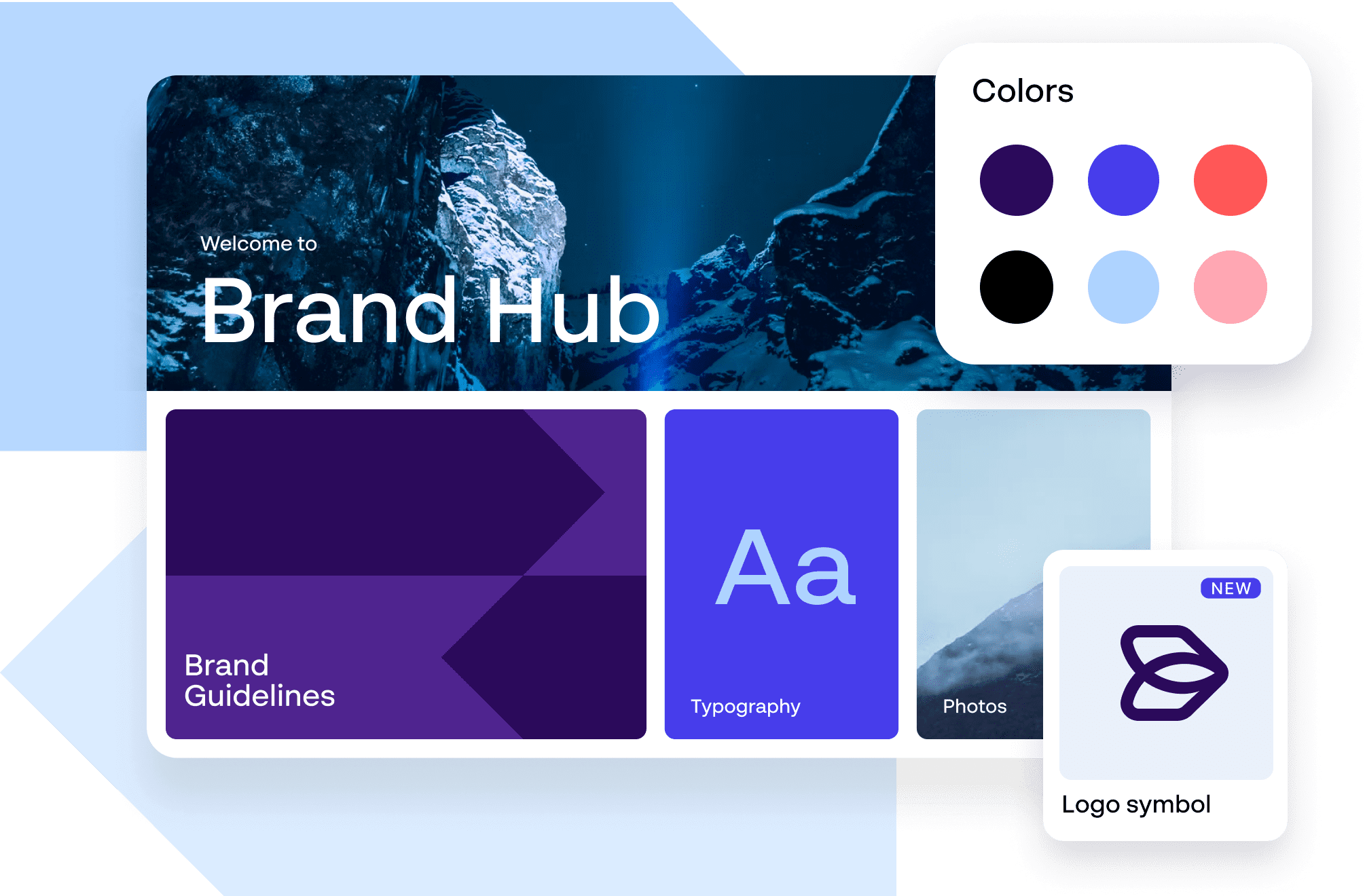
This is the core case for a brand portal: not a place where assets happen to live, but a single controlled front door. Every market and partner works from the same approved library – guidelines, current templates, campaign context, and sign-off status included – rather than from whatever was last emailed around.
The value is as much psychological as technical. When there is one obvious, well-maintained, genuinely fast place to get brand-approved material, people stop building private workarounds. Adoption is what converts a governance policy into governance in practice.
How templates keep local teams fast without loosening control
Regional and franchise teams cannot wait on a central design queue for every local variation, and they will not. Research consistently shows the demand outstripping central capacity: 78% of marketers say they need more personalized content than they can currently produce (Source: Salesforce, State of Marketing Report, 2026).
Speed cannot come at the cost of brand integrity, but the answer is not more approval steps. It is moving the control upstream, into the template itself, so that compliance is designed in rather than inspected afterwards.
This is where templated content creation earns its place alongside the portal:
- Locked templates let local teams build their own campaign and channel variants without a designer, in minutes rather than weeks.
- Every variant stays within parameters the brand team has already approved, because the non-negotiable elements simply cannot be edited.
- No asset reaches the market without passing through the same guardrails, regardless of who created it or which market they sit in.
The outcome central teams report is not tighter control for its own sake. It is time reclaimed – hours previously spent on low-value adaptation requests and manual sign-off returned to the strategic work only the central team can do.
For Martin Pospisil, Chief Product Officer at Papirfly, this is the central challenge of governing content across distributed teams:
“The report’s take on distribution complexity is something we see in every conversation with a brand director. The question is never whether local teams need to move fast – it’s whether they can do that without the brand having to review every single asset by hand. That’s exactly what a brand portal and templating are built to solve together.”

Martin Pospíšil
Chief Product Officer at Papirfly
What AI-generated content changes about brand brand governance
As AI tools make it trivial to generate content variants at volume, governance by habit stops working. A central team that could plausibly eyeball everything last year cannot eyeball ten times the output this year, and the volume curve is not flattening.
The market has recognized this. Nine in 10 organizations say human oversight is essential to safeguard brand identity as AI-generated content becomes more common (Source: Bynder and Censuswide, State of DAM Report, 2025).
That is a governance requirement, not a creative preference. Someone still needs to know what has been approved, by whom, when it expires, and where it is permitted to run – and that knowledge has to live in a system rather than in an individual’s memory.
A governed brand portal gives that oversight a home. A clear record of what is approved, what is in review, and what has expired means speed and control stop being a trade-off, because the audit trail is a by-product of the workflow rather than a separate exercise.
The central team to local market takeaway for brand teams
The value of DAM is no longer really about storage. It is about whether a brand can hold its shape while being represented by more people, in more places, and increasingly by more automated tools than ever before.
Brand governance succeeds or fails at local activation. A governed brand portal answers the distribution half of that problem, and locked templates answer the production half – which is why the two are far stronger together than either is alone.
For brand teams reviewing their own setup, the useful question is not whether the guidelines are good. It is whether the approved route is currently the fastest route for the person in the market with a deadline.
See brand governance working in practice
One home for every market’s approved brand assets.
See brand governance working in practice
One home for every market’s approved brand assets.
One home for every market’s approved brand assets.
FAQs
What is the difference between a brand portal and a standard DAM?
A DAM stores, organizes, and governs assets at scale, largely for the teams who manage them. A brand portal is the controlled, branded front door on top of it, giving markets and partners self-serve access to only the approved, current version of what they need.
How does templated content creation help maintain brand governance?
Templates let local or non-design teams build their own on-brand variants within parameters the brand team has already locked. Compliance is built into the template rather than checked afterwards, so speed does not require sacrificing control.
Why is human oversight still necessary with AI-generated content?
AI can produce content variants far faster than a brand team can manually review them. A clear system of record for what is approved, pending, or expired becomes essential to stop off-brand content slipping through unnoticed.
Can local teams create their own content without breaking brand guidelines?
Yes, provided they are working from locked templates and an approved asset library rather than recreating materials independently. This combination is what allows central teams to delegate production without delegating brand control.
What did the 2026 MarTech DAM report find about brand governance?
It found that most DAM decision-makers struggle to reuse, update, or retire existing content, and that distributing content across many markets and channels is a leading cause of brand inconsistency.
Table of contents:
- Why brand governance in local marketing struggles at activation stage
- More local markets and multichannel campaigns means more brand risk
- How templates keep local teams fast without loosening control
- What AI-generated content changes about brand brand governance
- The central team to local market takeaway for brand teams
- FAQs