

This content has been automatically translated and may include minor variations.
A Digital Asset Management (DAM) RFP does far more than shortlist vendors. It defines how effectively your teams will onboard, how consistently they will use the system, and how well your DAM becomes the content command center for your brand. Yet most organizations underestimate this step. They focus on storing files, not on the workflows, governance, and brand experience that make DAM successful.
After reviewing more than 50 enterprise RFPs, we saw a clear pattern: strong RFPs anchored around real business outcomes, content workflows, and user behavior. Weak RFPs described features, not needs — leading to mismatched solutions, rework, and slower adoption
As Christer Lorichs, DAM expert at Papirfly, puts it:
“The main success factor lies in the organization’s insight into the effort required internally — a clear purpose, the right resources, leadership support, and an obvious business case.”
This guide distills the seven questions every team should answer before writing a DAM RFP — the same questions covered in our upcoming webinar exploring real RFP examples, common pitfalls, and the operational foundations of modern DAM.
1. What are you trying to achieve?
This question shapes every decision that follows. Organizations often rush into vendor evaluation before aligning on the business outcome: What problem should the DAM solve? What behaviors need to change? What will success look like for marketing, brand, IT, or compliance?
Teams get stuck here because different functions have different priorities. Marketing wants ease of use. IT wants security and scalability. Brand teams want consistency. Without a shared definition of the problem, RFPs become feature lists rather than a clear articulation of need.
A strong DAM RFP starts by clearly defining the business outcomes you want to achieve, the challenges you need to solve, and the workflows that must improve. This shared purpose sets the foundation for accurate proposals and a smoother implementation.
2. How should the DAM integrate with your workflows and wider tech stack?
A DAM becomes your single source of truth, but only if it connects cleanly to the systems that create, manage, and deliver content. Many RFPs mention integrations but fail to describe how assets should move, when they should sync, or which systems rely on DAM content.
Without clear use cases, vendors cannot define feasibility or cost — and integrations become risk areas later.
Effective requirements describe integration scenarios in detail — including use cases, data flow, frequency, and required versus optional connections — so vendors can commit to the right approach from the start.
3. What governance, access controls, workflows, and approvals do you need?
Governance structures are often assumed rather than defined, and those assumptions create compliance risks. Organizations differ widely in how they manage access, approvals, brand permissions, and content lifecycles — but RFPs frequently leave these areas vague.
This leads to bottlenecks, unexpected limitations, and governance gaps that slow teams down or expose the organization to risk.
Clear governance requirements outline segmentation by brand, team, or territory; define user roles and lifecycle rules; and explain approval flows with real examples so vendors can configure the DAM accurately.
4. How should your DAM showcase the brand and support brand experience?
A modern DAM must feel like an extension of the brand — not just a file repository. Employees, partners, and agencies rely on it to understand what is approved, what is current, and how assets should be used.
Your RFP should outline expectations for brand portals, guideline presentation, multilingual support, access points, and the insights you need to understand how users engage with the brand inside the DAM.
5. How will you create, localize, and reuse on-brand content from the DAM?
Once assets sit inside the DAM, the real value comes from activation. Teams need to adapt and reuse content quickly, locally, and without manual design workarounds. But many organizations describe storage needs without describing how content will be transformed into campaigns, retail materials, or market-specific adaptations.
This creates inconsistency and slows down global-to-local delivery.
Your RFP should specify the types of templates required, the level of editing flexibility, who can localize content, how dynamic data feeds should connect, and what approvals are needed before assets are exported or published.
6. How do you need to organize and find your content?
Findability is often the biggest complaint in DAM implementations. Users must be able to find the right asset quickly, or they will revert to re-creating content or downloading outdated versions.
A DAM that works for a single, centralized team may not scale when market-level variations, regional permissions, brand hierarchies, and localized content are introduced.
As Christer puts it:
“If end users can’t get the right asset easily, everything else fails.”
Most RFPs lack detail about metadata rules, taxonomy structures, and search expectations — making it difficult for vendors to design a system that aligns with real user behavior.
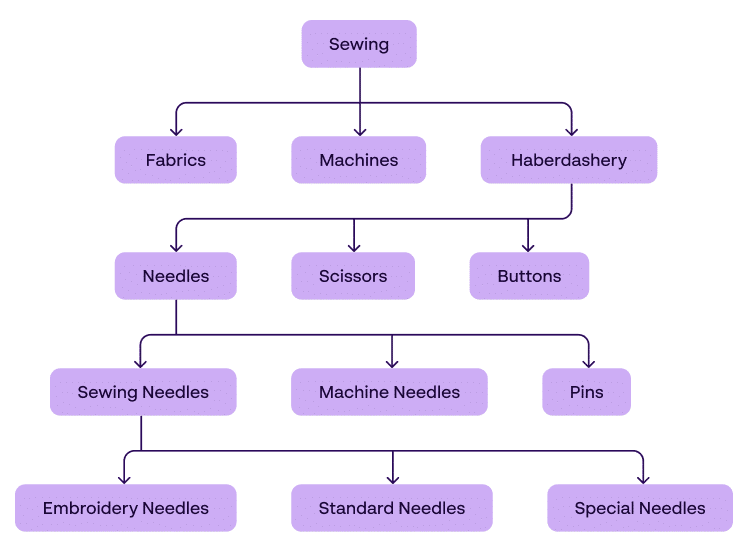
Before writing an RFP, map your content types and formats, define metadata and taxonomy rules, and detail the search outcomes users expect. This helps vendors design a structure that supports true asset discovery.
Example of a taxonomy (based on a sewing brand):
7. How will the DAM scale as your content, teams, and governance evolve?
A DAM must support the organization you are becoming, not just the one you are today. Many RFPs reflect current pain points but overlook future needs, such as new brands, market expansion, AI-driven automation, and growing content volumes.
This is why organizations often outgrow their DAM within two to three years.
Define your three- to five-year vision, including brand expansion, market growth, governance maturity, automation plans, and increasing content demands. This ensures long-term fit and reduces costly rework.
Conclusion
Well-shaped DAM RFP requirements reduce friction, set expectations early, and give vendors the clarity they need to demonstrate the right fit. These seven questions help you build a complete picture — from content structure to brand experience, templated creation, governance, integrations, and future scalability.
To make the process faster and more structured, you can build a tailored, vendor-ready brief in minutes using Papirfly’s DAM RFP Generator.


FAQs
What are DAM RFP requirements?
They define your needs across content structure, workflows, governance, brand experience, integrations, and scalability. Clarity reduces onboarding challenges and speeds vendor evaluation.
Who should help define DAM RFP requirements?
Marketing, brand, creative operations, IT, and regional teams should contribute. Each brings essential insight into workflows and content use.
How detailed should DAM RFP requirements be?
Provide clarity, not volume. Real examples of metadata, workflows, and integration use cases help vendors respond accurately.
Does Papirfly’s RFP Generator support multi-market or complex organizations?
Yes. It’s designed for multi-market, multi-brand, and enterprise content environments, guiding you through the requirements that matter most.
Table of contents:
- 1. What are you trying to achieve?
- 2. How should the DAM integrate with your workflows and wider tech stack?
- 3. What governance, access controls, workflows, and approvals do you need?
- 4. How should your DAM showcase the brand and support brand experience?
- 5. How will you create, localize, and reuse on-brand content from the DAM?
- 6. How do you need to organize and find your content?
- 7. How will the DAM scale as your content, teams, and governance evolve?
- Conclusion
- FAQs