
This content has been automatically translated and may include minor variations.
Local teams aren’t ignoring your brand guidelines because they don’t care. They’re ignoring them because finding the right answer takes too long.
When a regional marketing manager needs a hex code or a headline font rule, they’re not spending four minutes clicking through a portal page hierarchy. They’re using what they already know and moving on. The off-brand output that follows isn’t a people problem. It’s a friction problem.
AI brand assistants are changing this. Here’s what that means for how brand portals need to work in 2026 — and what it means for your brand’s visibility beyond your own website.
Why your brand portal doesn’t get used
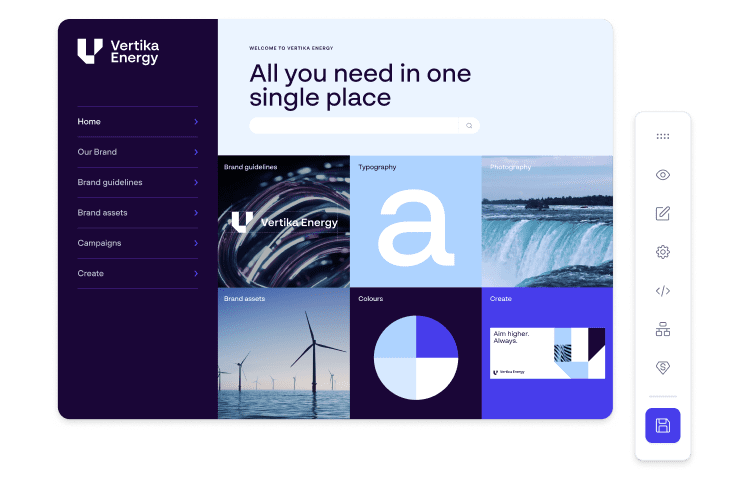
A brand portal solves the storage problem. Assets are no longer scattered across shared drives and email threads. There’s one place for logos, fonts, campaign materials, and brand rules.
But centralised storage and active adoption are different things.
Employees default to fast and familiar — even when those tools produce off-brand results. The barrier isn’t knowing the portal exists. It’s the time cost of finding a specific answer within it. When the on-brand option is slower than guessing, most people guess.
This is why off-brand content keeps appearing in the market even at organisations with well-maintained portals.
What an AI brand assistant does
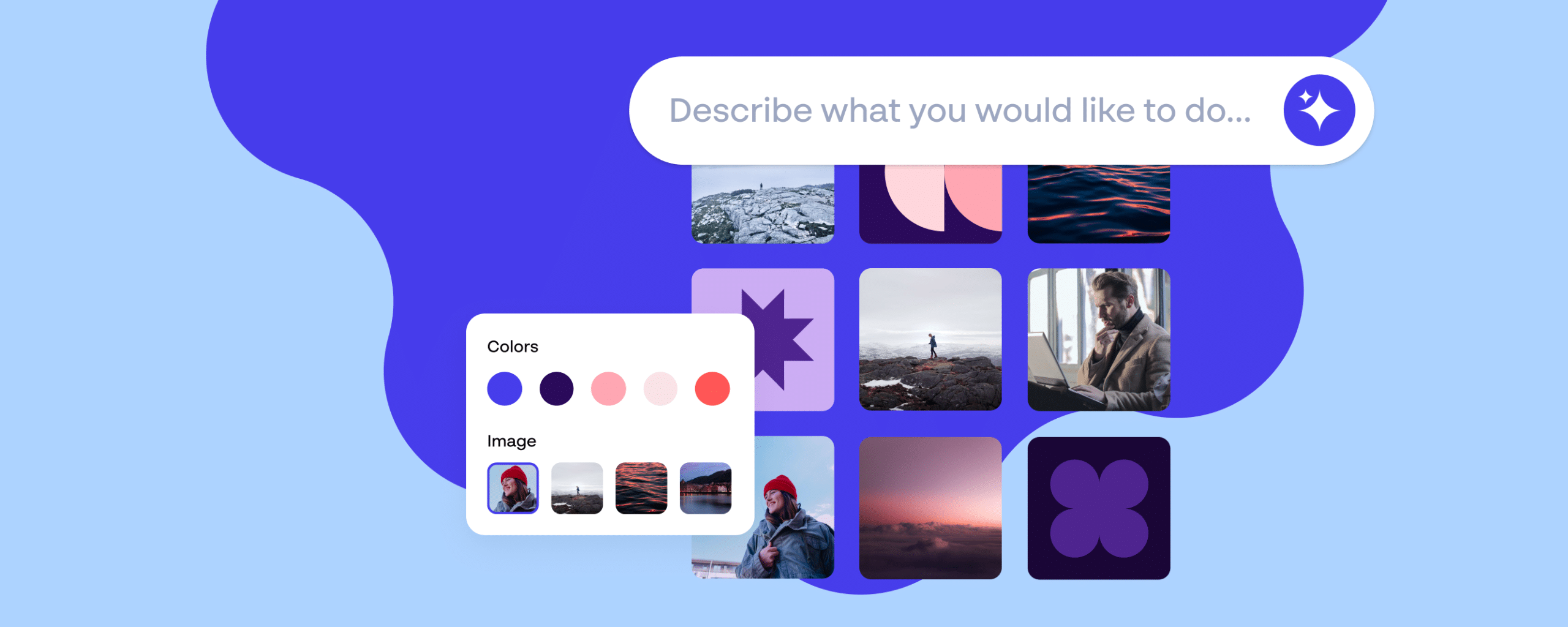
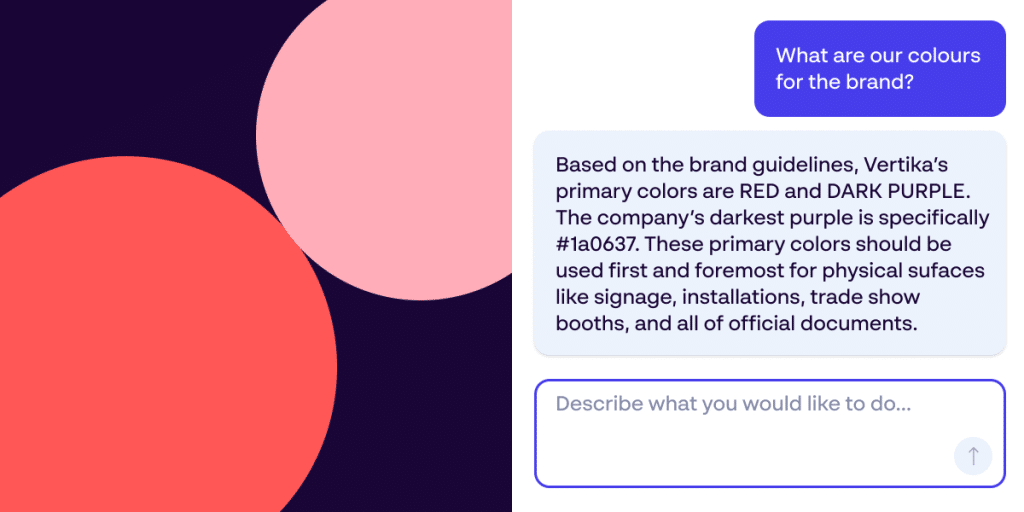
An AI brand assistant is a chat interface embedded directly inside your brand portal. Users type a question in plain language and get an immediate, sourced answer — with a link to the relevant guideline page.
What font do we use for headlines? What are our primary brand colours? Can I use the logo on a dark background?
No navigation required. No knowledge of the portal structure needed.
This matters because it removes the expertise barrier entirely. A new franchisee, a regional sales rep, a freelance designer — all can get the right answer on the first attempt. When the on-brand answer is faster than guessing, behaviour changes.
It also changes what a brand portal is. Not a content repository. An active system that helps teams apply the brand, not just view it.
Product Tour Guide
AI Brand Assistant beta mode: UI/UX may change
To try the Product Tour Guide DEMO, please switch to desktop mode.
Who benefits most from an AI brand assistant?
The teams that see the biggest change are distributed ones — local markets, franchise networks, regional offices — where brand knowledge is inconsistent and central teams spend a disproportionate amount of time fielding requests they shouldn’t need to answer manually.
According to Forrester’s State of Business Buying 2026, GenAI search is now the top discovery channel at the consideration stage — ahead of vendor websites, social media, and industry publications. That statistic matters for more than just how buyers find you. It matters for what they find when they do.
Brand guidelines and AI search: the connection most teams miss
AI discovery tools — ChatGPT, Perplexity, Gemini — are shaped by what they’ve been trained on. Every off-brand asset, every inconsistent logo usage, every unofficial brand interpretation that circulates online feeds that training data. Brands with inconsistent output get represented inconsistently by AI. That misrepresentation can persist for a long time after the source materials have been corrected.
Keeping brand guidelines accessible and followed is no longer just a consistency question. It directly affects how your brand is represented in the discovery layer where your buyers now start their research.
The permissions gap that breaks brand integrity
One risk that rarely surfaces until it’s already a problem: in portals where local editors have page-level access, those users can sometimes edit shared site components — navigation, headers, footers — that affect the entire portal, not just the page they were working on.
The fix is straightforward: separate page-level editing rights from control over global components. Local editors manage their own content areas. Central brand integrity stays intact. For multi-market or franchise organisations, this distinction is operationally critical.
What a brand portal should be able to do in 2026
Five questions worth asking about your current setup:
- Can any employee — regardless of how often they use the portal — get a brand answer in under 30 seconds?
- Does your portal surface the right answer, or does it require users to already know where to look?
- Are local teams still sending requests to your central brand team for information that should be self-serve?
- Do your portal permissions prevent local editors from accidentally changing site‑wide components?
- Do you have visibility into which guidelines are being accessed, and by which markets?
If question three is a regular occurrence, your portal is functioning as a helpdesk. That’s a workflow problem, not a content problem.
The AI brand assistant
Brand portals work when people use them. People use them when they’re faster than the alternative. An AI brand assistant closes that gap.
Turning passive brand guidelines into something teams can actually query in real time, and combined with proper governance controls and integration into DAM and content creation workflows, an ai brand assistant is the difference between a portal that stores your brand and one that actively protects it.
See how Papirfly’s brand portal works
Built for teams managing brand at scale.
See how Papirfly’s brand portal works
Built for teams managing brand at scale.
Built for teams managing brand at scale.
FAQs
What is an AI brand assistant in a brand portal?
An AI brand assistant lets users ask plain language questions about brand guidelines — fonts, colours, tone of voice, logo rules — and get immediate answers with a source link. It removes the need to navigate manually through portal pages to find specific information.
Why do employees ignore brand guidelines?
The most common reason is friction. When finding the right answer in a portal takes longer than guessing or using a familiar tool, most people default to what’s fastest — even if that produces off-brand results.
How does brand consistency affect AI search visibility?
AI tools like ChatGPT and Perplexity are trained on publicly available content. Off-brand assets and inconsistent brand representations that circulate online can be incorporated into that training data, causing AI to represent your brand inaccurately — sometimes for months after the issue has been corrected internally.
What’s the difference between a brand portal and a DAM?
A DAM stores and organises digital files at scale, with metadata, governance, and distribution capabilities. A brand portal presents assets and guidelines in a curated, user-facing environment with a branded experience. The two are complementary — most enterprise setups use both, integrated within the same workflow.
What user permissions should a brand portal have?
Local editors should be able to manage their own content areas without the ability to edit global components — navigation, headers, footers — that affect the entire portal. Separating page-level editing rights from site-wide control is the standard for distributed or multi-market organizations.
Table of contents:
- Why your brand portal doesn’t get used
- What an AI brand assistant does
- Product Tour Guide
- Who benefits most from an AI brand assistant?
- Brand guidelines and AI search: the connection most teams miss
- The permissions gap that breaks brand integrity
- What a brand portal should be able to do in 2026
- FAQs