

This content has been automatically translated and may include minor variations.
Rebranding can revitalize how audiences see and experience your business. But achieving that outcome requires more than a new logo or refreshed tone. It demands clarity of purpose, strong operational planning, and a deep understanding of the emotional impact change can have on customers and employees.
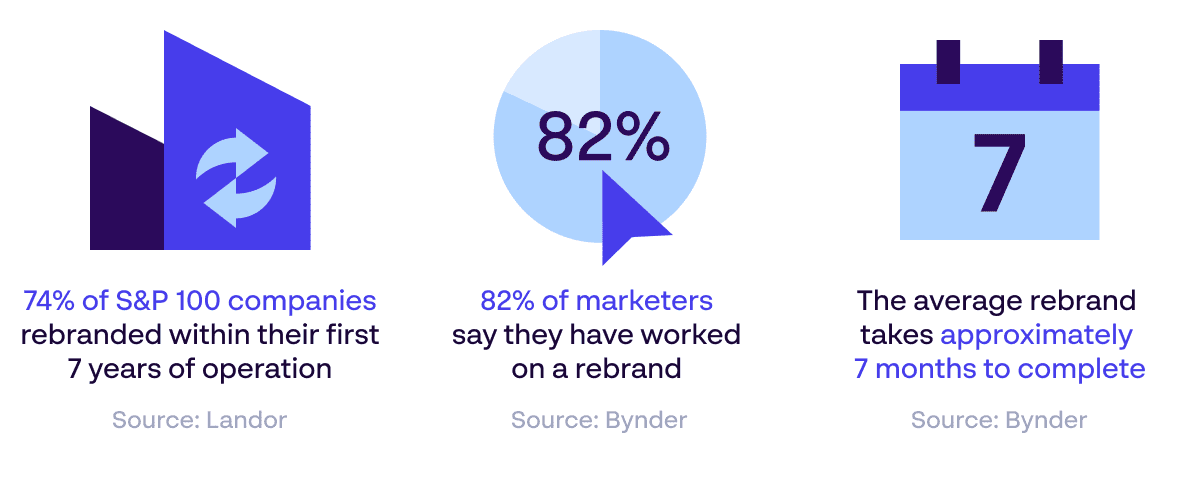
Rebrands are far more common than you might realize. Take Microsoft’s iconic multi-colored window. It’s actually the company’s fifth brand identity since 1975 – each shift signaling a strategic change in how they needed to show up in the world.
Brands reimagine themselves for many reasons: reaching new audiences, addressing outdated perceptions, or positioning for future growth. When done well, the results can be transformative – as seen with Burberry, Old Spice, and Lego. But when the process is mishandled, the consequences for brand equity and customer relationships can be severe.
If your organization is preparing for change, or already navigating a rebrand rollout, this guide breaks down the seven core rebrand challenges you must overcome to protect your investment and deliver a refresh that resonates.
7 critical rebrand challenges and how to overcome them
Challenge 1 – Rebranding for the wrong reasons
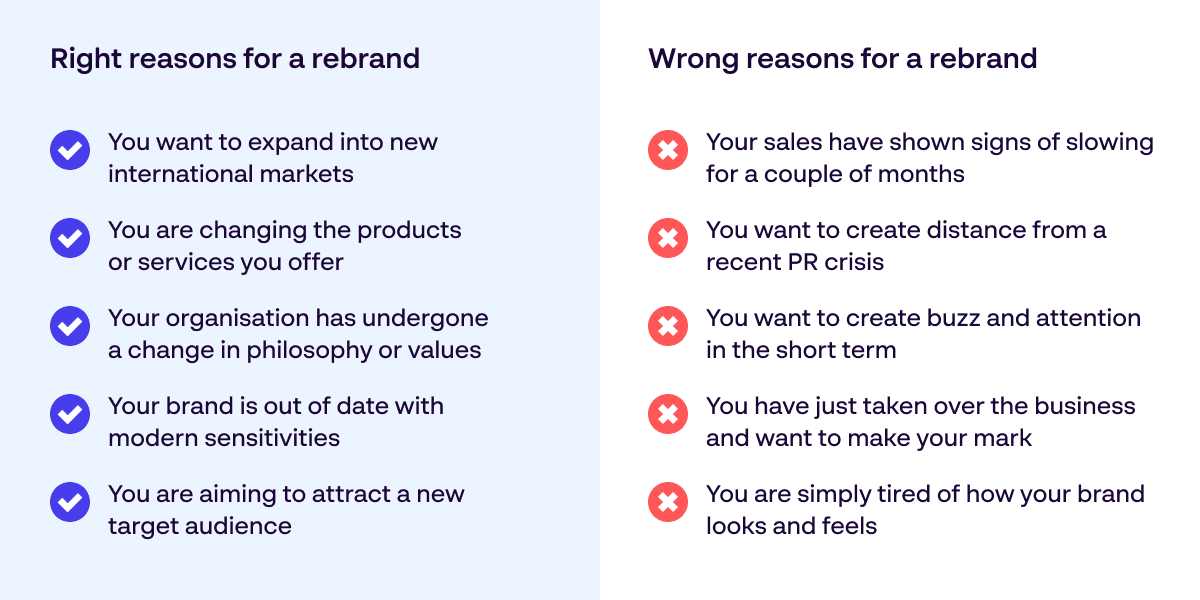
A brand is far more than a visual identity – it is the emotional thread connecting your business to customers, employees, and communities. Because this connection takes years to build, rebranding should never be a reflexive response to short-term performance or internal pressure. There must be a legitimate need for you to update your image.
Old Spice is a valuable case study. Having strong brand associations with an older demographic was seriously limiting the company’s growth. By modernizing their brand identity – and pairing it with the now-famous “The Man Your Man Could Smell Like” campaign – they repositioned themselves for a new generation.
GAP, on the other hand, provides a cautionary tale. A sudden sales dip prompted a rushed, high-cost logo change that abandoned the approachable values customers associated with the brand. Backlash was immediate. The new identity was withdrawn in six days.
The lesson is clear – rebrand only when there is a strategic advantage to doing so.
Conduct honest conversations with stakeholders, listen to customer feedback, and run a full brand audit before you start. These inputs help determine whether you need a full rebrand strategy or a lighter refresh that preserves valuable brand equity.

Challenge 2 – Secure buy-in from customers
Customers form strong cognitive associations with brands. Changing that mental picture takes time and intentional communication.
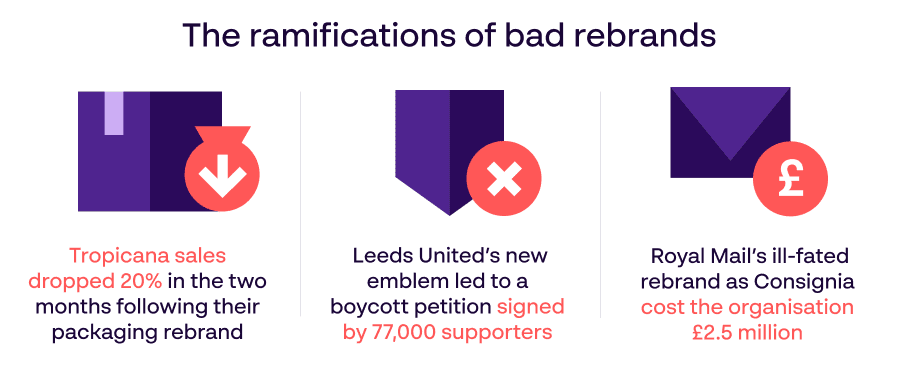
This is where GAP’s rebrand fell apart and why Tropicana lost $30 million after changing the beloved packaging of their orange cartons in 2009. They failed to talk to their customers and prepare them for the transition. Result: rebrand failure, reputational damage, and financial loss.
To bring customers with you, start by gathering insight. Surveys, interviews, and market research reveal what audiences value and what they are ready to see evolve. Transitional branding can also ease the shift. Simply retaining select design elements or messaging helps you signal continuity while preparing customers for what’s new.
Your goal is not only to complete a brand identity refresh, but to help audiences understand why it matters – and why the change benefits them.

Challenge 3 – Map the scale of your rebrand
The operational scope of a rebrand is often underestimated. For global teams working across hundreds of touchpoints, even the smallest overlooked element – like an email signature or outdated icon – can compromise brand consistency.
To avoid this, map every asset, channel, and dependency involved in your brand identity. Engage your regional and functional teams early to identify anything that might be hidden or decentralized. Consolidate this into a single transition plan so execution feels coordinated, not chaotic.
Once your rollout is complete, use a Digital Asset Management system to ensure teams only access approved, updated materials. Effective brand asset management helps maintain brand consistency and prevents outdated creative assets from resurfacing.
Challenge 4 – Communicate your rebrand internally
Your people are the strongest ambassadors of your new brand identity. If they feel unclear or disconnected, they may unintentionally revert to old branding or deliver mixed messages externally. And this is a big problem because what they say matters, with 82 percent of consumers seeking recommendations frorem their peers before making a purchase (source: Nielsen).
A central brand portal helps teams understand the “why” behind your evolution and gives them the rebranding tools to apply it confidently. This ensures employees across countries, time zones, and roles present your brand consistently.
Challenge 5 – Quantify the success of your rebrand
Every rebrand should begin with a measurable outcome in mind, whether it’s reaching new audiences, addressing reputation issues, or preparing for a strategic shift.
Data is the clearest way to determine if your investment is working. Consider metrics such as:
- Net Promoter Score (NPS) – indicates loyalty and sentiment.
- Social media engagement – reveals how audiences respond to your new look and message.
- Customer retention rate – signals long-term trust.
- Revenue growth – shows the commercial return of your new brand.
Because rebranding is often a significant financial commitment, leadership will expect clear evidence of return. Defining KPIs early and collecting data from day one ensures you can measure and optimize your new brand identity effectively.
Challenge 6 – Lock down rebrand logistics
The logistics of a rebrand can be as demanding as the creative shift itself. Trademark checks, packaging updates, external partner coordination, legal compliance, brand asset production – all require precise orchestration.
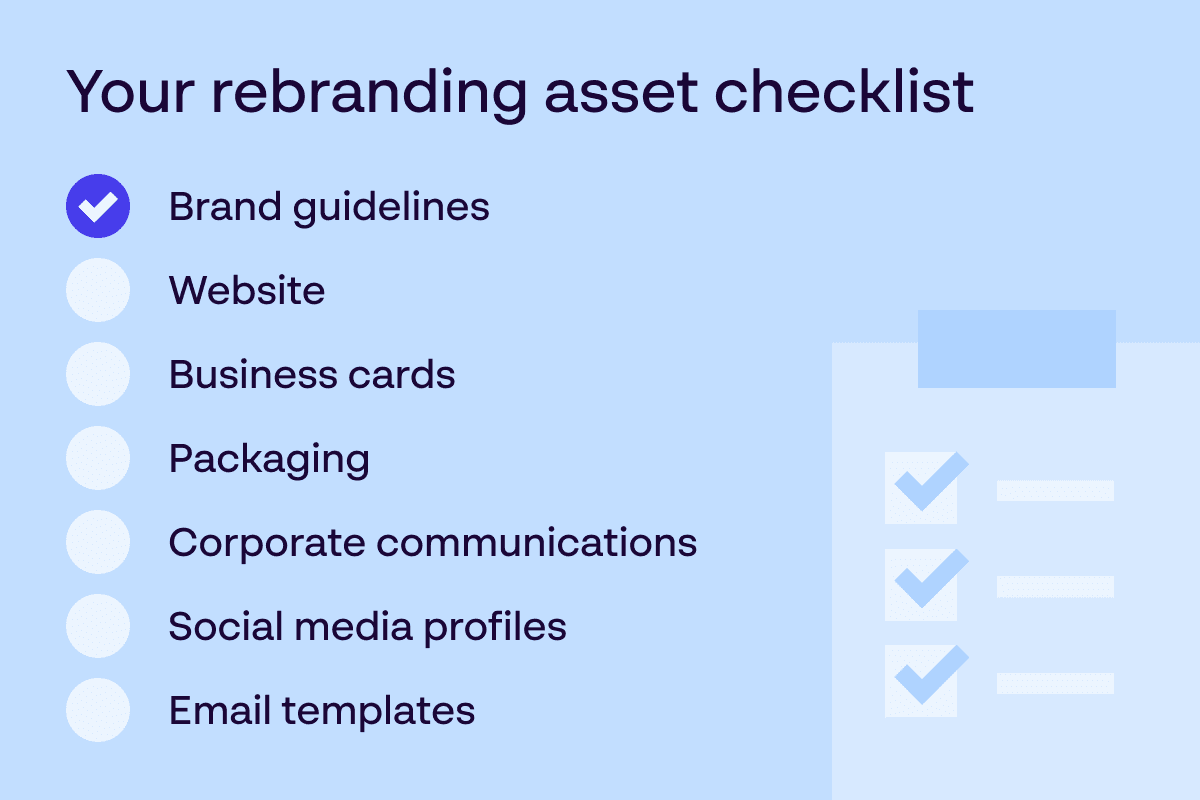
Gaps in these workflows can trigger delays, create liabilities, or create brand consistency issues. Use this rebranding logistics checklist to stay on track over the course of your rebrand timeline:
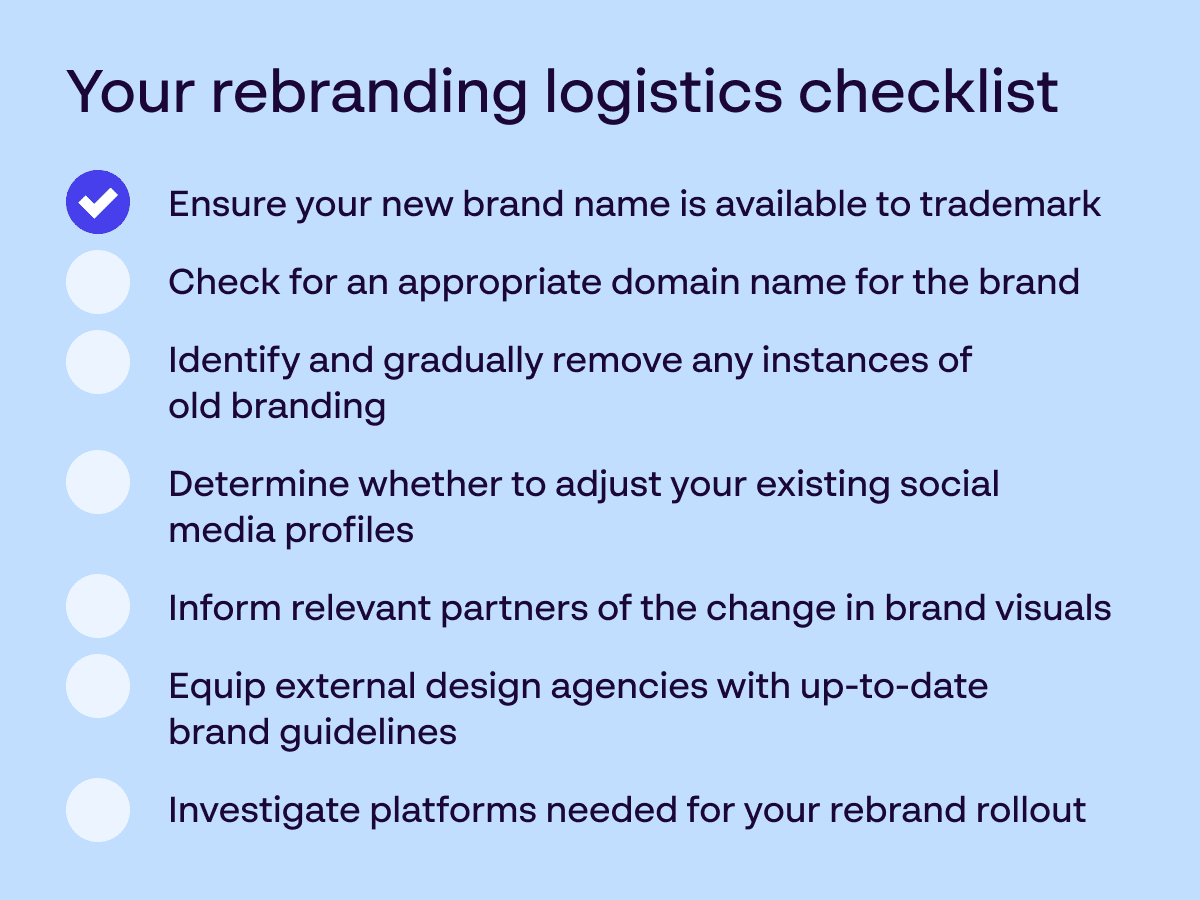
When it comes to adapting existing creative assets to new brand guidelines, many organizations outsource the work to external agencies. But this can quickly become costly. A more cost-effective approach is to empower internal teams through templated content creation. With the right system in place, anyone in your organization can create brand-compliant assets – reducing bottlenecks and ensuring every touchpoint is ready for external launch.
Challenge 7 – Nail the all-important relaunch
With your foundations in place, the final step is bringing your new brand identity into the world. In a market where attention is scarce and customer expectations shift quickly, a brand relaunch must feel intentional – never rushed or abrupt.
A coordinated rollout gives your rebrand the best chance of landing with excitement rather than uncertainty. Start by mapping a clear sequence for who needs to know, and when. Employees come first, followed by customers, partners, suppliers and, finally, the media. This order ensures your most influential audiences are informed and prepared before the wider world reacts. Using campaign management tools can add structure and keep every moving part aligned.
Next, craft a narrative that explains the “why” behind your new identity. People respond positively when they understand the purpose of a change – how it benefits them, what it represents, and what it signals about your direction as a business.

From there, build anticipation. A sudden, top-to-bottom change can feel disorienting, even to loyal customers. Gradual teasers, behind-the-scenes previews and phased updates help audiences acclimatize, reducing resistance and encouraging curiosity.
Finally, commit to ongoing communication after external launch. The days, weeks and months that follow are crucial for cementing your updated identity. Consistent brand management builds familiarity and helps audiences move confidently from your former brand to your new one.
With the right preparation, your rebrand relaunch becomes more than a reveal – it becomes a moment that strengthens trust, ignites interest, and signals a bold new chapter for your business.
Unlock the full potential of your rebranding strategy
Rebranding can be a powerful catalyst for growth, helping organizations shift perception, break into new markets, and strengthen their competitive position. But success depends on more than creative output. It requires thoughtful planning, aligned teams, and a Digital Asset Management system that makes consistency achievable.
We hope these steps have given you the clarity and confidence to navigate your rebrand challenges and bring your new brand identity to life with purpose and precision.
Strengthen your rebrand rollout
Use Papirfly for consistent, scalable brand activation.
Strengthen your rebrand rollout
Use Papirfly for consistent, scalable brand activation.
Use Papirfly for consistent, scalable brand activation.

FAQs
Many rebrands fail because organizations treat them as design projects rather than strategic business decisions. Without clear objectives, aligned stakeholders, and a structured rollout, even strong creative work can weaken brand equity and confuse customers.
This comes down to data, feedback, and brand maturity. A brand audit, combined with stakeholder conversations, helps determine whether your current identity can evolve or whether a full rebrand is required to support future positioning.
Proactive communication is essential. Share the purpose behind the change, listen to customer sentiment, and introduce transitional elements where appropriate. This creates continuity and reduces friction during the shift.
Your employees are the lead ambassadors of your new brand identity. If they are unclear on the direction or default to previous branding, they create inconsistency. This impacts customer trust. A centralized brand hub and ongoing communication help everyone stay aligned.
Success looks different for every organization, but common metrics include Net Promoter Score, customer retention, social engagement, and revenue growth. Defining KPIs before launch ensures you can evaluate performance and refine your brand over time.