

This content has been automatically translated and may include minor variations.
Every franchise brand faces a version of the same problem. The brand lives across dozens, hundreds, or thousands of locations – each run by a different operator, in a different market, with different resources and different local competitors. When those locations market inconsistently – different colors, different tone, different offers – customers notice. And the brand erodes.
This guide covers franchise marketing end-to-end: what it is, why it’s structurally different from regular marketing, the strategies that work, the channels that matter, and the tools that make it manageable at scale. Whether you’re building a franchise marketing program from scratch or tightening up one that’s grown beyond control, this is the reference you need.
What is franchise marketing?
Franchise marketing is the combined effort to promote a brand nationally while driving performance at the local level. It is not one thing – it operates across three distinct layers that most franchise networks manage simultaneously.
Franchisor brand marketing sets the national or global brand position. It builds awareness, runs brand campaigns, defines the identity that all other marketing must reflect. This layer is owned centrally and sets the standard everyone else follows.
Franchise development marketing targets prospective franchisees. Its job is to attract the right operators to join the network – so the audience here is investors and entrepreneurs evaluating the franchise opportunity, not end consumers.
Local store marketing is what most franchisees care about most. It is the day-to-day promotional activity at location level: the flyers, social posts, Google Business Profile updates, local offers, and community-facing content that drives foot traffic and repeat custom.
Each layer has a different audience, a different goal, and a different owner. The challenge is that they all need to feel like the same brand. (Source: INSERT SOURCE)
The core franchise marketing challenge: Consistency vs. local relevance
The structural tension in franchise marketing is not a failure of execution – it is a feature of the model. Corporate teams want brand standards protected. Franchisees want to run local promotions, respond to local events, and speak to their own community in their own voice.
Neither position is wrong. The brand exists to be consistent enough that customers trust it everywhere they encounter it. But markets differ. A promotion that works in a city center does not necessarily work in a suburban location. A tone that resonates in one region can feel off in another.

The goal is not to pick a side. The goal is to build a system that makes it easy to be on-brand.
What brand inconsistency actually costs
When franchisees go off-brand – using unofficial colors, running unapproved promotions, creating their own materials from scratch – the damage is not always visible immediately. But it accumulates.
Brand recognition weakens when customers see different visual identities at different locations. Trust erodes when messaging is contradictory. And the central marketing team absorbs the cost: time spent chasing down rogue content, re-shooting assets that exist but can’t be found, managing complaints that stem from a franchisee doing something the brand would never have approved. Research by Lucidpress found that consistent brand presentation can increase revenue by up to 23% (Source: Lucidpress, Brand Consistency Report).
What over‑centralizing costs
The opposite failure is equally damaging, just less obvious. When central teams try to control every piece of local marketing output – requiring every social post, every flyer, every in-store promotion to pass through HQ for approval – they create a bottleneck that kills local momentum.
Franchisees stop asking for help and start improvising. They use Canva, pull images from Google, and write their own copy. The central team calls it “shadow marketing” – and it is almost always worse than what would have happened with a faster, more accessible governed system. Over-centralization also burns out the central team. Spending 50% of marketing capacity on low-value adaptation requests is not a brand governance strategy – it is a resource failure.
6 franchise marketing strategies that work
The following strategies address both sides of the tension. They give the central team control over what matters most and give franchisees the freedom to execute quickly within those boundaries.
1. Turn brand guidelines into usable tools
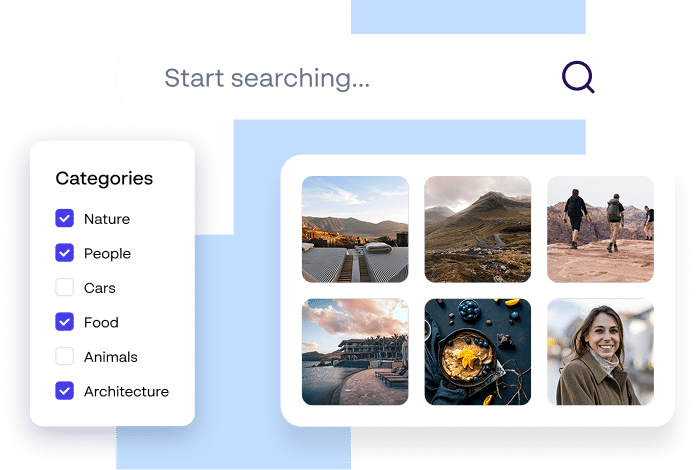
A PDF brand book does not govern a franchise network. It sits in a folder, goes unread, and gets ignored the moment a franchisee is under time pressure. Brand guidelines need to be accessible, searchable, and built into the tools franchisees already use – not delivered as a document and hoped for.
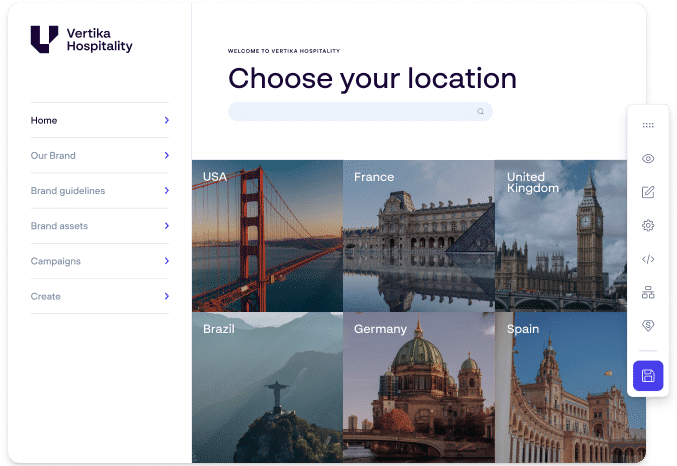
Effective franchise brands publish their guidelines through a brand portal: a single, always-current home for logos, colors, tone of voice rules, approved imagery, and campaign context. When the guidelines are easy to find and easy to apply, compliance becomes the path of least resistance.
2. Build a scalable template system
Templates are the single most effective tool for scaling on-brand local content creation. A well-designed template locks the non-negotiable elements – logo placement, color palette, approved font – and opens the editable fields: local address, local offer, local image slot.
The result is that a franchisee with no design skills can produce a professional, fully on-brand flyer in under two minutes. No agency request. No HQ approval needed. No risk of going off-brand because the template makes it structurally impossible. Platforms like Papirfly’s Templated Content Creation solution make this possible across print, social, email, and digital formats from a single interface.
3. Centralize your asset library
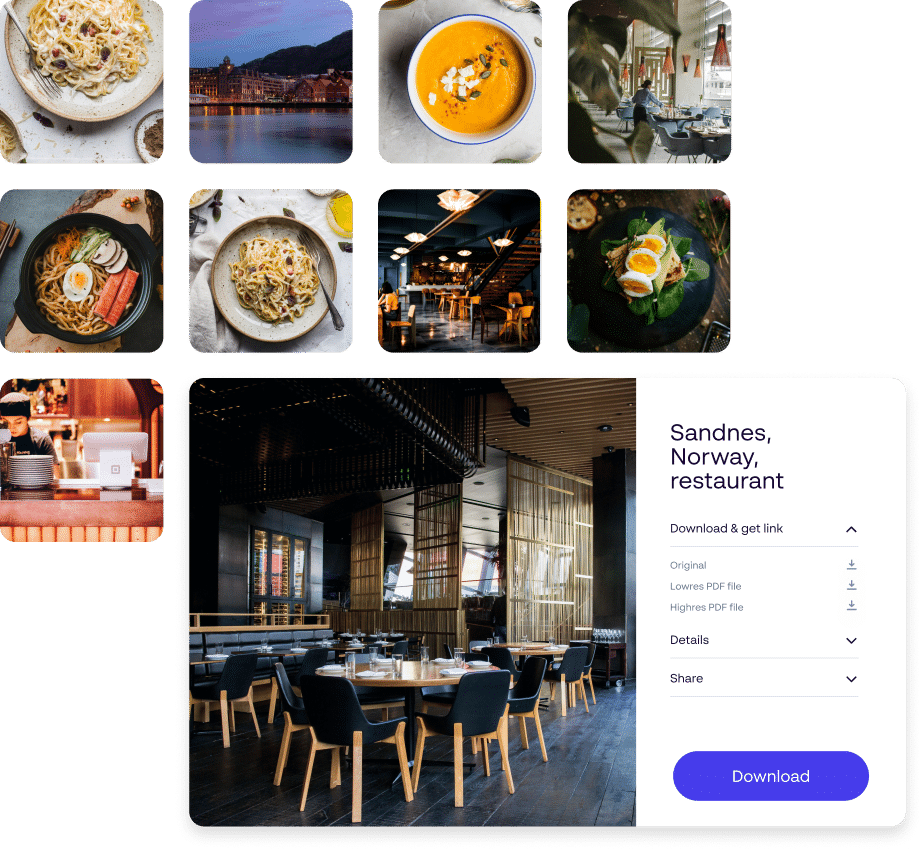
Inconsistent creative often has a simple root cause: franchisees cannot find the approved assets, so they use whatever they can find. A centralized Digital Asset Management (DAM) system solves this at the source.
When every approved logo version, every campaign image, every co-op creative, and every seasonal asset lives in one searchable, rights-managed library – and when franchisees have role-appropriate access to exactly what they need – the “I couldn’t find it” excuse disappears. Asset centralization also eliminates redundant production. If the asset exists and can be found, there is no need to recreate it.
4. Define the local marketing playbook
Franchisees should not have to guess what they are allowed to do locally. A clear, practical local marketing playbook defines the rules of engagement: which channels they are responsible for, what pre-approved content they can use, what requires approval, and what is off-limits.
The playbook reduces the volume of ad hoc requests reaching the central team and gives franchisees genuine confidence to act. It works best when it is structured around real scenarios – “here’s what to do for a grand opening,” “here’s how to run a local social campaign” – rather than written as a compliance document. (Source: INSERT SOURCE)
5. Create a fast approval process
Not everything can be templatized. Franchisees will always have local needs that require custom content – a community event, a local partnership, a regional promotion. The question is how quickly and reliably those requests get handled.
A slow approval process is not neutral. It trains franchisees to stop asking and start improvising. A good approval workflow is structured, tracked, and fast – with clear SLAs, clear feedback when something is not approved, and a clear escalation path. Built-in approval workflows within the content platform, rather than email chains, are significantly faster and more auditable.
6. Measure and learn across locations
Franchise marketing generates a large volume of data across a large number of locations. Most franchise brands do not use it well. Asset usage rates, local campaign performance, and template adoption by location are all signals that tell the central team which markets are engaged, which are struggling, and where the brand is most at risk.
Analytics dashboards that aggregate performance across the network give the central team visibility they cannot get from individual check-ins. Over time, this data informs which templates get updated, which guidelines need clarification, and which markets need additional support.
5 key franchise marketing channels
Franchise brands typically need both a national layer and a local layer for most channels. The national layer builds awareness and sets the brand; the local layer drives conversion and community connection.
1. National brand campaigns
National campaigns – TV, out-of-home, digital display, paid social – are owned and funded by the franchisor. They build category awareness and reinforce brand identity at scale. Franchisees benefit directly from national campaigns even if they play no role in creating them.
2. Local SEO and Google Business Profile
Every franchise location needs its own optimized Google Business Profile. Inconsistent NAP (name, address, phone) information, missing opening hours, or outdated photos are direct conversion failures. Local SEO is one of the highest-ROI investments a franchise network can make at location level – and one of the most commonly neglected. (Source: BrightLocal, Local Consumer Review Survey)
3. Social media
Social media operates best as a hybrid. The central team manages the brand account and publishes national content. Franchisees manage local accounts – but with guardrails. Pre-approved post templates, approved image libraries, and clear tone guidance enable local social activity that stays on-brand without requiring individual HQ approval for every post.
4. Paid media and co‑op programs
Co-op advertising programs pool franchisee contributions into a shared media budget, allowing for more effective local spend than individual locations could achieve independently. The central team typically manages the creative and media strategy; franchisees benefit from the buying power. Clear rules about what is covered, what requires top-up funding, and how performance is reported are essential for co-op programs to function well.
5. Email and CRM
Email remains one of the highest-performing channels for franchise marketing – both for customer retention at location level and for re-engagement campaigns run centrally. Centrally managed templates allow local customization (location name, local offer, local event) without compromising deliverability or brand consistency.
Conclusion
Franchise marketing works when it solves the right problem: not choosing between brand control and local freedom, but building the systems that make both possible at the same time. The strategies and channels in this guide are each individually valuable. But they work best when they are connected – when the asset library feeds the templates, the templates flow through the brand portal, and the portal gives every franchisee a single, reliable place to start.
Getting this right is not a creative challenge. It is a systems and governance challenge. The franchise brands that scale without brand erosion are the ones that invest in infrastructure early – before the network grows beyond the capacity of the central team to manage it manually.
Papirfly is built specifically for this problem. The franchise marketing software combines Templated Content Creation, brand portal, and Digital Asset Management into one platform – so every location has everything it needs to market locally and stay on-brand automatically.
Give every location the tools to stay on‑brand
See how Papirfly powers franchise marketing at scale.
Give every location the tools
to stay on‑brand
See how Papirfly powers
franchise marketing at scale.
See how Papirfly powers franchise marketing at scale.
FAQs
How do you maintain brand consistency across franchise locations?
Brand consistency in franchise networks requires more than a brand book. It needs centralized asset libraries, pre-approved content templates with locked brand elements, and a brand portal that gives every location a single source of truth. When the right tools are in place, on-brand execution becomes the easiest path – not a compliance exercise.
What is the difference between national and local franchise marketing?
National franchise marketing is owned by the franchisor and focuses on building brand awareness and driving system-wide growth. Local franchise marketing is owned or co-owned by individual franchisees and focuses on driving traffic and conversion at location level. The two layers need to be coordinated: national campaigns set the brand context; local activity converts it into sales.
What software do franchise brands use for marketing?
The most effective franchise marketing platforms combine three core capabilities: Templated Content Creation (so local teams can produce on-brand materials without a designer), centralized Digital Asset Management (so approved assets are always findable), and a brand portal (so guidelines, campaigns, and assets have a single governed home). Papirfly combines all three in one platform built for multi-location brand governance.
What is the biggest franchise marketing mistake brands make?
Over-centralizing. When every piece of local content requires HQ approval, franchisees stop asking and start improvising – using unapproved tools, unofficial assets, and off-brand messaging. The fix is not less control; it is better-designed guardrails that make on-brand execution faster and easier than going rogue.
How do franchise brands balance brand standards with local marketing needs?
The most effective approach is structured flexibility. Central teams define what cannot change – logo, core colors, approved imagery, brand voice – and build templates that lock those elements. Franchisees control what should change locally: the offer, the location details, the local imagery. This gives every location genuine creative latitude within a defined brand framework. See also: Franchise brand consistency.