

This content has been automatically translated and may include minor variations.
In today’s retail environment, brands compete across more channels than ever — from e-commerce and social platforms to immersive digital and in-store experiences. Each of these touchpoints is an opportunity to boost retail customer engagement, but it can present a challenge to consistency as well.
As the pace of retail content marketing accelerates, so does the pressure on teams to deliver more content at scale. That’s why strong brand governance in retail is so important. It provides the guardrails that enable creativity, clarity, and trust.
This article explores what good brand governance in retail looks like and how technology helps global teams maintain consistency without slowing down.
Brand governance in retail: what is it and why does it matter?
Brand governance is the framework that keeps every message, visual, and experience aligned — no matter where or how it’s delivered.
This is critical because consistency builds trust. When customers repeatedly experience your brand in a familiar, reliable way, they form emotional connections that drive loyalty. Break that consistency, even unintentionally, and it can weaken recognition and reliability.
For teams operating at speed and scale, maintaining consistency is no small task — but it’s what turns awareness into retail marketing ROI.
3 ways to strengthen brand governance in retail
1. Keep brand guidelines current and accessible
Most retail brands already have guidelines, but not all keep them up to date or widely available. If your business has evolved — with new markets, product lines, or values — your retail brand marketing guidelines should evolve too.
Outdated or inaccessible guidelines lead to confusion: inconsistent messaging, off-brand visuals, and unclear pricing. To prevent this, centralize your brand assets and guidelines, using brand portal software supported by Digital Asset Management. This ensures every team, in every location, is aligned on the same version of your brand.
2. Align pricing with brand value
Brand governance and price positioning are closely connected. Consistent pricing supports perceived value, while mismatched pricing can undermine your brand credibility.
Integrating Product Information Management (PIM) and ERP systems into your content creation process allows teams to import accurate, up-to-date product data directly into marketing materials — ensuring accuracy at scale without manual input.
3. Organize and streamline product data
Product data is a powerful asset — when it’s well structured. This is why it’s so important to centralize and organize product information effectively. Doing so helps retail marketers:
- Ensure consistent pricing and product details across platforms
- Provide accurate sales and marketing collateral
- Improve commercial decisions with reliable insights
When teams can easily access this information through a unified system, they work faster, deliver with confidence, and strengthen brand consistency across every channel. Great news for your retail marketing strategy.
How brand governance creates a more connected retail experience
In-store
Consumers now expect a seamless connection between physical and digital experiences. Personalization in retail recommendations, loyalty apps, and click-and-collect services are all part of the same journey.
Effective brand governance ensures the customer experience feels unified, all the way from website to shelf. This is crucial because any mismatch between online and offline identities erodes trust.
Online
Online retail competition is higher than ever. With major e-commerce platforms setting new standards, traditional retailers need to differentiate through experience and authenticity.
Consistent brand governance helps traditional retailers deliver the same recognizable, values-led experience across digital channels — something large marketplaces still struggle to replicate.
How simplifying approvals helps strengthen governance
A clear, digitized approval workflow ensures that all creative materials are reviewed, approved, and compliant before launch.
With automated workflows built into your Digital Asset Management or Templated Content Creation system, teams can deliver retail marketing campaigns faster without compromising governance. It means more agility, fewer errors, and complete visibility for brand leaders.
What to look for in your retail brand governance tools
When selecting technology to strengthen brand governance, look for platforms that make creating, controlling and delivering brand assets more efficient for your teams. These include:
- Template creation – Enable teams to create on-brand assets independently using pre-approved templates tailored to each campaign or market.
- Brochure and print management – Produce both digital and printed materials from one system, ensuring accuracy in design, copy, and localization.
- DAM and PIM / ERP integration – Keep product data synchronized and consistent across all channels.
- Digital signage management – Push new creative directly to in-store screens for faster rollouts and consistent messaging.
The future of brand governance in retail
The challenges and opportunities of digital and print in retail marketing are evolving at incredible speed. Teams are producing more content across more platforms than ever before. Central teams need ways to manage that output efficiently — without losing control of brand consistency.
By digitizing production workflows and connecting global teams through Digital Asset Management and Templated Content Creation, retail marketers can increase productivity, maintain governance, and deliver on-brand campaigns at speed and at scale.
Enable brand governance that scales
At Papirfly, we help global retail brands achieve effortless brand governance — empowering teams to create, manage, and deliver content that’s always on-brand and on time.
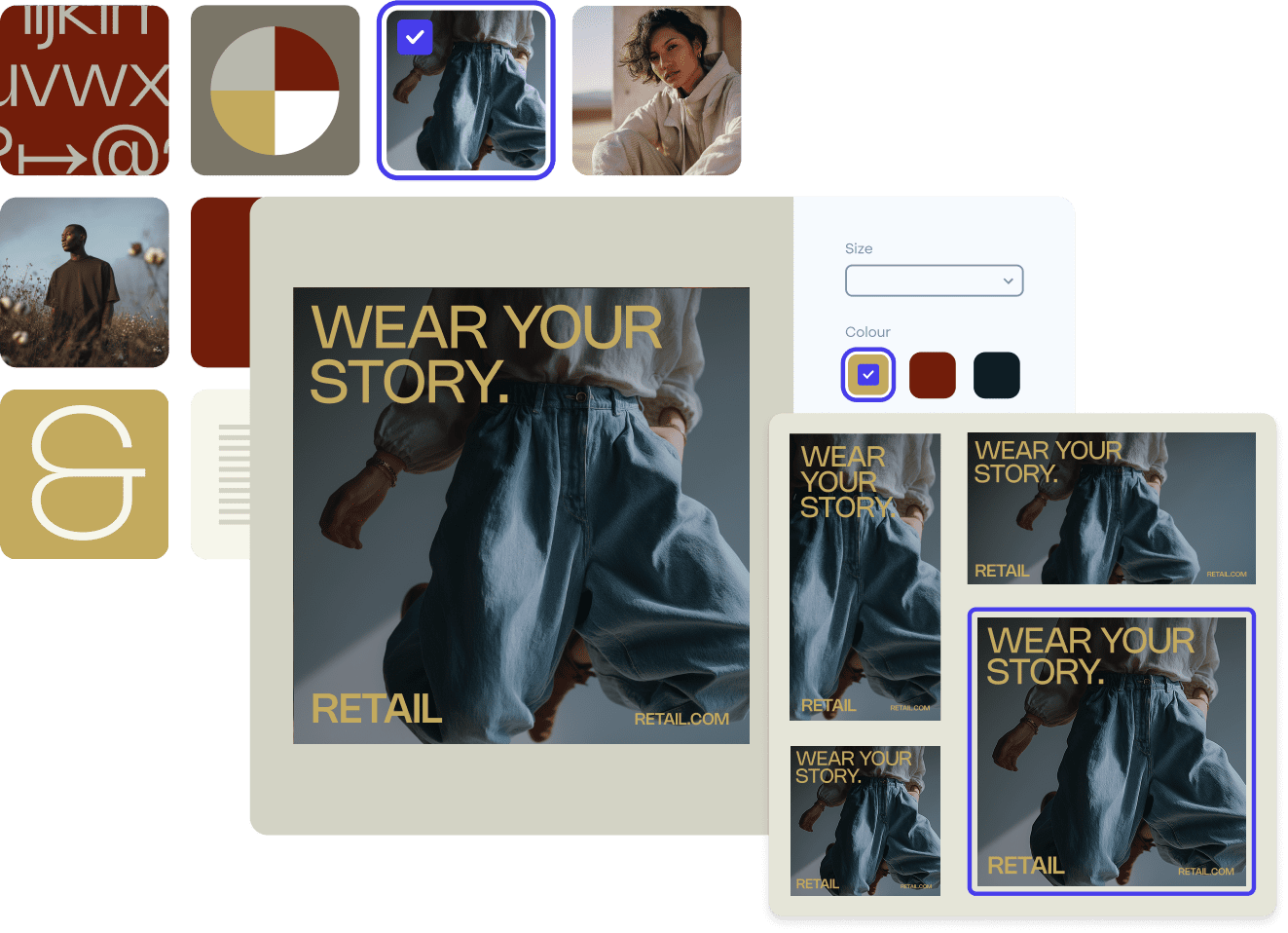
Our Digital Asset Management and Templated Content Creation solutions enable consistent content creation, seamless collaboration, and faster campaign delivery across every market.
Protect your retail brand
Control campaigns through one connected ecosystem.
Protect your retail brand
Control campaigns through one connected ecosystem.
Control campaigns through one connected ecosystem.
FAQs
Brand governance in retail is the framework that ensures every message, visual, and customer interaction aligns with your brand identity. It keeps retail brand marketing consistent across all channels, from e-commerce to in-store experiences.
Consistency builds trust. When your retail content marketing looks and feels the same across every touchpoint, customers perceive reliability and professionalism — both of which drive loyalty and long-term retail marketing ROI.
Tools like Digital Asset Management and Templated Content Creation give global and local retail marketing teams access to approved assets while also automating approvals and standardizing production. This ensures all content is on-brand, accurate, and ready for market.
Brand governance supports retail customer engagement by creating a seamless connection between online and in-store interactions. Consistent visuals, messaging, and pricing across every platform make your brand recognizable and trustworthy.
Choose platforms that support your retail marketing strategy by centralizing content and simplifying production. Key features to look out for include template creation, brochure management, DAM and PIM integration, and digital signage capabilities for faster, on-brand rollouts.
Table of contents:
- Brand governance in retail: what is it and why does it matter?
- 3 ways to strengthen brand governance in retail
- How brand governance creates a more connected retail experience
- How simplifying approvals helps strengthen governance
- What to look for in your retail brand governance tools
- The future of brand governance in retail
- Enable brand governance that scales
- FAQs