

This content has been automatically translated and may include minor variations.
Every global brand is a lot bigger than it appears on the surface. Look beneath the logo and you’ll find an entire brand ecosystem of assets, messages, workflows, and touchpoints that stretch across teams, markets, and channels. And the longer your brand has been active, the harder it becomes to keep every element aligned.
From outdated stationery still circulating in finance to a regional office using last year’s email footer, even small inconsistencies can quietly chip away at your brand experience. For those responsible for brand asset management, this is the day-to-day reality – an ever-growing universe of brand assets to track, assess, and evolve.
That’s why a brand audit is essential. It gives you a clear view of what exists, what needs attention, and where teams require support. The process can feel extensive, but every strong brand starts by taking stock.
Whether you address the essentials immediately or plan a phased approach, your focus should be on what matters most to the brand and the business. Invite each team to evaluate what they use, what’s missing, and what needs improvement. Then align on brand management priorities, together.
Below is a comprehensive checklist to help you get started.
Brand strategy fundamentals
Make brand strategy insights accessible globally
Every team needs access to the insight that shapes your decisions. Audience segmentation, research findings, workshop notes, audits, and strategic recommendations should live in one place, documented and easy to update. If insight is scattered or siloed, teams end up working from different assumptions and brand consistency inevitably suffers.
Document every communication strategy
It goes way beyond marketing activity. Every layer of your brand – from sales outreach and customer engagement to internal comms and recruitment marketing – should have a clearly documented strategy, stored in one easily accessible place. Without this, teams drift and your communication loses clarity and impact.
Clarify your brand structure
Do employees and customers understand your brand hierarchy? While internally this is of more importance, if you are part of a wider umbrella brand, it’s important this is recognised within your external branding (where required). Each team should understand the structure of the business and how the brand they represent and associated product sub-brands fit in.
This will give them greater clarity on the position of the brand globally and help them speak confidently should a client question it in the future.
Know who you are as a brand
Your brand hierarchy need to be absolutely clear to employees, partners, and customers. If you operate within a wider brand family or umbrella structure, that relationship should be visible and understood – and every team should know exactly where their brand and its sub-brands sit within the bigger picture.
This clarity strengthens global alignment and equips your people to speak confidently about the brand’s role, relevance, and value whenever they’re asked.
Know who you are as a brand
If you asked colleagues across different offices to describe your mission, vision, and values, would their answers match? They should. Your positioning, point of difference, and purpose must be communicated consistently across every market.
This is the foundation of brand equity – the way audiences feel about you and what they believe you stand for. If your teams aren’t aligned internally, your external messaging won’t be aligned either. And that will have major consequences for the impact of your brand.
Understand your brand voice
Your brand voice is how people experience your brand in words. And while messaging will – and should – always have local nuances, consistency of tone is a key factor in building trust and loyalty. Whether you’re known for being bold, quirky, technical or straightforward, that personality needs to shine through in every market, language, and format.
Visual identity fundamentals
Start with the basics
Your visual language is more than design – it’s the combined expression of how your brand shows up across every touchpoint. Even if your products or sub-brands have distinct identities, they should still feel like part of the same family.
Unifying elements such as naming conventions, URLs, social handles, and visual cues helps reinforce that connection. Review not only the formatting, but also how these brand assets appear in logos, icons, and layouts. Identify where greater cohesion is possible and bring everything into alignment to strengthen the overall brand experience.
Create comprehensive, accessible brand guidelines
To keep your brand consistent and coherent worldwide, your teams need clear guidance on everything from photography and video to color palette, typography, logos, and iconography. Robust, well-documented brand guidelines reduce ambiguity and prevent costly inconsistencies. Ideally, these brand assets should live in a single, centralized digital space – like a Papirfly brand portal – ensuring every market works from the same source of truth.
You also need to standardize how teams brief, create, and deliver work. When processes are unified and expectations clear, the brand becomes easier to activate – and far harder to dilute.
Brand experience fundamentals
Evaluate every touchpoint
Perceptions of your brand are shaped at every single touchpoint – from PowerPoint slides to social graphics, from email signatures to invoices. The brand feels more intentional and more professional if all the details of these experiences are fully aligned.
Unify digital and print
Your website and brand guidelines should set the standard for design across all channels. Digital-first principles must translate into print effectively, and vice versa. When both ecosystems feel connected, your brand becomes unmistakable.
Ensure company-wide brand adoption
Brand isn’t just a marketing remit – it’s a business-wide responsibility. Whether it’s through sales scripts, HR documents, leadership reports, or internal newsletters, every team interacts with your brand. And every team needs access to your tone of voice and visual style guidelines, so they can represent your brand well.
Reflect your brand in physical environments
Even if customers never visit your office, your employees do – and a well-branded environment reinforces pride, purpose, and alignment. Signage, interior imagery, vehicle wraps, workspace displays… they all contribute to a cohesive brand world.
Digital Asset Management fundamentals
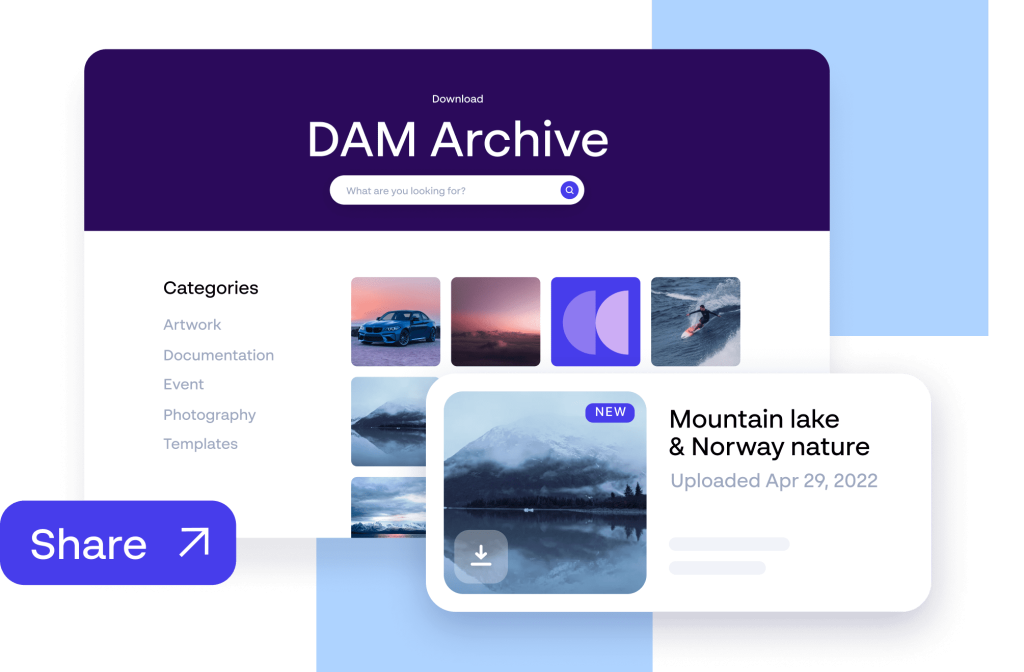
A central Digital Asset Management (DAM) system is the backbone of brand consistency. By providing an effective brand management platform, it ensures that:
- Photography, brand guides, and campaign materials remain organized and up to date
- Teams access the latest approved brand assets
- Regions see only the content relevant to them
- Permissions prevent incorrect editing
- Templates can be customized safely, without design skills
Likewise, all photography, illustrations, brand guides and dedicated templates will only be visible to the teams they are relevant to.
Where to go next with your brand audit
Your priorities will depend on your industry, your resources, and the urgency of your marketing needs. What matters most is ensuring the work you do connects with your audience and aligns your teams.
A modern brand portal can transform the entire process. It gives teams clarity on what’s approved, enables them to create brand-safe content at scale, and reinforces global brand governance. When you combine it with DAM capabilities, brand consistency is virtually guaranteed.
Not sure what to look for in a DAM?
We’ve got you covered
Not sure what to look for in a DAM?
We’ve got you covered.
Not sure what to look for in a DAM?
We’ve got you covered.

FAQs
Why is a brand audit important for global teams?
A brand audit reveals where your brand is aligned, where it’s drifting, and where teams need support. It creates shared clarity across markets and ensures every touchpoint reflects the brand you intend to present.
What should be included in a comprehensive brand audit?
A full audit spans strategy, visual identity, communication, brand experience, and Digital Asset Management. It’s about reviewing every asset, process, and touchpoint – from messaging to templates to physical environments.
How does a brand audit improve consistency across regions?
By centralizing insights, brand guidelines, and brand assets, teams work from the same source of truth. This prevents regional drift, reduces errors, and builds a globally unified brand that still adapts effectively to local needs.
Why does a brand audit need Digital Asset Management (DAM)?
DAM ensures teams always use the latest approved brand assets. It controls permissions, enables safe template customization, and organizes photography, brand guides, and campaign materials – all essential for long-term brand consistency.
How often should organizations conduct a brand audit?
The frequency depends on your growth, complexity, and market activity, but most brands benefit from an annual audit or a deep review when entering new markets, rebranding, or scaling content creation.